Department of Biochemistry and Cell Biology, National Institute of Infectious Diseases, Shinjuku-ku, Tokyo, Japan.
Department of Pathology, National Institute of Infectious Diseases, Shinjuku-ku, Tokyo, Japan.
PLoS One. 2019 May 16;14(5):e0216807. doi: 10.1371/journal.pone.0216807. eCollection 2019.
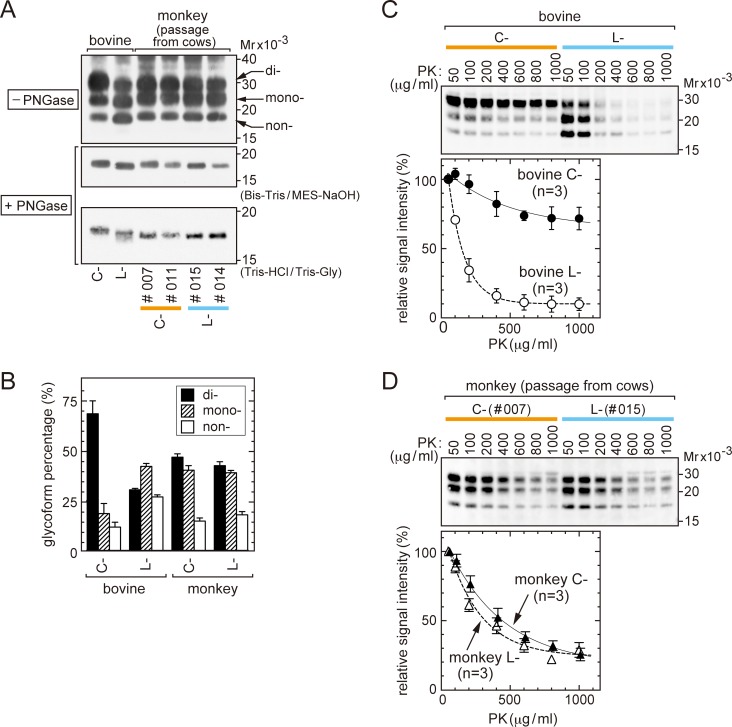
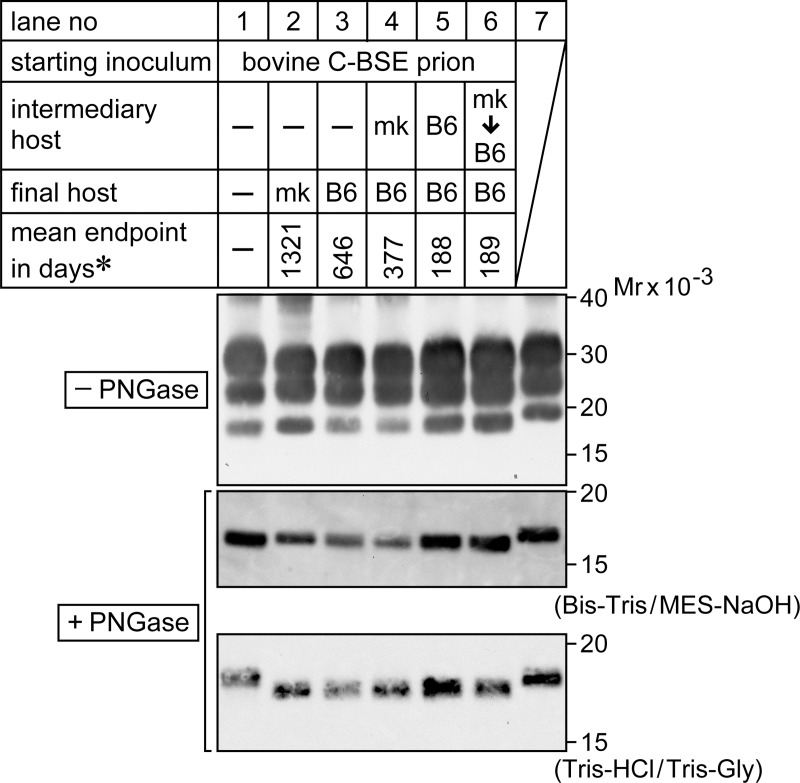
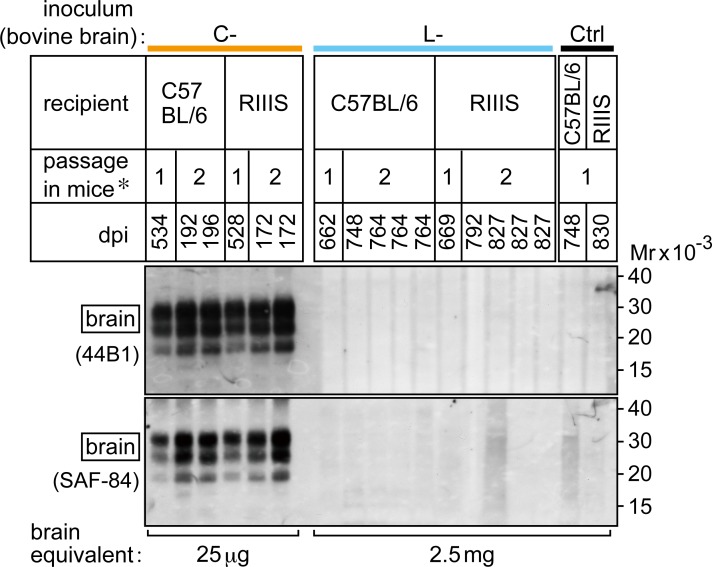
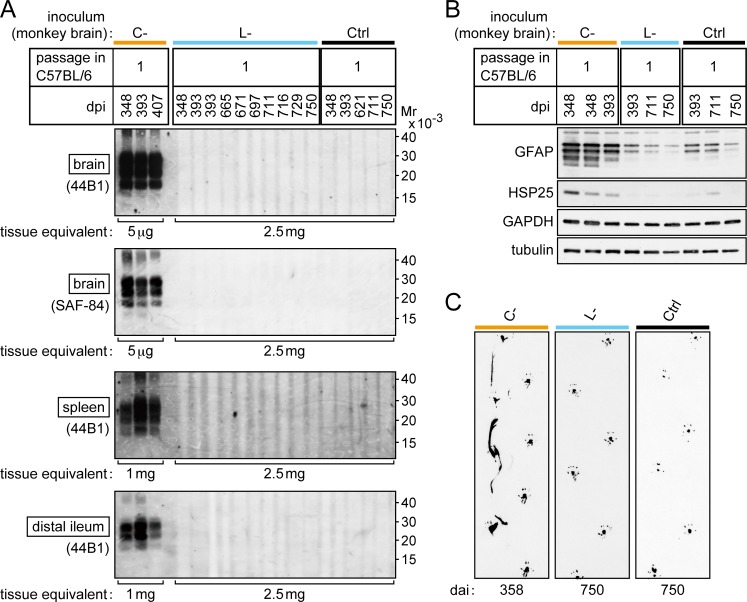
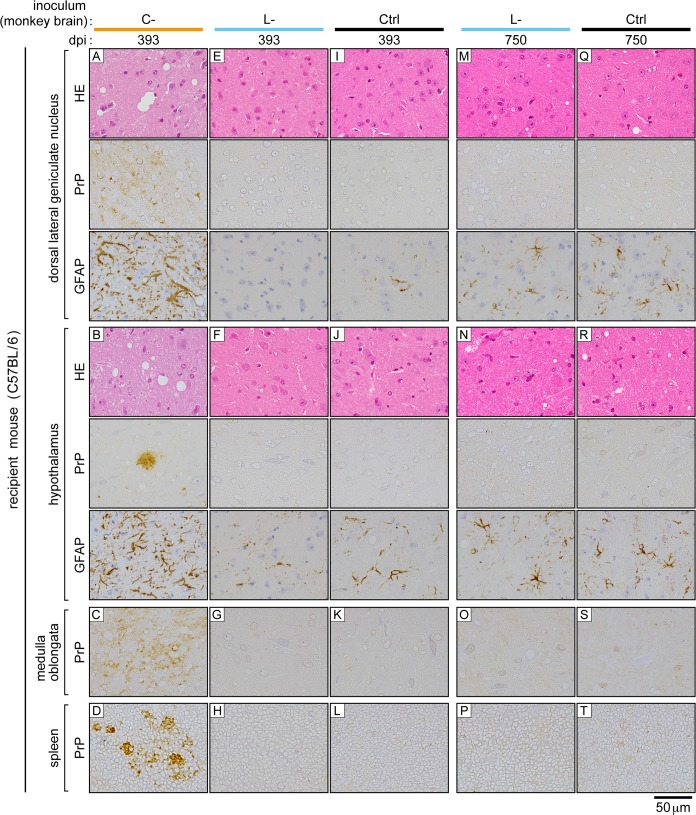
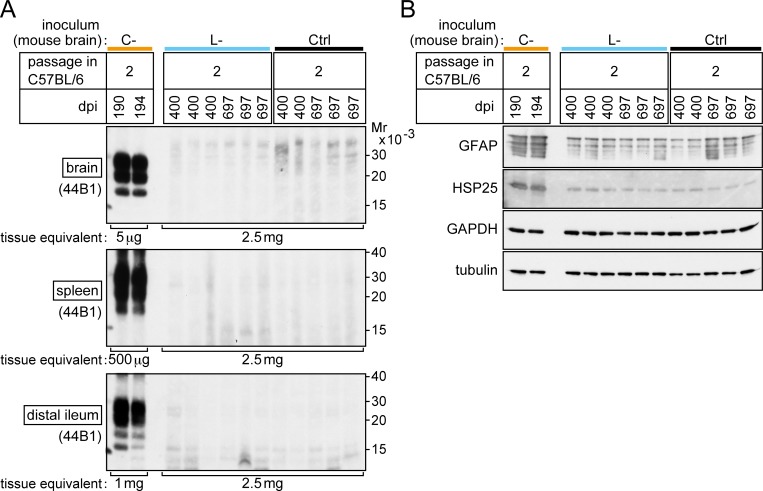
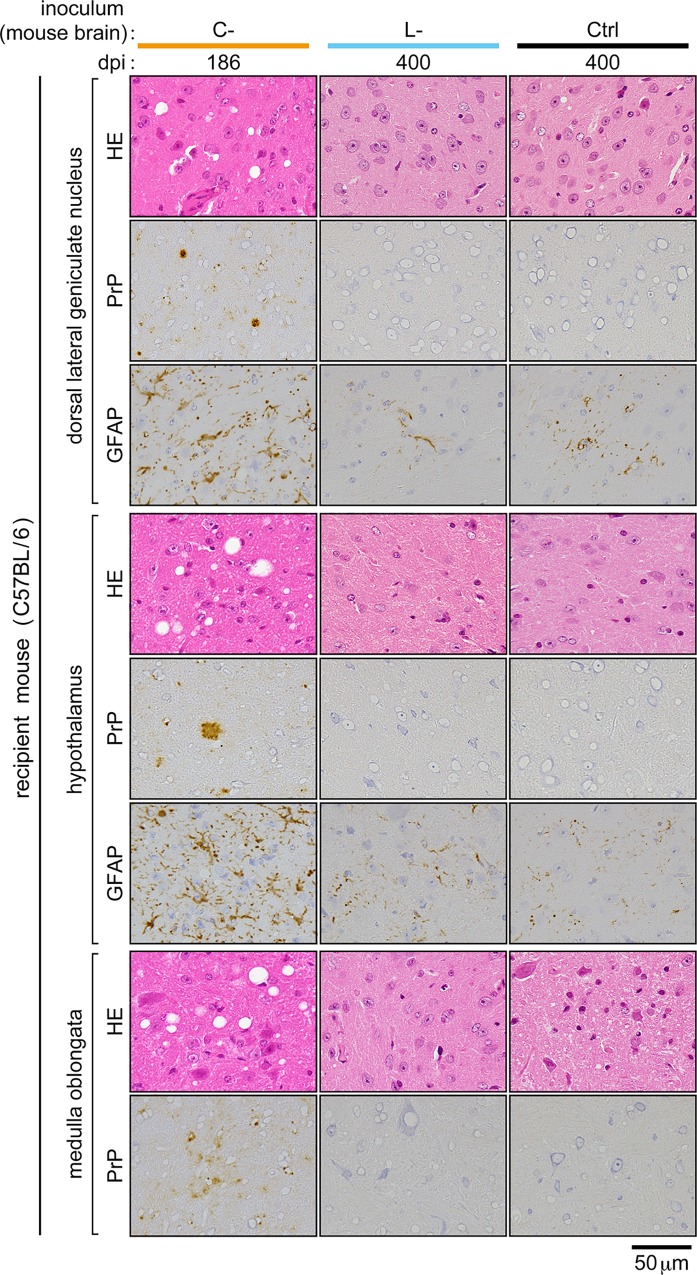
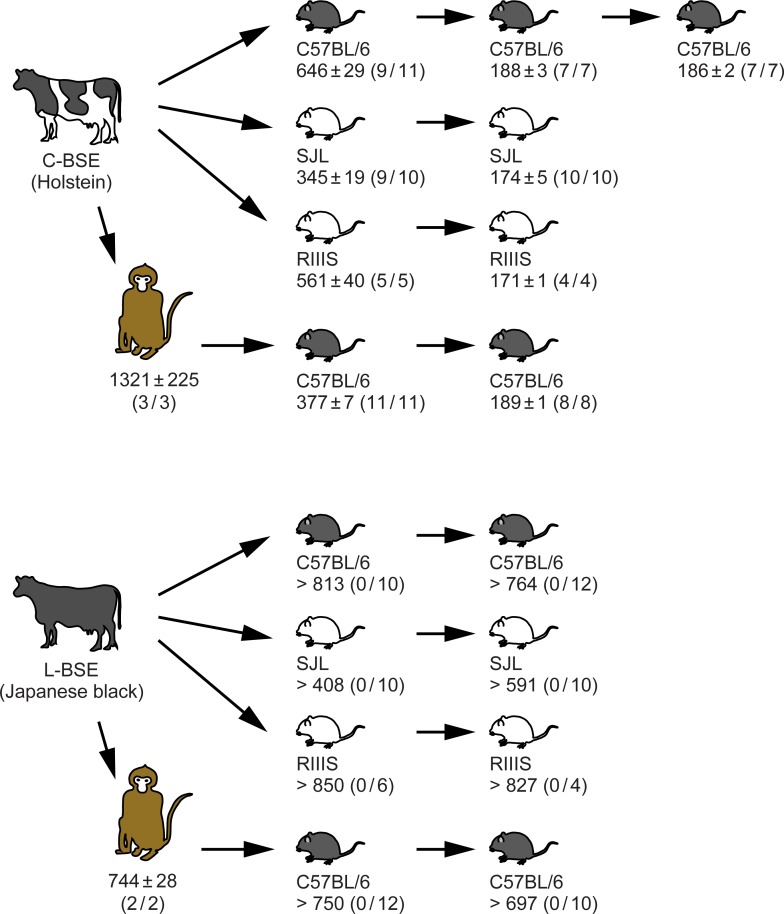
Classical- (C-) and atypical L-type bovine spongiform encephalopathy (BSE) prions cause different pathological phenotypes in cattle brains, and the disease-associated forms of each prion protein (PrPSc) has a dissimilar biochemical signature. Bovine C-BSE prions are the causative agent of variant Creutzfeldt-Jakob disease. To date, human infection with L-BSE prions has not been reported, but they can be transmitted experimentally from cows to cynomolgus monkeys (Macaca fascicularis), a non-human primate model. When transmitted to monkeys, C- and L-BSE prions induce different pathological phenotypes in the brain. However, when isolated from infected brains, the two prion proteins (PrPSc) have similar biochemical signatures (i.e., electrophoretic mobility, glycoforms, and resistance to proteinase K). Such similarities suggest the possibility that L-BSE prions alter their virulence to that of C-BSE prions during propagation in monkeys. To clarify this possibility, we conducted bioassays using inbred mice. C-BSE prions with or without propagation in monkeys were pathogenic to mice, and exhibited comparable incubation periods in secondary passage in mice. By contrast, L-BSE prions, either with or without propagation in monkeys, did not cause the disease in mice, indicating that the pathogenicity of L-BSE prions does not converge towards a C-BSE prion type in this primate model. These results suggest that, although C- and L-BSE prions propagated in cynomolgus monkeys exhibit similar biochemical PrPSc signatures and consist of the monkey amino acid sequence, the two prions maintain strain-specific conformations of PrPSc in which they encipher and retain unique pathogenic traits.
经典型(C-)和非典型 L 型牛海绵状脑病(BSE)朊病毒在牛脑中引起不同的病理表型,并且每种朊病毒蛋白(PrPSc)的疾病相关形式具有不同的生化特征。牛 C-BSE 朊病毒是变异型克雅氏病的病原体。迄今为止,尚未报道人类感染 L-BSE 朊病毒,但可以通过实验将其从牛传播给食蟹猴(Macaca fascicularis),一种非人类灵长类动物模型。当传播给猴子时,C-和 L-BSE 朊病毒在大脑中引起不同的病理表型。然而,当从感染的大脑中分离出来时,两种朊病毒蛋白(PrPSc)具有相似的生化特征(即,电泳迁移率,糖型和对蛋白酶 K 的抗性)。这种相似性表明,在猴子中传播时,L-BSE 朊病毒可能改变其毒力,使其类似于 C-BSE 朊病毒。为了阐明这种可能性,我们使用近交系小鼠进行了生物测定。在猴子中传播或未传播的 C-BSE 朊病毒对小鼠具有致病性,并且在小鼠中的二次传代中具有可比的潜伏期。相比之下,无论是否在猴子中传播,L-BSE 朊病毒均未在小鼠中引起疾病,这表明在这种灵长类动物模型中,L-BSE 朊病毒的致病性不会趋同于 C-BSE 朊病毒类型。这些结果表明,尽管在食蟹猴中传播的 C-和 L-BSE 朊病毒表现出相似的生化 PrPSc 特征,并且由猴氨基酸序列组成,但这两种朊病毒在 PrPSc 中保持株特异性构象,其中它们编码并保留独特的致病特征。