Kim Miseon, Suh Dong Hoon, Choi Jin Young, Bu Jiyoon, Kang Yoon-Tae, Kim Kidong, No Jae Hong, Kim Yong Beom, Cho Young-Ho
Department of Obstetrics and Gynecology, CHA Gangnam Medical Center, CHA University School of Medicine, Seoul.
Department of Obstetrics and Gynecology, Seoul National University Bundang Hospital, Seongnam.
Medicine (Baltimore). 2019 May;98(20):e15354. doi: 10.1097/MD.0000000000015354.
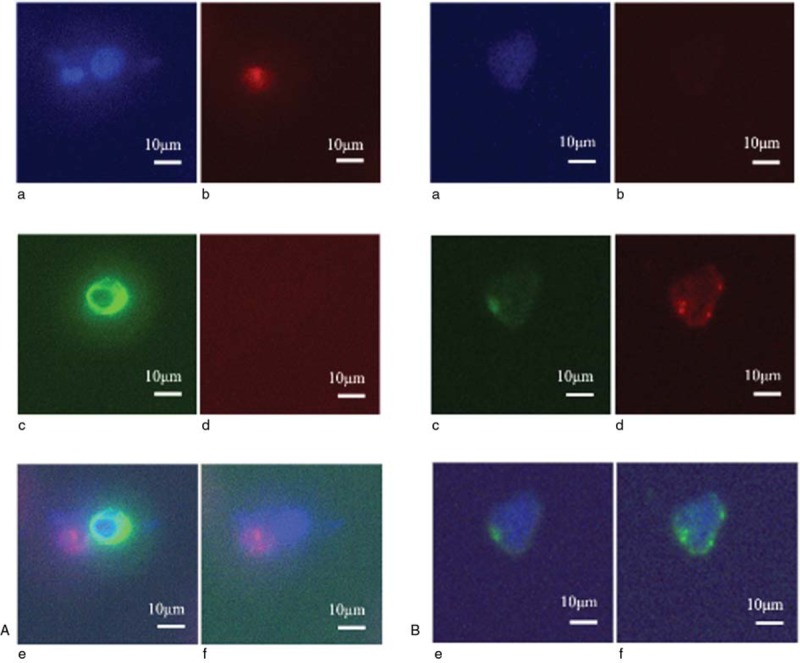
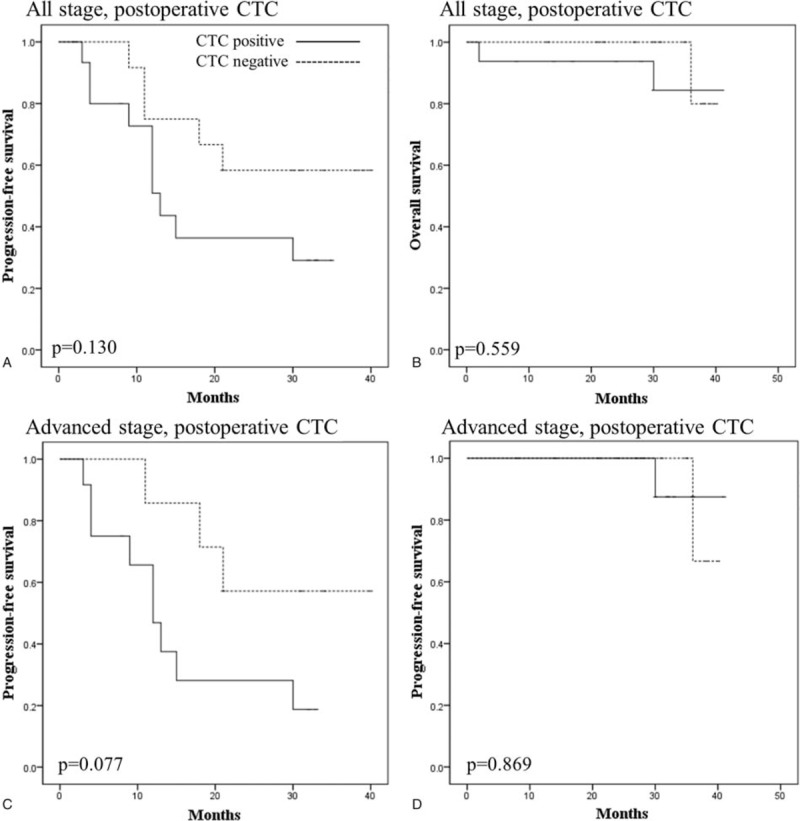
Circulating tumor cells (CTCs) have received enormous attention as a novel biomarker in various malignant diseases. We investigated the clinical association between the presence of perioperative CTCs and survival outcomes in women with ovarian cancer. In a total of 30 women who were scheduled to undergo a surgical treatment for ovarian cancer, peripheral blood samples were obtained before and after surgery. CTCs were isolated and counted using the optimized tapered-slit filter (TSF) platform. The association between the presence of perioperative CTCs and tumor features was evaluated. The impact of the presence of perioperative CTCs on progression-free survival (PFS) and overall survival (OS) rates were analyzed using a Kaplan-Meier method. The median age was 58 (range, 24-77) years, and the median follow-up period was 31.5 (range, 1-41) months. Overall, the CTC detection rate was not significantly different before and after surgery (76.7% vs 57.1%, P = .673). The presence of postoperative CTCs was not significantly associated with 3-year PFS (29.1% vs 58.3%, P = .130) and OS (84.4% vs 80.0%, P = .559) rates in the whole study population. In advanced stage, PFS rate in patients with postoperative CTCs had lower PFS rates than those without postoperative CTCs, although there was no statistical significance (18.8% vs 57.1%, P = .077). Postoperative CTC was more frequently detected in women who had lymph node involvement than those who did not (7/7 [100%] vs 3/10 [30.0%], P = .010). The presence of postoperative CTCs as detected using the TSF platform seems to be associated with poorer PFS rates in women with ovarian cancer of advanced stage. Further study with a larger population is warranted to validate our study findings.
循环肿瘤细胞(CTCs)作为一种新型生物标志物在各种恶性疾病中受到了极大关注。我们研究了围手术期CTCs的存在与卵巢癌女性患者生存结局之间的临床关联。在总共30例计划接受卵巢癌手术治疗的女性中,于手术前后采集外周血样本。使用优化的锥形狭缝滤器(TSF)平台分离并计数CTCs。评估围手术期CTCs的存在与肿瘤特征之间的关联。采用Kaplan-Meier方法分析围手术期CTCs的存在对无进展生存期(PFS)和总生存期(OS)率的影响。中位年龄为58岁(范围24 - 77岁),中位随访期为31.5个月(范围1 - 41个月)。总体而言,手术前后CTCs检测率无显著差异(76.7%对57.1%,P = 0.673)。在整个研究人群中,术后CTCs的存在与3年PFS率(29.1%对58.3%,P = 0.130)和OS率(84.4%对80.0%,P = 0.559)无显著关联。在晚期,术后有CTCs的患者PFS率低于无术后CTCs的患者,尽管无统计学意义(18.8%对57.1%,P = 0.077)。有淋巴结受累的女性比无淋巴结受累的女性更频繁检测到术后CTCs(7/7 [100%]对3/10 [30.0%],P = 0.010)。使用TSF平台检测到的术后CTCs的存在似乎与晚期卵巢癌女性较差的PFS率相关。有必要进行更大规模人群的进一步研究以验证我们的研究结果。