Saudi Food and Drug Authority, Riyadh, Saudi Arabia.
King Saud bin Abdulaziz University for Health Sciences, Riyadh, Saudi Arabia.
BMC Infect Dis. 2019 May 16;19(1):427. doi: 10.1186/s12879-019-4063-7.
Tuberculosis (TB) continues to be a public health challenge in Saudi Arabia, particularly for the elderly. This study was conducted to estimate mortality per 1000 person-year among TB and resistant TB cases and to identifying factors associated with mortality.
This is a retrospective cohort study of 713 new TB cases at King Abdulaziz Medical City in Riyadh diagnosed between January 1, 2000, and December 31, 2016. Patient medical records and microbiology lab databases were used to identify TB cases. Through reviews were conducted of patients' medical records, including physician notes, physical examinations, radiology (scans and imaging), laboratory tests, and follow-up notes. Collected data include demographic information, clinical features, diagnoses, comorbidities, and death rates.
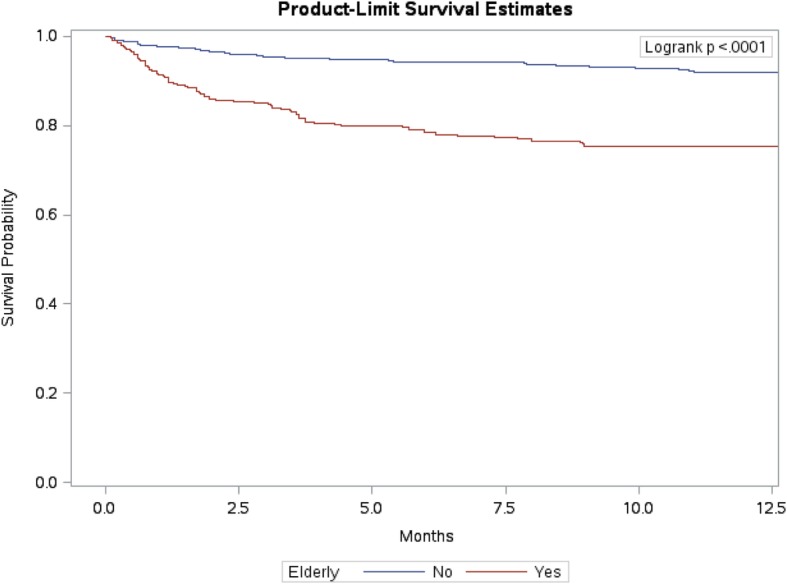
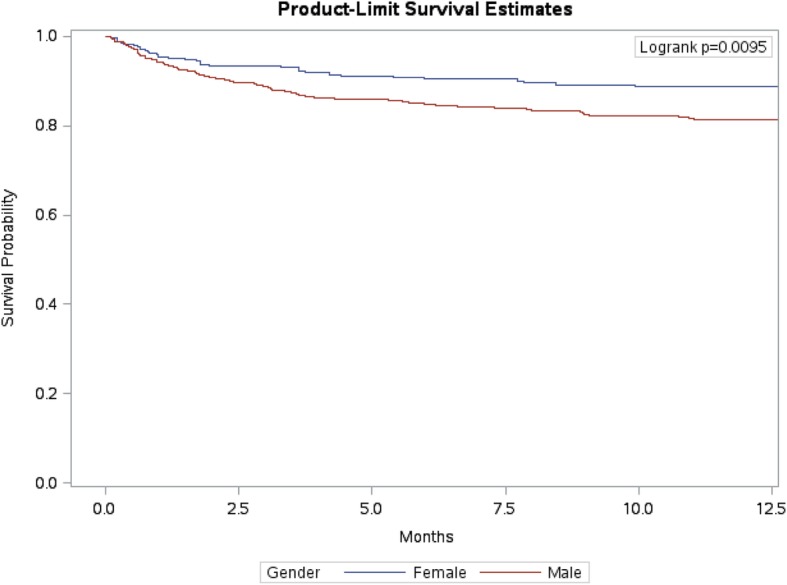
Of the 713 TB patients included in this study, 110 died, giving an average mortality rate of 22 per 1000 person-years (PY; 95% CI: 18.2-26.4). Elderly patients (≥ 60 years) had a higher mortality rate of 36.5 per 1000 PY (95% CI: 28.9-45.5). As age increases by one year, the hazard of mortality increase by 2.4% (aHR: 1.024 [95% CI: 1.009-1.039, P = 0.002]). Higher hazard of mortality was found among males (aHR: 2.014 [95% CI: 1.186-3.418, P = 0.010]). Patients with respiratory and other types of comorbidities and cancer had a higher mortality hazard (aHR: 1.898 [95% CI: 1.005-3.582, P = 0.048]; aHR: 2.346 [95% CI: 1.313-4.192, P = 0.004]; aHR: 3.292 [95% CI: 1.804-6.006, P = 0.001]), respectively. Multidrug-resistant TB (MDR-TB) was found in 2 cases (0.28%) (95% CI: 0.08-1.02), 1.68% were resistant to only one antibiotic, 0.14% had rifampicine-resistant TB (RR-TB), 0.28% had MDR-TB, and 0.14% had extensively drug-resistant TB (XDR-TB).
The mortality rate among TB patients was found to be 22 per 1000 person-year at our center. TB was associated with high mortality rates among males, the elderly, and patients with cancer, respiratory illness, and other comorbidities. Future clinical practice should include establishing an efficient TB diagnostic program and continued hazard assessment of TB treatment options.
结核病(TB)仍然是沙特阿拉伯的一个公共卫生挑战,特别是对老年人而言。本研究旨在估计每 1000 人年中结核病和耐药结核病病例的死亡率,并确定与死亡率相关的因素。
这是一项回顾性队列研究,纳入了 2000 年 1 月 1 日至 2016 年 12 月 31 日期间在利雅得阿卜杜勒阿齐兹国王医疗城诊断的 713 例新结核病病例。患者的病历和微生物学实验室数据库用于确定结核病病例。通过对患者病历进行审查,包括医生笔记、体格检查、放射学(扫描和成像)、实验室检查和随访记录。收集的数据包括人口统计学信息、临床特征、诊断、合并症和死亡率。
在纳入本研究的 713 例结核病患者中,有 110 例死亡,平均死亡率为每 1000 人年 22 例(95%置信区间:18.2-26.4)。老年患者(≥60 岁)的死亡率更高,为每 1000 人年 36.5 例(95%置信区间:28.9-45.5)。年龄每增加 1 岁,死亡风险增加 2.4%(调整后危险比[aHR]:1.024[95%置信区间:1.009-1.039,P=0.002])。男性的死亡风险更高(aHR:2.014[95%置信区间:1.186-3.418,P=0.010])。患有呼吸和其他类型合并症和癌症的患者的死亡风险更高(aHR:1.898[95%置信区间:1.005-3.582,P=0.048];aHR:2.346[95%置信区间:1.313-4.192,P=0.004];aHR:3.292[95%置信区间:1.804-6.006,P=0.001])。发现 2 例(0.28%)耐多药结核病(MDR-TB)(95%置信区间:0.08-1.02),1.68%仅对一种抗生素耐药,0.14%对利福平耐药(RR-TB),0.28%耐 MDR-TB,0.14%耐广泛耐药结核病(XDR-TB)。
我们中心的结核病患者死亡率为每 1000 人年 22 例。结核病与男性、老年人以及患有癌症、呼吸系统疾病和其他合并症的患者的高死亡率相关。未来的临床实践应包括建立有效的结核病诊断计划,并持续评估结核病治疗方案的风险。