Hospital of Stomatology, Sun Yat-sen University, Guangzhou 510060, China; Guangdong Provincial Key Laboratory of Stomatology, Guanghua School of Stomatology, Sun Yat-sen University, Guangzhou 510080, China.
First Affiliated Hospital, Sun Yat-sen University, Guangzhou 510080, China.
EBioMedicine. 2019 Jun;44:275-288. doi: 10.1016/j.ebiom.2019.03.076. Epub 2019 May 13.
R-spondins (Rspo) and leucine-rich repeat-containing G-protein-coupled receptors (LGR) play important roles in development, stem cells survival, and tumorigenicity by activating Wnt signaling pathway. Whether R-spondins-LGR signaling affects the progression of squamous cell carcinoma (SCC) remain unknown. This study aims to uncover the role of R-spodin2/LGR4 in tongue SCC (TSCC).
The expression of Rspo2 in TSCC specimens and its correlation with TSCC clinical outcome were evaluated. Levels of Rspo2 or LGR4 were altered by pharmacological and genetic approaches, and the effects on TSCC progression were assessed.
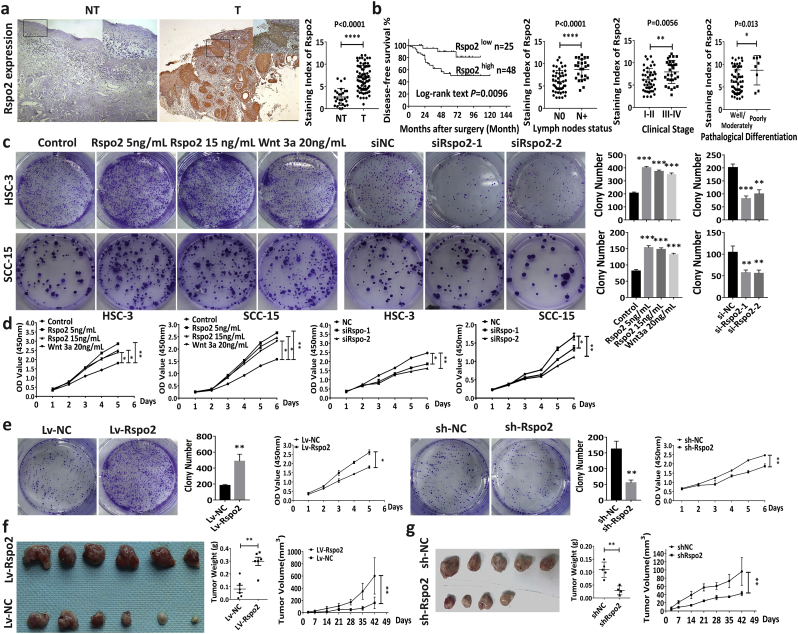
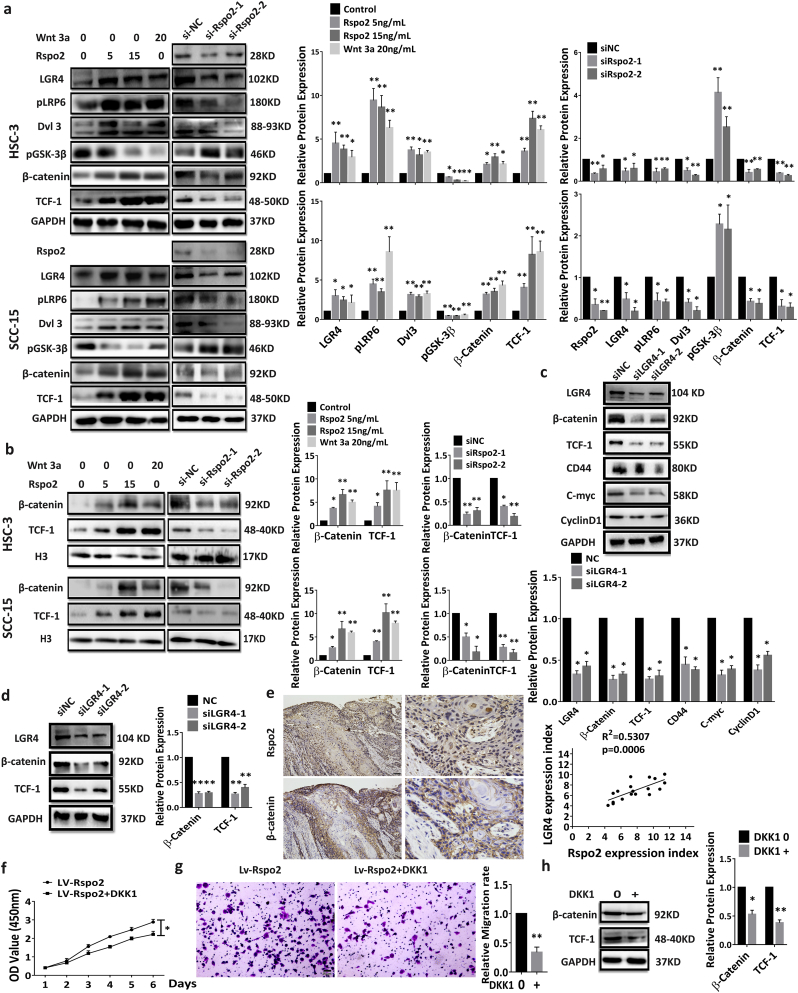
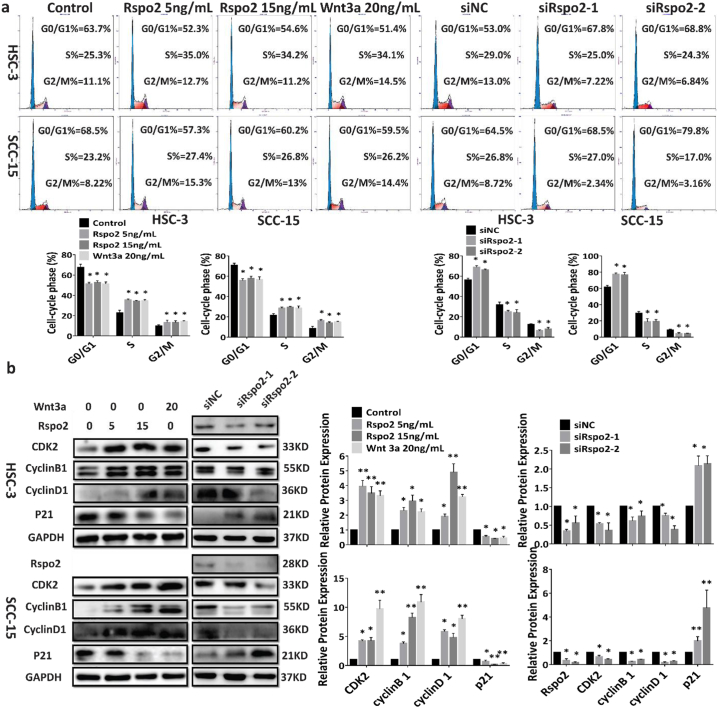
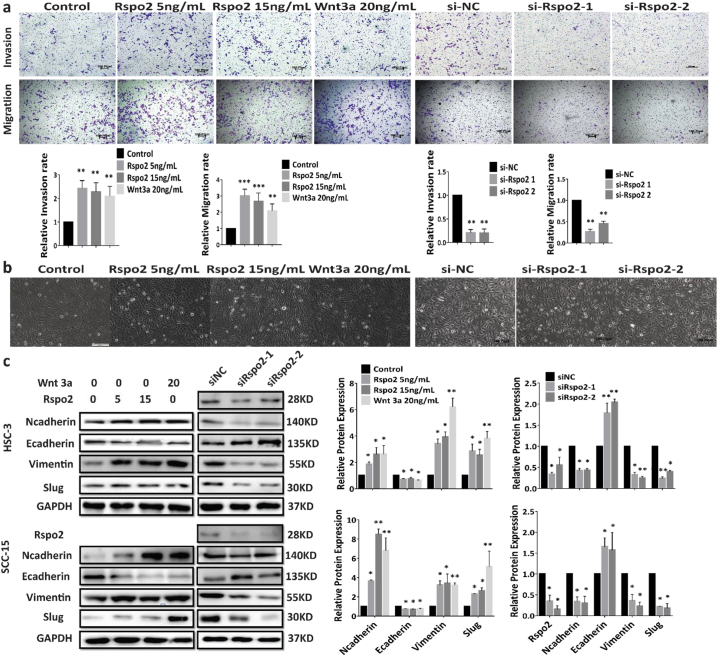
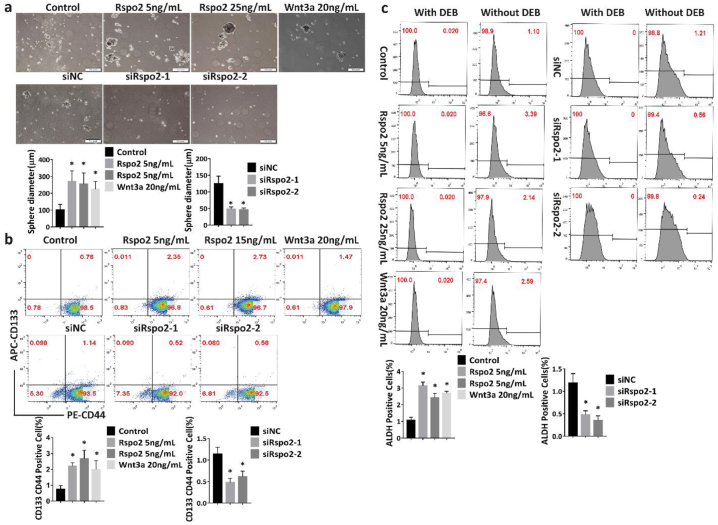
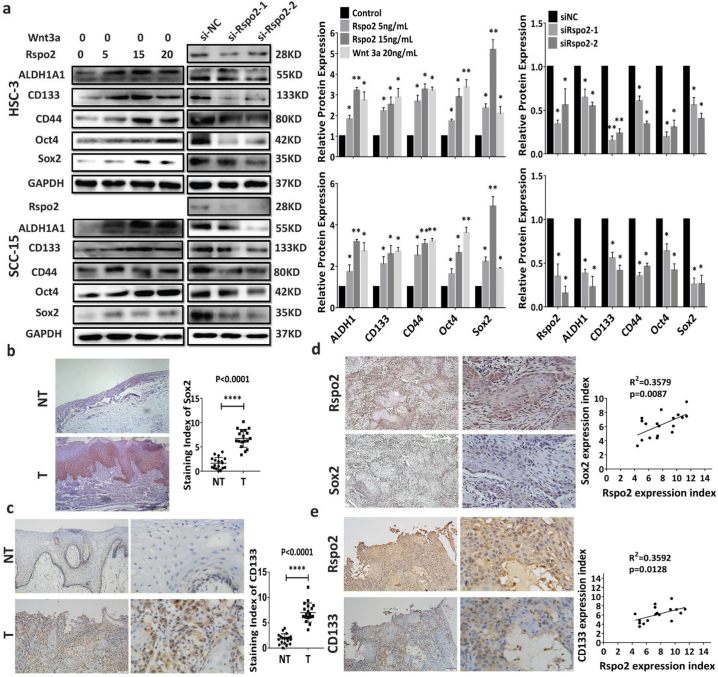
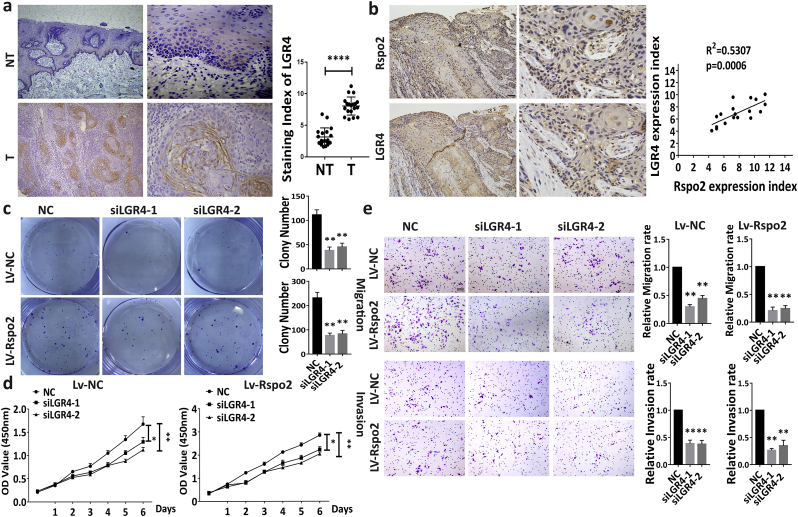
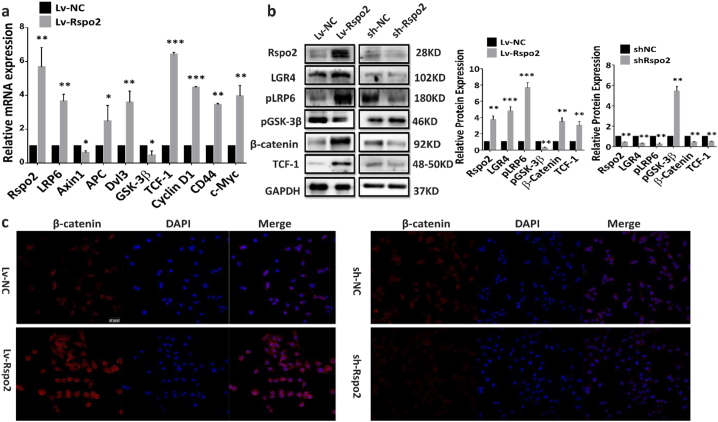
Aberrantly high levels of Rspo2 were detected in TSCC specimens. Its levels were closely related with lymph node metastasis, clinical stage and survival rate in patients with tongue SCC. Exogenous Rspo2 or overexpression of Rspo2 promoted growth, migration and invasion, epithelial-mesenchymal transition (EMT) and stem-like properties in SCC both in vivo and in vitro. Silence of Rspo2 abolished these phenotypes. LGR4 was functionally upregulated by Rspo2 in TSCC. Overexpression of Rspo2 increased, whereas Rspo2 silencing decreased the expression of LGR4, leading to subsequent phosphorylation of LRP6 and nuclear translocation of β-catenin in TSCC cell lines. This nuclear translocation of β-catenin was associated with a significant alteration in TCF-1, a downstream nuclear transcription factor of β-catenin, as well as its target genes: CD44, CyclinD1 and c-Myc.
Rspo2-LGR4 system regulates growth, migration and invasion, EMT and stem-like properties of TSCC via Wnt/β-catenin signaling pathway.
R 应答蛋白(Rspo)和富含亮氨酸重复序列的 G 蛋白偶联受体(LGR)通过激活 Wnt 信号通路在发育、干细胞存活和肿瘤发生中发挥重要作用。R 应答蛋白-LGR 信号是否影响鳞状细胞癌(SCC)的进展尚不清楚。本研究旨在揭示 R 应答蛋白 2(Rspo2)/LGR4 在舌鳞状细胞癌(TSCC)中的作用。
评估 Rspo2 在 TSCC 标本中的表达及其与 TSCC 临床结局的相关性。通过药理学和遗传学方法改变 Rspo2 或 LGR4 的水平,并评估其对 TSCC 进展的影响。
在 TSCC 标本中检测到异常高的 Rspo2 水平。其水平与舌 SCC 患者的淋巴结转移、临床分期和生存率密切相关。外源性 Rspo2 或 Rspo2 的过表达促进了 SCC 在体内和体外的生长、迁移和侵袭、上皮-间充质转化(EMT)和干细胞样特性。沉默 Rspo2 可消除这些表型。LGR4 在 TSCC 中被 Rspo2 功能性地上调。Rspo2 的过表达增加,而 Rspo2 的沉默减少了 LGR4 的表达,导致 LRP6 的磷酸化和β-catenin在 TSCC 细胞系中的核转位。β-catenin 的核转位与 TCF-1 的显著改变有关,TCF-1 是β-catenin 的下游核转录因子,以及其靶基因:CD44、CyclinD1 和 c-Myc。
Rspo2-LGR4 系统通过 Wnt/β-catenin 信号通路调节 TSCC 的生长、迁移和侵袭、EMT 和干细胞样特性。