Eli and Edythe Broad Center of Regeneration Medicine and Stem Cell Research, University of California, San Francisco, CA 94143, USA.
Department of Neurology, University of California, San Francisco, CA 94158, USA.
Science. 2019 May 17;364(6441):685-689. doi: 10.1126/science.aav8130.
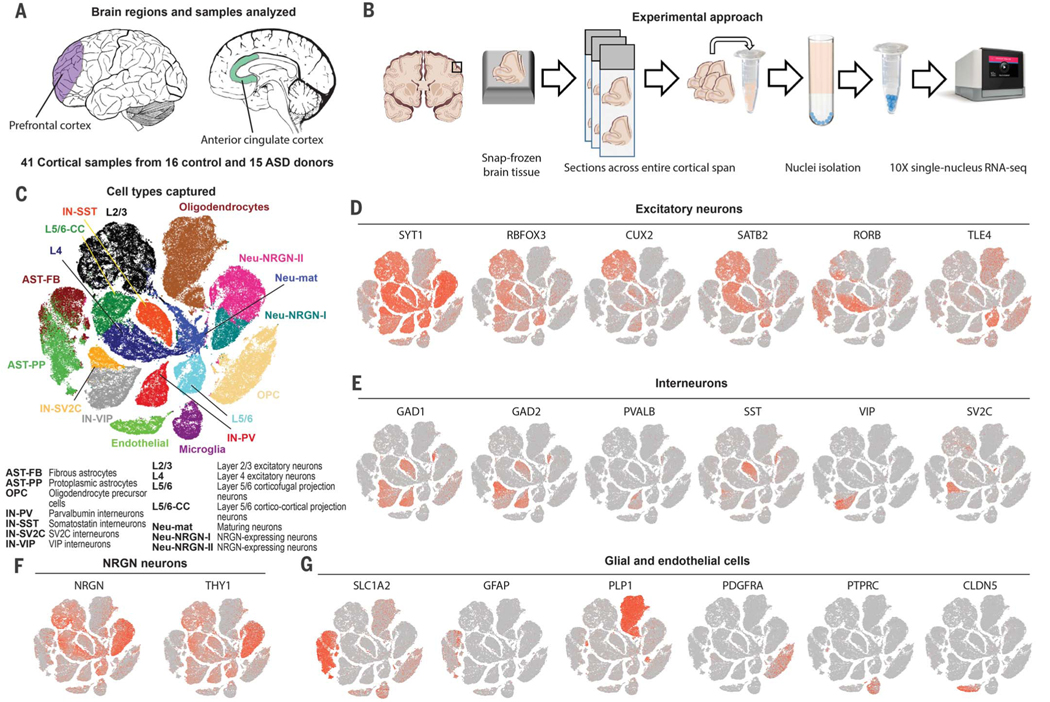
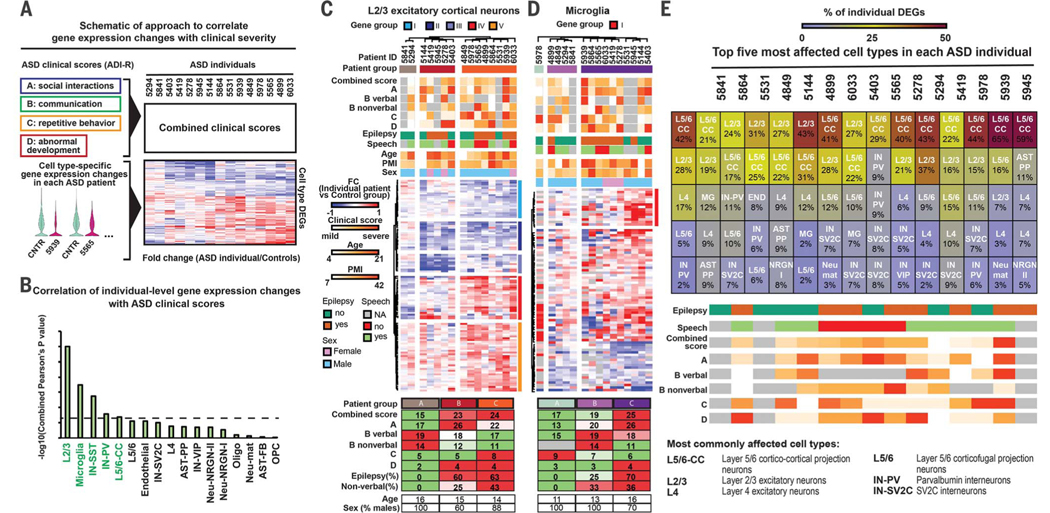
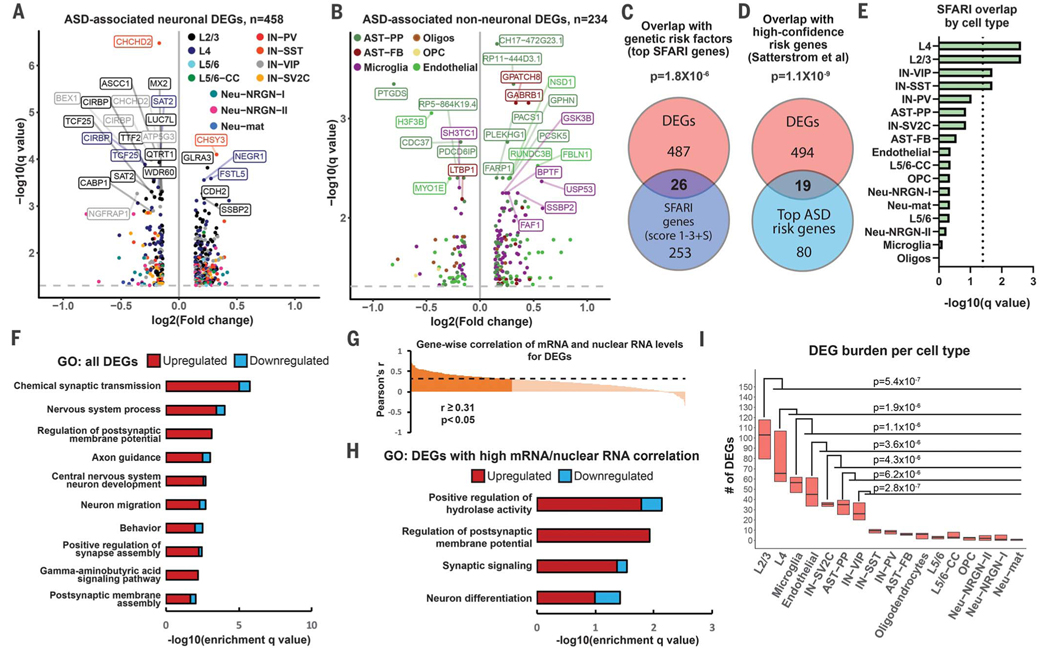
Despite the clinical and genetic heterogeneity of autism, bulk gene expression studies show that changes in the neocortex of autism patients converge on common genes and pathways. However, direct assessment of specific cell types in the brain affected by autism has not been feasible until recently. We used single-nucleus RNA sequencing of cortical tissue from patients with autism to identify autism-associated transcriptomic changes in specific cell types. We found that synaptic signaling of upper-layer excitatory neurons and the molecular state of microglia are preferentially affected in autism. Moreover, our results show that dysregulation of specific groups of genes in cortico-cortical projection neurons correlates with clinical severity of autism. These findings suggest that molecular changes in upper-layer cortical circuits are linked to behavioral manifestations of autism.
尽管自闭症在临床和遗传上存在异质性,但大量基因表达研究表明,自闭症患者的大脑新皮层的变化集中在共同的基因和途径上。然而,直到最近,直接评估自闭症影响的特定脑细胞类型才成为可能。我们使用自闭症患者大脑皮质组织的单细胞 RNA 测序,鉴定出自闭症相关的特定细胞类型的转录组变化。我们发现,上层兴奋性神经元的突触信号和小胶质细胞的分子状态在自闭症中受到优先影响。此外,我们的研究结果表明,皮质-皮质投射神经元中特定基因群的失调与自闭症的临床严重程度相关。这些发现表明,上层皮质回路的分子变化与自闭症的行为表现有关。