College of Life Science and Bioengineering, Beijing University of Technology, 100 Ping Le Yuan, Chaoyang, 100124, Beijing, China.
Sci Rep. 2019 May 16;9(1):7504. doi: 10.1038/s41598-019-43668-8.
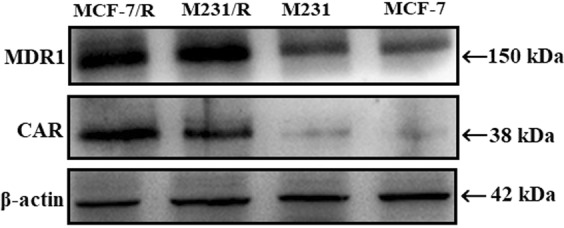
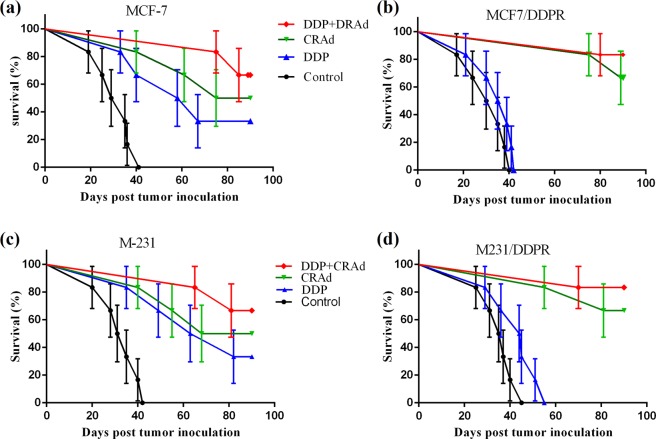
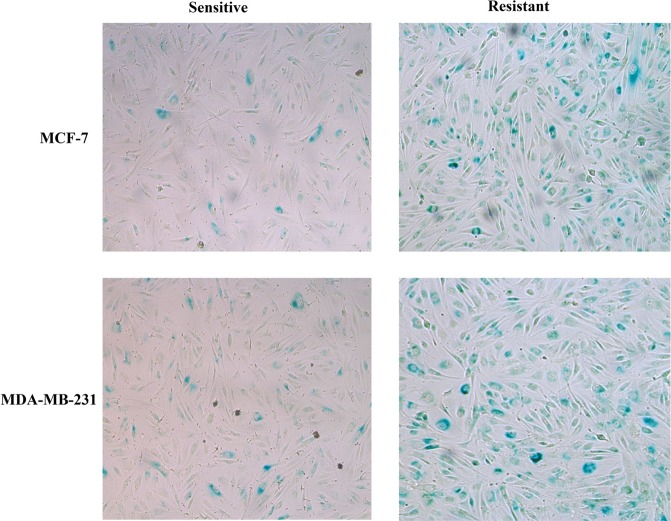
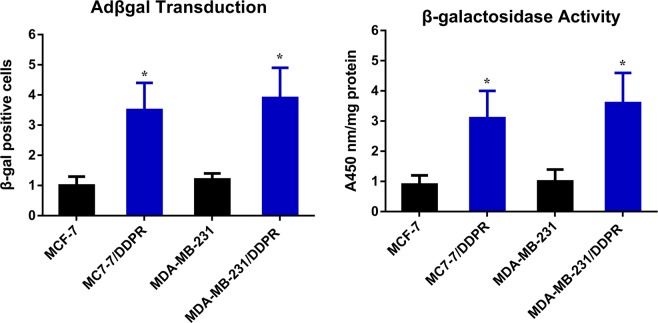
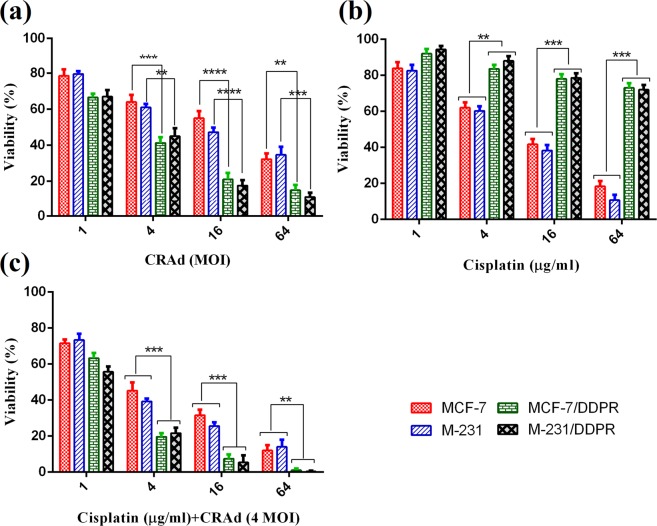
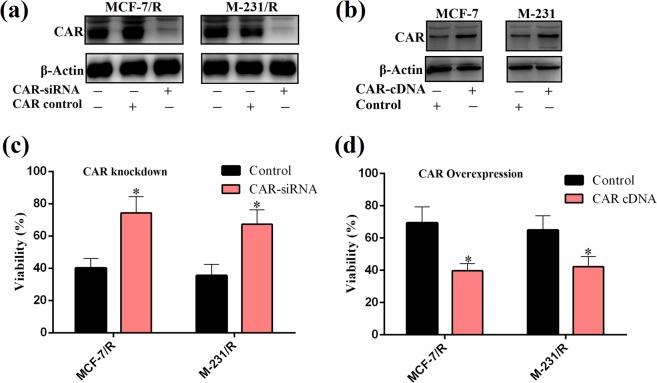
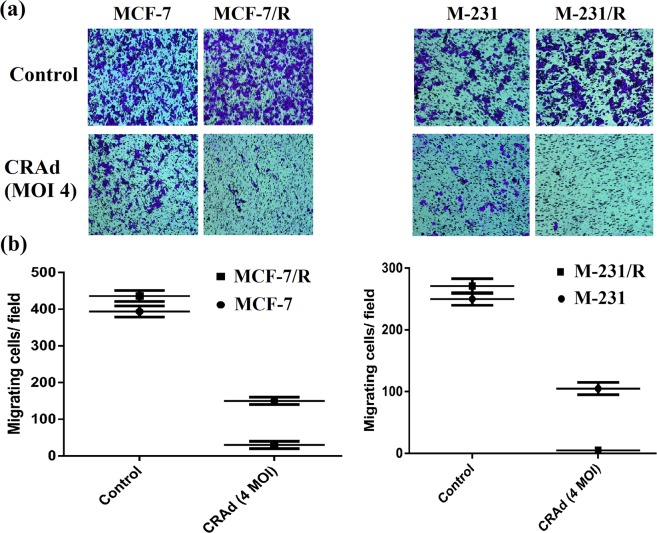
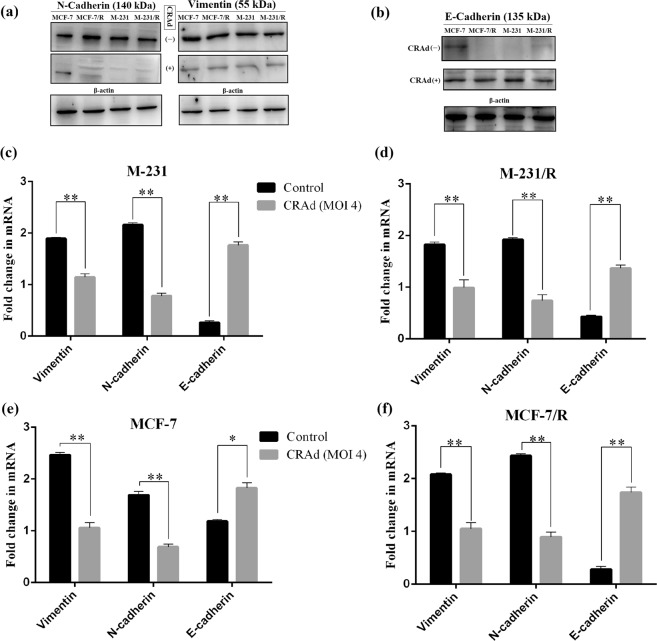
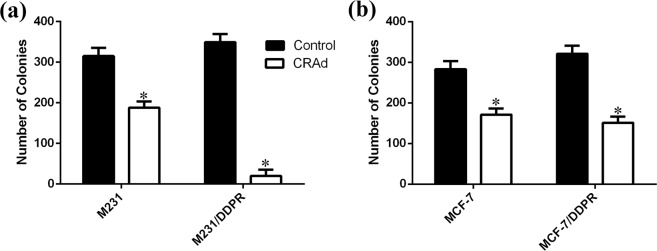
Breast cancer is the most prevalent malignancy in women, which remains untreatable once metastatic. The treatment of advanced breast cancer is restricted due to chemotherapy resistance. We previously investigated anti-cancer potential of a tumor selective oncolytic adenovirus along with cisplatin in three lung cancer cells; A549, H292, and H661, and found it very efficient. To our surprise, this virotherapy showed remarkable cytotoxicity to chemo-resistant cancer cells. Here, we extended our investigation by using two breast cancer cells and their resistant sublines to further validate CRAd's anti-resistance properties. Results of in vitro and in vivo analyses recapitulated the similar anti-tumor potential of CRAd. Based on the molecular analysis through qPCR and western blotting, we suggest upregulation of coxsackievirus-adenovirus receptor (CAR) as a selective vulnerability of chemotherapy-resistant tumors. CAR knockdown and overexpression experiments established its important involvement in the success of CRAd-induced tumor inhibition. Additionally, through transwell migration assay we demonstrate that CRAd might have anti-metastatic properties. Mechanistic analysis show that CRAd pre-treatment could reverse epithelial to mesenchymal transition in breast cancer cells, which needs further verification. These insights may prove to be a timely opportunity for the application of CRAd in recurrent drug-resistant cancers.
乳腺癌是女性最常见的恶性肿瘤,一旦转移就无法治愈。由于化疗耐药,晚期乳腺癌的治疗受到限制。我们之前研究了一种肿瘤选择性溶瘤腺病毒与顺铂联合治疗三种肺癌细胞(A549、H292 和 H661)的抗癌潜力,发现其非常有效。令我们惊讶的是,这种病毒疗法对化疗耐药的癌细胞显示出显著的细胞毒性。在这里,我们使用两种乳腺癌细胞及其耐药亚系进行了进一步的研究,以进一步验证 CRAd 的抗耐药特性。体外和体内分析的结果重现了 CRAd 的相似抗肿瘤潜力。基于 qPCR 和 Western blot 的分子分析,我们提出了 Coxsackie 病毒-腺病毒受体 (CAR) 的上调作为化疗耐药肿瘤的选择性弱点。CAR 敲低和过表达实验证实了其在 CRAd 诱导的肿瘤抑制中的重要作用。此外,通过 Transwell 迁移实验,我们证明 CRAd 可能具有抗转移特性。机制分析表明,CRAd 预处理可以逆转乳腺癌细胞中的上皮间质转化,这需要进一步验证。这些见解可能为 CRAd 在复发性耐药癌症中的应用提供及时的机会。