• 文献检索
  • 文档翻译
  • 深度研究
  • 学术资讯
  • Suppr Zotero 插件Zotero 插件
  • 邀请有礼
  • 套餐&价格
  • 历史记录
应用&插件
Suppr Zotero 插件Zotero 插件浏览器插件Mac 客户端Windows 客户端微信小程序
定价
高级版会员购买积分包购买API积分包
服务
文献检索文档翻译深度研究API 文档MCP 服务
关于我们
关于 Suppr公司介绍联系我们用户协议隐私条款
关注我们

Suppr 超能文献

核心技术专利:CN118964589B侵权必究
粤ICP备2023148730 号-1Suppr @ 2026

文献检索

告别复杂PubMed语法,用中文像聊天一样搜索,搜遍4000万医学文献。AI智能推荐,让科研检索更轻松。

立即免费搜索

文件翻译

保留排版,准确专业,支持PDF/Word/PPT等文件格式,支持 12+语言互译。

免费翻译文档

深度研究

AI帮你快速写综述,25分钟生成高质量综述,智能提取关键信息,辅助科研写作。

立即免费体验

社交焦虑的儿童是贫穷的还是高级的心理解读者?

Are Socially Anxious Children Poor or Advanced Mindreaders?

机构信息

University of Amsterdam.

Erasmus University Rotterdam.

出版信息

Child Dev. 2019 Jul;90(4):1424-1441. doi: 10.1111/cdev.13248. Epub 2019 May 16.

DOI:10.1111/cdev.13248
PMID:31099053
原文链接:https://pmc.ncbi.nlm.nih.gov/articles/PMC6852401/
Abstract

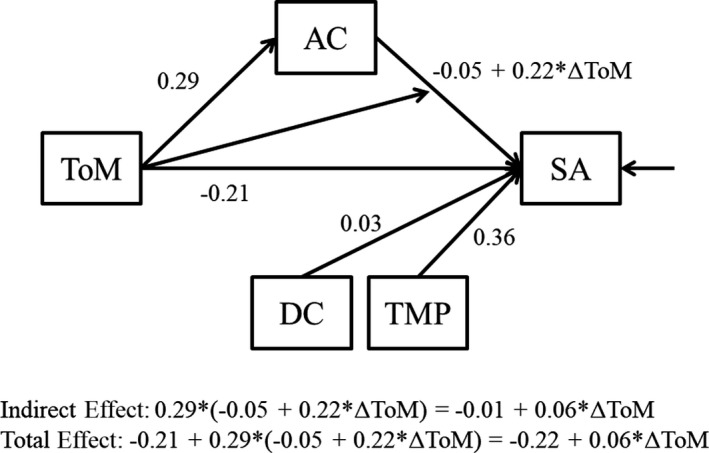
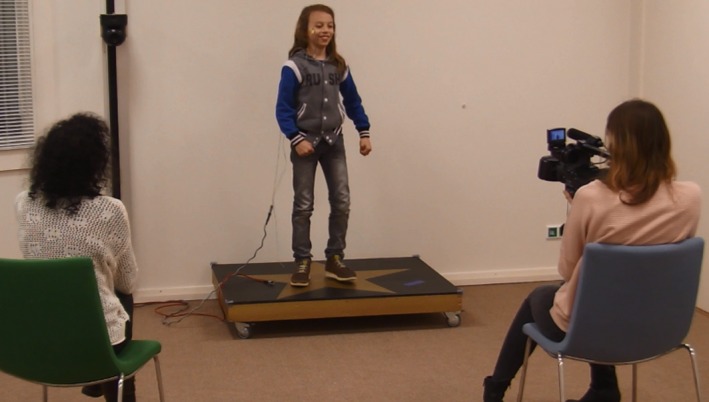
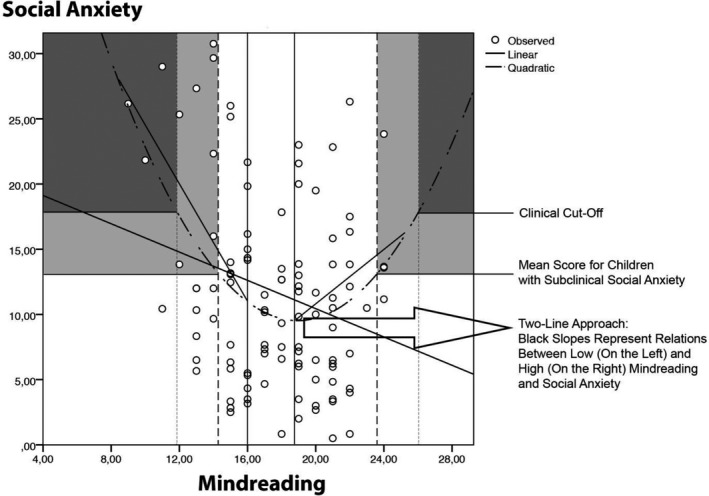
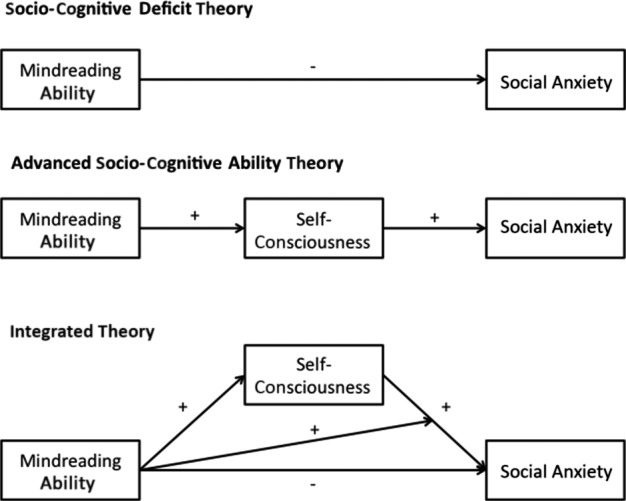
Why are some children more socially anxious than others? One theory holds that socially anxious children are poor mindreaders, which hampers their social interactions; another that socially anxious children are advanced mindreaders leading to heightened self-consciousness in social situations. To test these theories simultaneously, this study (N = 105, ages 8-12) assessed children's mindreading (accuracy in detecting mental states from the eye region), self-consciousness (indexed as physiological blushing during public performance), and social anxiety levels. Results support both theories, showing a quadratic relation between mindreading and social anxiety. Low mindreading was related to clinical levels of social anxiety. High mindreading was related to subclinical levels of social anxiety through blushing. Our findings suggest two social-cognitive pathways to heightened social anxiety.

摘要

为什么有些孩子比其他孩子更社交焦虑?一种理论认为,社交焦虑的孩子是糟糕的心理解读者,这阻碍了他们的社交互动;另一种理论则认为,社交焦虑的孩子是高级的心理解读者,这导致他们在社交场合中更加自我意识。为了同时检验这些理论,本研究(N=105,年龄 8-12 岁)评估了儿童的心理解读能力(从眼部区域准确识别心理状态的能力)、自我意识(在公开表演时的生理脸红程度)和社交焦虑水平。结果支持了这两种理论,表明心理解读和社交焦虑之间存在二次关系。低心理解读能力与临床水平的社交焦虑有关。高心理解读能力则通过脸红与亚临床水平的社交焦虑有关。我们的发现表明,有两种社交认知途径会导致社交焦虑加剧。
https://cdn.ncbi.nlm.nih.gov/pmc/blobs/9c08/6852401/013767fabb61/CDEV-90-1424-g004.jpg
https://cdn.ncbi.nlm.nih.gov/pmc/blobs/9c08/6852401/e2a8412a38e7/CDEV-90-1424-g001.jpg
https://cdn.ncbi.nlm.nih.gov/pmc/blobs/9c08/6852401/d1dfdeb19d6e/CDEV-90-1424-g002.jpg
https://cdn.ncbi.nlm.nih.gov/pmc/blobs/9c08/6852401/449cdf4268e6/CDEV-90-1424-g003.jpg
https://cdn.ncbi.nlm.nih.gov/pmc/blobs/9c08/6852401/013767fabb61/CDEV-90-1424-g004.jpg
https://cdn.ncbi.nlm.nih.gov/pmc/blobs/9c08/6852401/e2a8412a38e7/CDEV-90-1424-g001.jpg
https://cdn.ncbi.nlm.nih.gov/pmc/blobs/9c08/6852401/d1dfdeb19d6e/CDEV-90-1424-g002.jpg
https://cdn.ncbi.nlm.nih.gov/pmc/blobs/9c08/6852401/449cdf4268e6/CDEV-90-1424-g003.jpg
https://cdn.ncbi.nlm.nih.gov/pmc/blobs/9c08/6852401/013767fabb61/CDEV-90-1424-g004.jpg

相似文献

1
Are Socially Anxious Children Poor or Advanced Mindreaders?社交焦虑的儿童是贫穷的还是高级的心理解读者?
Child Dev. 2019 Jul;90(4):1424-1441. doi: 10.1111/cdev.13248. Epub 2019 May 16.
2
When gushing leads to blushing: Inflated praise leads socially anxious children to blush.当滔滔不绝导致脸红:过度的赞扬会让社交焦虑的孩子脸红。
Behav Res Ther. 2018 Jul;106:1-7. doi: 10.1016/j.brat.2018.04.003. Epub 2018 Apr 19.
3
Blushing in early childhood: Feeling coy or socially anxious?幼儿脸红:是害羞还是社交焦虑?
Emotion. 2016 Jun;16(4):475-487. doi: 10.1037/emo0000131. Epub 2015 Dec 7.
4
The causal role of self-awareness in blushing-anxious, socially-anxious and social phobics individuals.自我意识在脸红焦虑、社交焦虑和社交恐惧症个体中的因果作用。
Behav Res Ther. 2002 Dec;40(12):1367-84. doi: 10.1016/s0005-7967(01)00096-1.
5
Social Anxiety Symptoms in Young Children: Investigating the Interplay of Theory of Mind and Expressions of Shyness.幼儿社交焦虑症状:探究心理理论与害羞表现的相互作用
J Abnorm Child Psychol. 2017 Jul;45(5):997-1011. doi: 10.1007/s10802-016-0206-0.
6
Autonomic arousal in children of parents with and without social anxiety disorder: a high-risk study.患有和未患有社交焦虑障碍的父母的子女的自主神经唤醒:一项高危研究。
J Child Psychol Psychiatry. 2016 Sep;57(9):1047-55. doi: 10.1111/jcpp.12563. Epub 2016 May 2.
7
Threat perception bias in nonreferred, socially anxious children.未被转诊的社交焦虑儿童的威胁感知偏差。
J Clin Child Psychol. 2000 Sep;29(3):348-59. doi: 10.1207/S15374424JCCP2903_6.
8
The relationship between blushing propensity, social anxiety and facial blood flow during embarrassment.尴尬时脸红倾向、社交焦虑与面部血流量之间的关系。
Cogn Emot. 2012;26(3):561-7. doi: 10.1080/02699931.2011.595775. Epub 2011 Sep 26.
9
The effect of facial blood flow on ratings of blushing and negative affect during an embarrassing task: preliminary findings.面部血流对尴尬任务中脸红和负面情绪评价的影响:初步研究结果。
J Anxiety Disord. 2012 Mar;26(2):305-10. doi: 10.1016/j.janxdis.2011.12.012. Epub 2011 Dec 30.
10
Trajectories of socially anxious behavior from age 5 to 13: Temperamental and sociocognitive pathways.从 5 岁到 13 岁的社交焦虑行为轨迹:气质和社会认知途径。
Child Dev. 2022 Sep;93(5):1334-1346. doi: 10.1111/cdev.13767. Epub 2022 Apr 11.

引用本文的文献

1
Impact of mask use on facial emotion recognition in individuals with subclinical social anxiety: an eye-tracking study.口罩使用对亚临床社交焦虑个体面部情绪识别的影响:一项眼动追踪研究。
Cogn Res Princ Implic. 2025 Jun 2;10(1):25. doi: 10.1186/s41235-025-00635-4.
2
Putting the Social in Emotions: The Effect of Audience Presence on Pride and Embarrassment Across Ontogeny.将社交融入情感:观众在场对个体发育过程中自豪感和尴尬感的影响。
Dev Sci. 2025 Jul;28(4):e70024. doi: 10.1111/desc.70024.
3
Relationships between empathy, executive functions, and internalizing and externalizing symptoms in early adolescents.

本文引用的文献

1
When gushing leads to blushing: Inflated praise leads socially anxious children to blush.当滔滔不绝导致脸红:过度的赞扬会让社交焦虑的孩子脸红。
Behav Res Ther. 2018 Jul;106:1-7. doi: 10.1016/j.brat.2018.04.003. Epub 2018 Apr 19.
2
Putting Ostracism into Perspective: Young Children Tell More Mentalistic Stories after Exclusion, But Not When Anxious.正确看待排斥:幼儿在被排斥后会讲述更多心理主义故事,但焦虑时则不然。
Front Psychol. 2016 Dec 22;7:1926. doi: 10.3389/fpsyg.2016.01926. eCollection 2016.
3
Social Anxiety Symptoms in Young Children: Investigating the Interplay of Theory of Mind and Expressions of Shyness.
青少年早期同理心、执行功能与内外化症状的关系。
BMC Psychiatry. 2024 Nov 28;24(1):858. doi: 10.1186/s12888-024-06324-8.
4
Research hot topics and frontiers in social anxiety over the past decade: a CiteSpace bibliometric analysis based on Web of Science database from 2013 to 2023.过去十年社交焦虑的研究热点与前沿:基于2013年至2023年Web of Science数据库的CiteSpace文献计量分析
Front Psychiatry. 2024 Oct 23;15:1421907. doi: 10.3389/fpsyt.2024.1421907. eCollection 2024.
5
Emotional and socio-cognitive processing in young children with symptoms of anxiety.焦虑症状幼儿的情绪和社会认知加工。
Eur Child Adolesc Psychiatry. 2023 Oct;32(10):2077-2088. doi: 10.1007/s00787-022-02050-2. Epub 2022 Jul 21.
6
Trajectories of socially anxious behavior from age 5 to 13: Temperamental and sociocognitive pathways.从 5 岁到 13 岁的社交焦虑行为轨迹:气质和社会认知途径。
Child Dev. 2022 Sep;93(5):1334-1346. doi: 10.1111/cdev.13767. Epub 2022 Apr 11.
7
Theory of Mind as a Mechanism That Accounts for the Continuity or Discontinuity of Behavioral Inhibition: A Developmentally Informed Model of Risk for Social Anxiety.心智理论作为解释行为抑制连续性或非连续性的机制:社会焦虑风险的发展信息模型。
Res Child Adolesc Psychopathol. 2021 Oct;49(10):1333-1344. doi: 10.1007/s10802-021-00831-y. Epub 2021 May 26.
8
Selective Mutism and Its Relations to Social Anxiety Disorder and Autism Spectrum Disorder.选择性缄默症及其与社交焦虑症和自闭症谱系障碍的关系。
Clin Child Fam Psychol Rev. 2021 Jun;24(2):294-325. doi: 10.1007/s10567-020-00342-0. Epub 2021 Jan 19.
9
The unique contribution of blushing to the development of social anxiety disorder symptoms: results from a longitudinal study.脸红对社交焦虑障碍症状发展的独特贡献:一项纵向研究的结果。
J Child Psychol Psychiatry. 2020 Dec;61(12):1339-1348. doi: 10.1111/jcpp.13221. Epub 2020 Feb 20.
幼儿社交焦虑症状:探究心理理论与害羞表现的相互作用
J Abnorm Child Psychol. 2017 Jul;45(5):997-1011. doi: 10.1007/s10802-016-0206-0.
4
Effects of adolescent sociocognitive development on the cortisol response to social evaluation.青少年社会认知发展对皮质醇对社会评价反应的影响。
Dev Psychol. 2016 Jul;52(7):1151-63. doi: 10.1037/dev0000133. Epub 2016 May 12.
5
Autonomic arousal in children of parents with and without social anxiety disorder: a high-risk study.患有和未患有社交焦虑障碍的父母的子女的自主神经唤醒:一项高危研究。
J Child Psychol Psychiatry. 2016 Sep;57(9):1047-55. doi: 10.1111/jcpp.12563. Epub 2016 May 2.
6
Predicting stress from the ability to eavesdrop on feelings: Emotional intelligence and testosterone jointly predict cortisol reactivity.从窥探情绪的能力预测压力:情绪智力和睾丸激素共同预测皮质醇反应。
Emotion. 2016 Sep;16(6):815-25. doi: 10.1037/emo0000134. Epub 2016 Apr 11.
7
Theory of mind in social anxiety disorder, depression, and comorbid conditions.社交焦虑障碍、抑郁症及共病情况下的心理理论。
J Anxiety Disord. 2016 Jan;37:71-7. doi: 10.1016/j.janxdis.2015.11.004. Epub 2015 Nov 22.
8
Blushing in early childhood: Feeling coy or socially anxious?幼儿脸红:是害羞还是社交焦虑?
Emotion. 2016 Jun;16(4):475-487. doi: 10.1037/emo0000131. Epub 2015 Dec 7.
9
Theory of mind impairments in social anxiety disorder.社交焦虑障碍中的心理理论缺陷
Behav Ther. 2014 Jul;45(4):530-40. doi: 10.1016/j.beth.2014.02.010. Epub 2014 Mar 1.
10
Social anxiety and emotion knowledge: a meta-analysis.社交焦虑与情绪知识:一项元分析。
J Anxiety Disord. 2013 Jan;27(1):98-108. doi: 10.1016/j.janxdis.2012.09.005. Epub 2012 Nov 9.