MRC Centre for Molecular Bacteriology and Infection, Department of Life Sciences, Imperial College London, London, SW7 2AZ, UK.
Division of Biosciences, Department of Life Sciences, College of Health and Life Sciences, Brunel University London, Uxbridge, UB8 3PH, UK.
Mol Microbiol. 2019 Aug;112(2):632-648. doi: 10.1111/mmi.14279. Epub 2019 Jun 4.
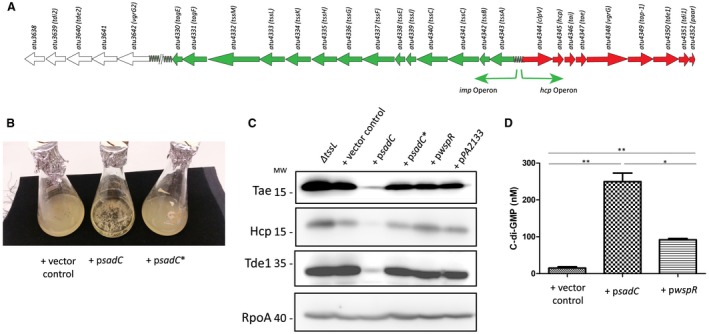
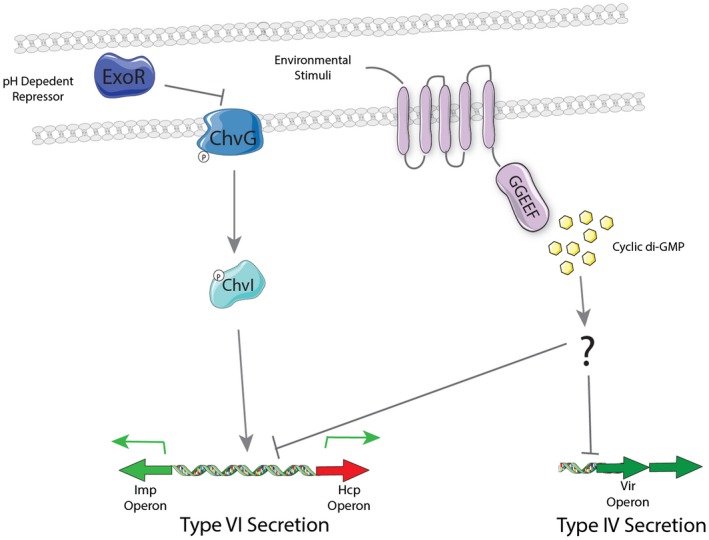
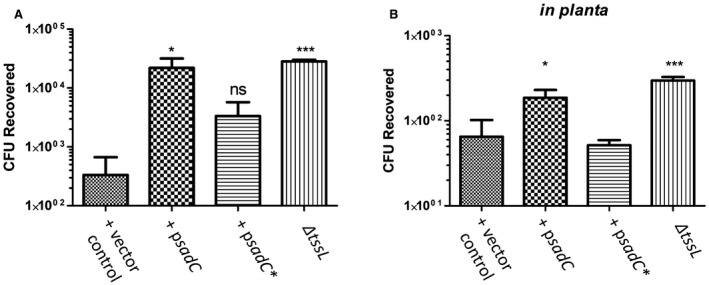
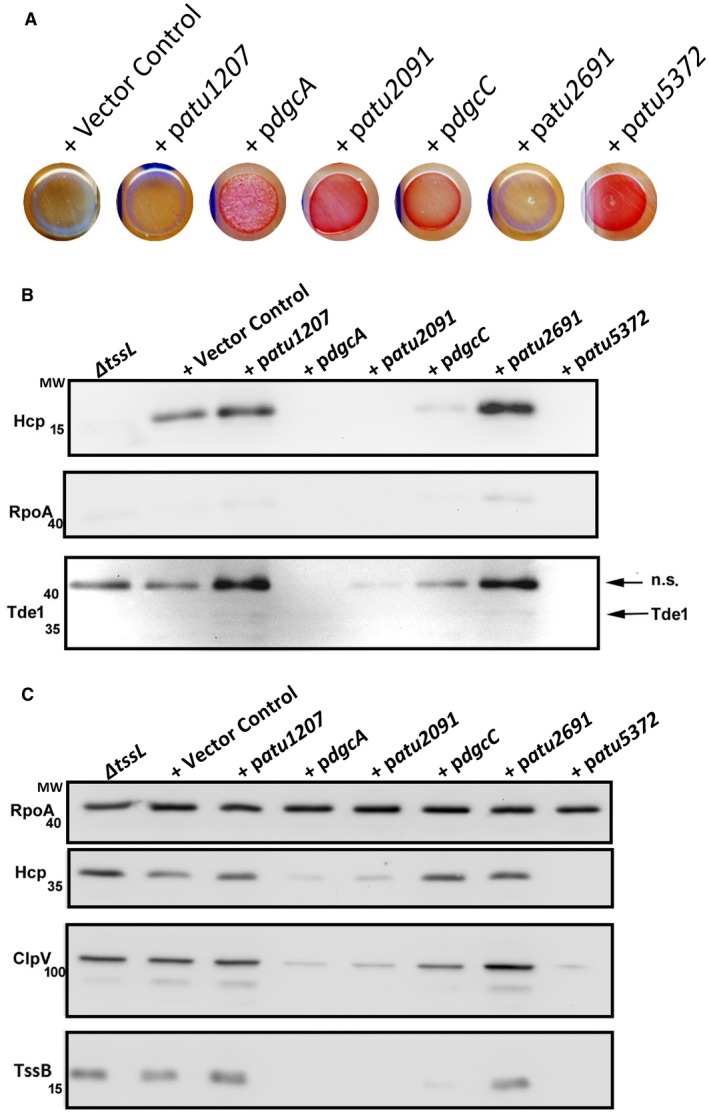
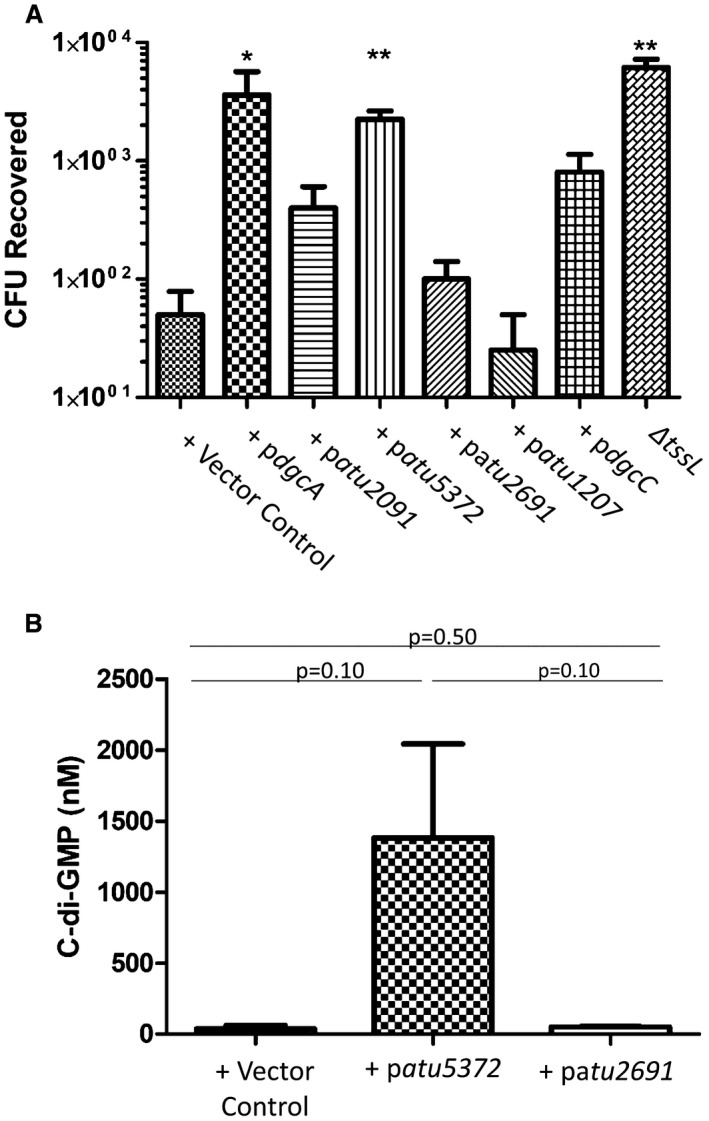
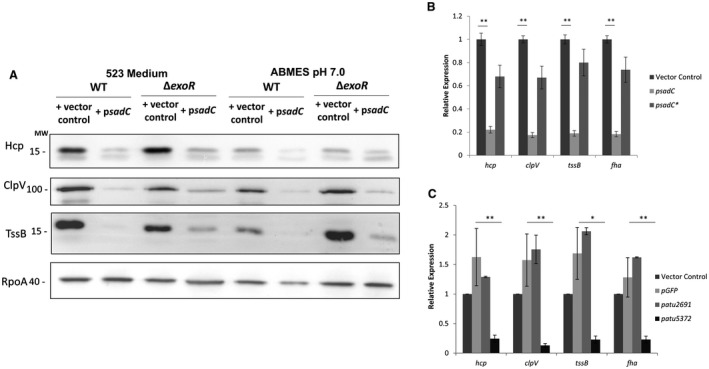
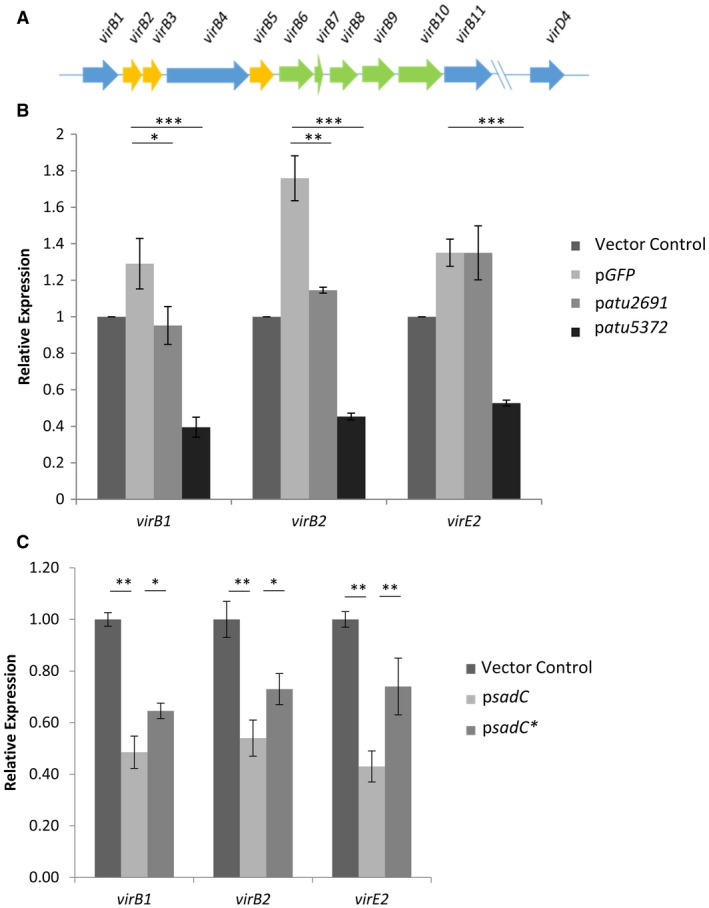
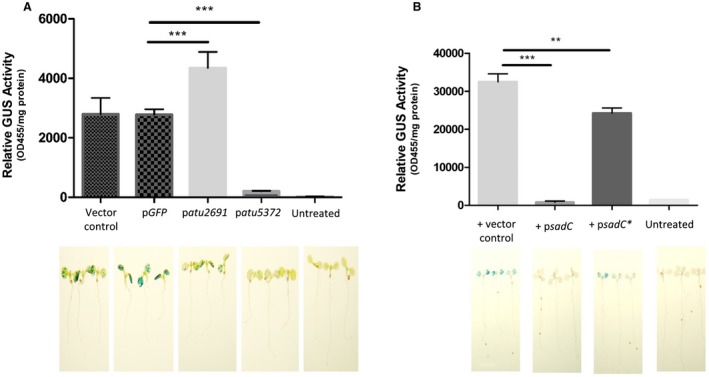
The Type VI secretion system (T6SS) is a bacterial nanomachine that delivers effector proteins into prokaryotic and eukaryotic preys. This secretion system has emerged as a key player in regulating the microbial diversity in a population. In the plant pathogen Agrobacterium tumefaciens, the signalling cascades regulating the activity of this secretion system are poorly understood. Here, we outline how the universal eubacterial second messenger cyclic di-GMP impacts the production of T6SS toxins and T6SS structural components. We demonstrate that this has a significant impact on the ability of the phytopathogen to compete with other bacterial species in vitro and in planta. Our results suggest that, as opposed to other bacteria, c-di-GMP turns down the T6SS in A. tumefaciens thus impacting its ability to compete with other bacterial species within the rhizosphere. We also demonstrate that elevated levels of c-di-GMP within the cell decrease the activity of the Type IV secretion system (T4SS) and subsequently the capacity of A. tumefaciens to transform plant cells. We propose that such peculiar control reflects on c-di-GMP being a key second messenger that silences energy-costing systems during early colonization phase and biofilm formation, while low c-di-GMP levels unleash T6SS and T4SS to advance plant colonization.
VI 型分泌系统(T6SS)是一种将效应蛋白输送到原核和真核猎物中的细菌纳米机器。这个分泌系统已成为调节种群中微生物多样性的关键因素。在植物病原体根癌农杆菌中,调节该分泌系统活性的信号级联反应知之甚少。在这里,我们概述了普遍存在的真细菌第二信使环二鸟苷酸 (c-di-GMP) 如何影响 T6SS 毒素和 T6SS 结构成分的产生。我们证明,这对植物病原体在体外和体内与其他细菌物种竞争的能力有重大影响。我们的结果表明,与其他细菌不同,c-di-GMP 下调了根癌农杆菌中的 T6SS,从而影响了其与根际中其他细菌物种竞争的能力。我们还证明,细胞内 c-di-GMP 水平的升高会降低 IV 型分泌系统(T4SS)的活性,从而降低根癌农杆菌转化植物细胞的能力。我们提出,这种特殊的控制反映了 c-di-GMP 是一种关键的第二信使,它在早期定植阶段和生物膜形成过程中沉默能源消耗系统,而低 c-di-GMP 水平则释放 T6SS 和 T4SS 以促进植物定植。