1 Microbiological Diagnostic Unit Public Health Laboratory at the University of Melbourne, The Peter Doherty Institute for Infection and Immunity, Melbourne, Australia.
2 National Centre for Epidemiology and Population Health, The Australian National University, Canberra, Australia.
Microb Genom. 2019 May;5(5). doi: 10.1099/mgen.0.000268. Epub 2019 May 20.
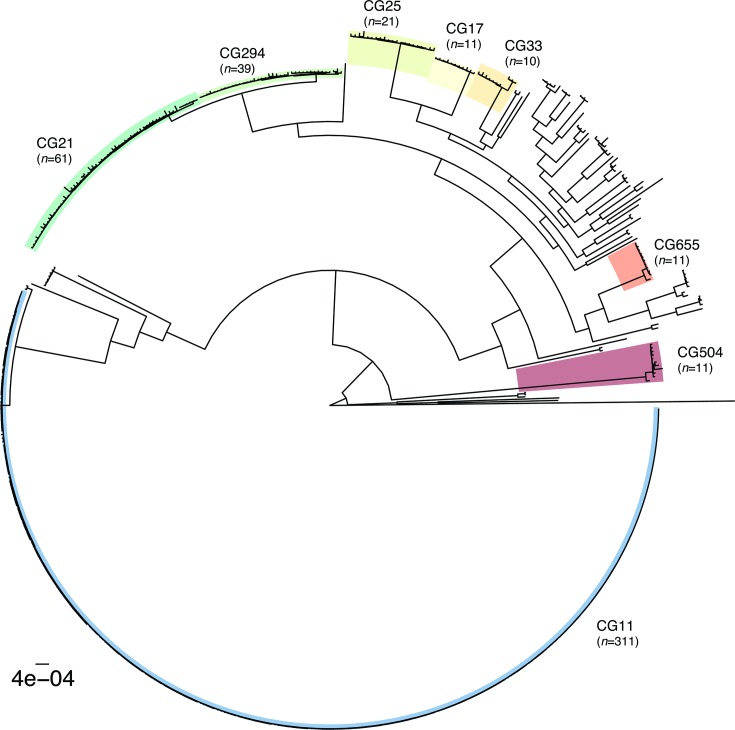
Shiga-toxin-producing Escherichia coli (STEC) infection is an important global cause of foodborne disease. To date however, genomics-based studies of STEC have been predominately focused upon STEC collected in the Northern Hemisphere. Here, we demonstrate the population structure of 485 STEC isolates in Australia, and show that several clonal groups (CGs) common to Australia were infrequently detected in a representative selection of contemporary STEC genomes from around the globe. Further, phylogenetic analysis demonstrated that lineage II of the global O157:H7 STEC was most prevalent in Australia, and was characterized by a frameshift mutation in flgF, resulting in the H-non-motile phenotype. Strong concordance between in silico and phenotypic serotyping was observed, along with concordance between in silico and conventional detection of stx genes. These data represent the most comprehensive STEC analysis from the Southern Hemisphere, and provide a framework for future national genomics-based surveillance of STEC in Australia.
产志贺毒素大肠杆菌(STEC)感染是全球重要的食源性疾病病因。然而,目前基于基因组学的 STEC 研究主要集中在北半球采集的 STEC 上。在这里,我们展示了澳大利亚 485 株 STEC 分离株的种群结构,并表明在全球具有代表性的当代 STEC 基因组样本中,澳大利亚常见的几个克隆群(CGs)很少被检测到。此外,系统发育分析表明,全球 O157:H7 STEC 的谱系 II 在澳大利亚最为流行,其特点是 flgF 中的移码突变,导致 H-非运动表型。在表型血清分型与计算机模拟之间观察到了很强的一致性,并且在计算机模拟与stx 基因的常规检测之间也存在一致性。这些数据代表了南半球最全面的 STEC 分析,并为未来澳大利亚基于基因组学的 STEC 国家监测提供了框架。