National Infection Service, Public Health England, United Kingdom.
Euro Surveill. 2019 Jan;24(4). doi: 10.2807/1560-7917.ES.2019.24.4.1800346.
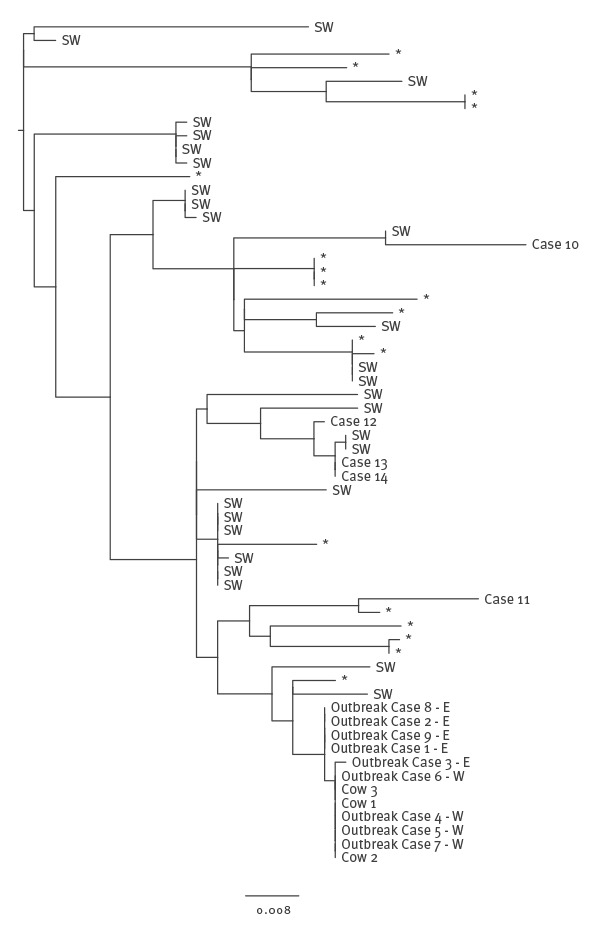
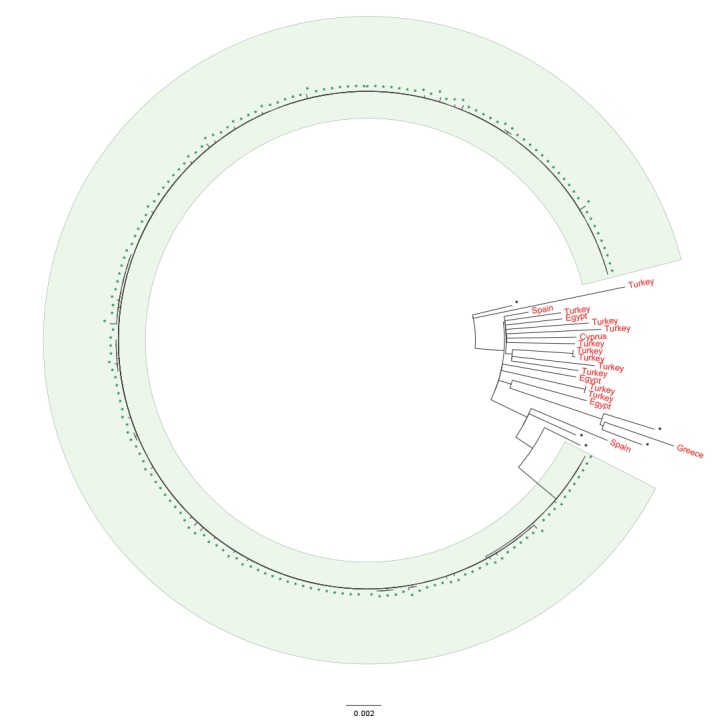
We aim to provide insight and guidance on the utility of whole genome sequencing (WGS) data for investigating food-borne outbreaks of Shiga toxin-producing (STEC) O157:H7 in England between 2013 and 2017. Analysis of WGS data delivered an unprecedented level of strain discrimination when compared with multilocus variable number tandem repeat analysis. The robustness of the WGS method ensured confidence in the microbiological identification of linked cases, even when epidemiological links were obscured. There was evidence that phylogeny derived from WGS data can be used to trace the geographical origin of an isolate. Further analysis of the phylogenetic data provided insight on the evolutionary context of emerging pathogenic strains. Publically available WGS data linked to the clinical, epidemiological and environmental context of the sequenced strain has improved trace back investigations during outbreaks. Expanding the use of WGS-based typing analysis globally will ensure the rapid implementation of interventions to protect public health, inform risk assessment and facilitate the management of national and international food-borne outbreaks of STEC O157:H7.
我们旨在提供有关利用全基因组测序 (WGS) 数据调查 2013 年至 2017 年间英格兰食源性产志贺毒素 (STEC) O157:H7 暴发的实用信息和指导。与多位点可变数串联重复分析相比,WGS 数据分析提供了前所未有的菌株区分水平。WGS 方法的稳健性确保了对相关病例的微生物学鉴定的信心,即使流行病学联系被掩盖。有证据表明,来自 WGS 数据的系统发育可用于追踪分离株的地理来源。对系统发育数据的进一步分析提供了有关新兴致病菌株进化背景的见解。与测序菌株的临床、流行病学和环境背景相关的公开可用 WGS 数据提高了暴发期间的追溯调查。在全球范围内扩大基于 WGS 的分型分析的使用将确保迅速实施干预措施以保护公众健康、进行风险评估并促进国家和国际食源性 O157:H7 型 STEC 暴发的管理。