Department of Anesthesiology and Perioperative Care, University of California, Irvine, Irvine, United States.
Irvine Center for Addiction Neuroscience, University of California, Irvine, Irvine, United States.
Elife. 2019 May 20;8:e43551. doi: 10.7554/eLife.43551.
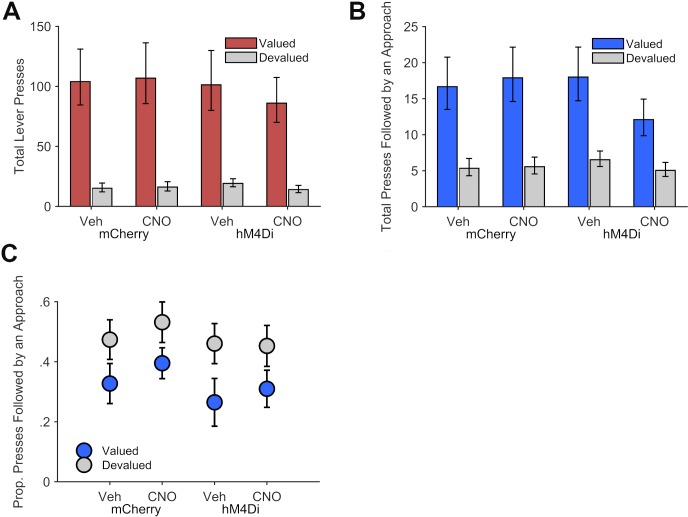
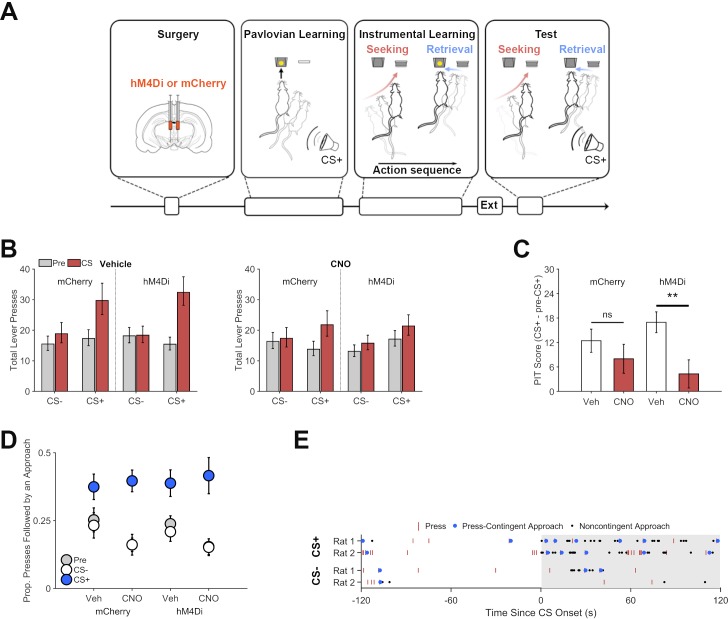
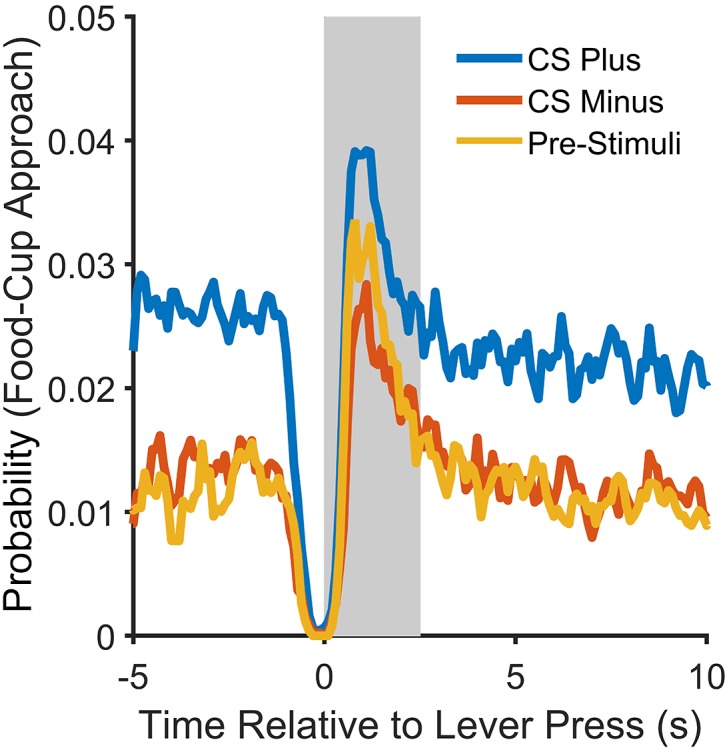
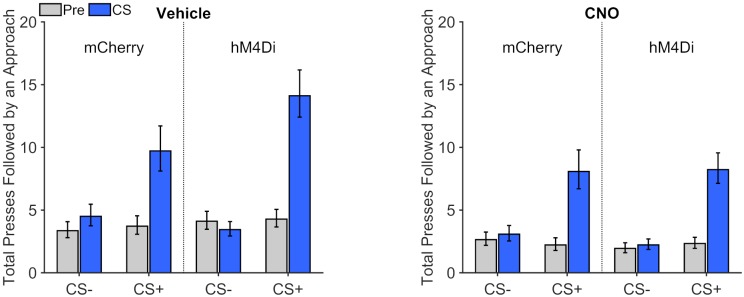
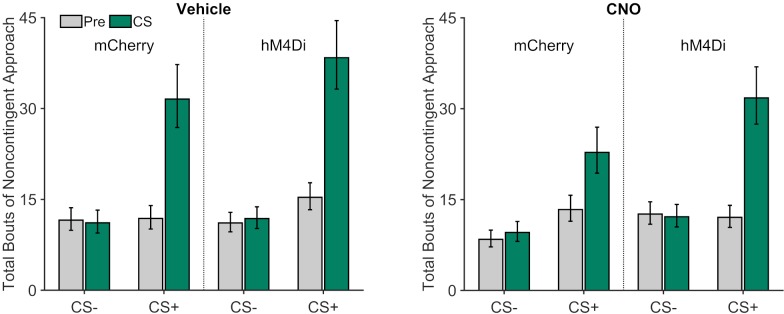
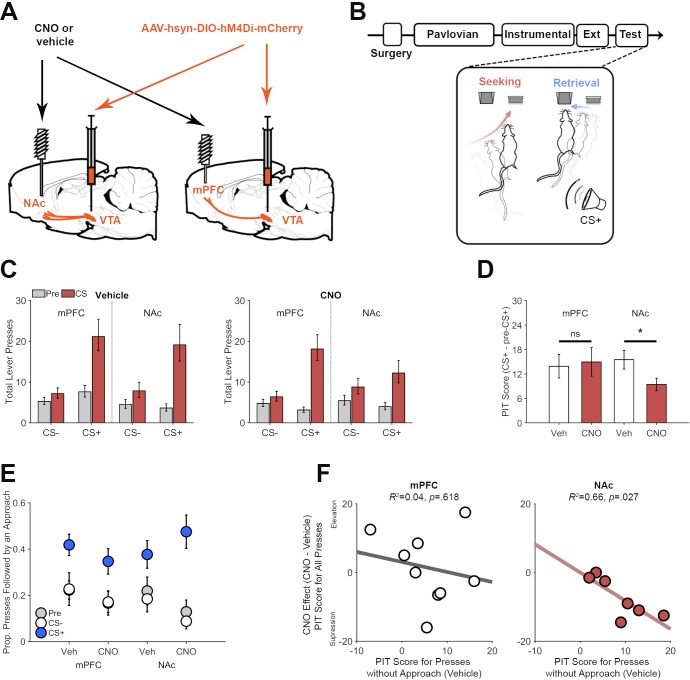
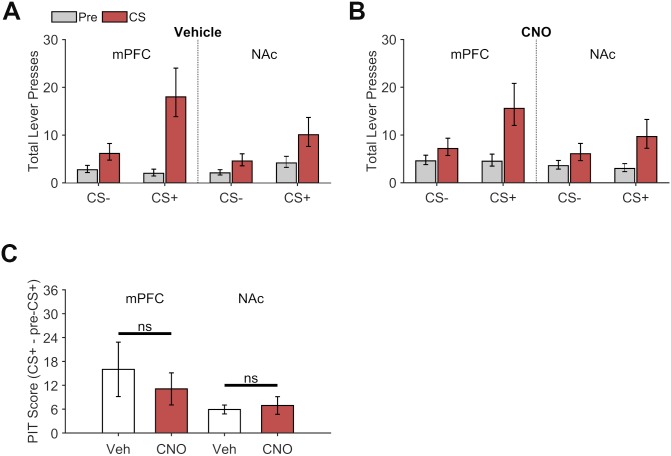
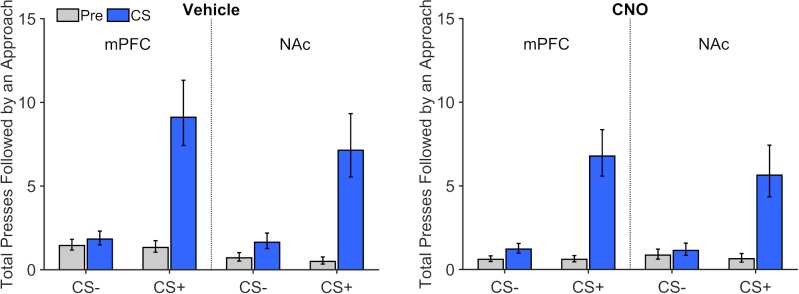
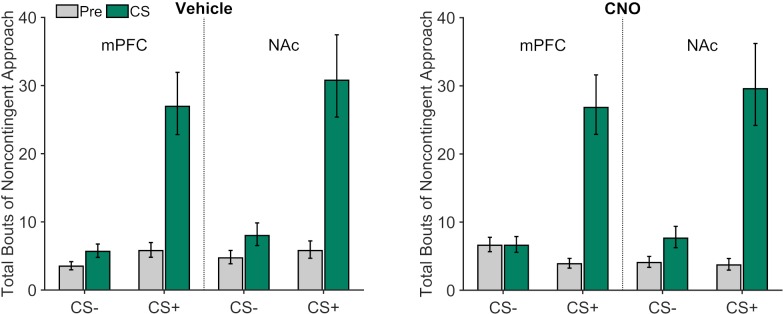
Efficient foraging requires an ability to coordinate discrete reward-seeking and reward-retrieval behaviors. We used pathway-specific chemogenetic inhibition to investigate how rats' mesolimbic and mesocortical dopamine circuits contribute to the expression and modulation of reward seeking and retrieval. Inhibiting ventral tegmental area dopamine neurons disrupted the tendency for reward-paired cues to motivate reward seeking, but spared their ability to increase attempts to retrieve reward. Similar effects were produced by inhibiting dopamine inputs to nucleus accumbens, but not medial prefrontal cortex. Inhibiting dopamine neurons spared the suppressive effect of reward devaluation on reward seeking, an assay of goal-directed behavior. Attempts to retrieve reward persisted after devaluation, indicating they were habitually performed as part of a fixed action sequence. Our findings show that complete bouts of reward seeking and retrieval are behaviorally and neurally dissociable from bouts of reward seeking without retrieval. This dichotomy may prove useful for uncovering mechanisms of maladaptive behavior.
有效觅食需要协调离散的奖励寻求和奖励获取行为。我们使用特定通路的化学遗传抑制来研究大鼠中脑边缘和中脑皮质多巴胺回路如何促进奖励寻求的表达和调节。抑制腹侧被盖区多巴胺神经元会破坏与奖励相关的线索激发奖励寻求的趋势,但不会影响它们增加获取奖励尝试的能力。对伏隔核多巴胺输入的类似抑制产生了相似的效果,但对内侧前额叶皮层没有影响。抑制多巴胺神经元会使奖励贬值对奖励寻求的抑制作用不受影响,这是一种目标导向行为的测定。在贬值后,获取奖励的尝试仍然存在,这表明它们作为固定动作序列的一部分习惯性地进行。我们的研究结果表明,完整的奖励寻求和获取行为与没有获取的奖励寻求行为在行为和神经上是可分离的。这种二分法可能有助于揭示适应不良行为的机制。