Department of Opthalmology, Afyonkarahisar Health Science University, Medical School, Afyonkarahisar, Turkey.
Department of Opthalmology, HSU Bursa Yuksek Ihtisas Training and Research Hospital, Bursa, Turkey.
Indian J Ophthalmol. 2019 Jun;67(6):879-883. doi: 10.4103/ijo.IJO_2115_18.
Retinopathy of prematurity (ROP) is the leading cause of preventable blindness in premature infants. Antivascular endothelial growth factor (anti-VEGF) therapy has been used increasingly in treatment as a pharmacological alternative to laser therapy. In this study, we evaluate the results of low-dose anti-VEGF treatments.
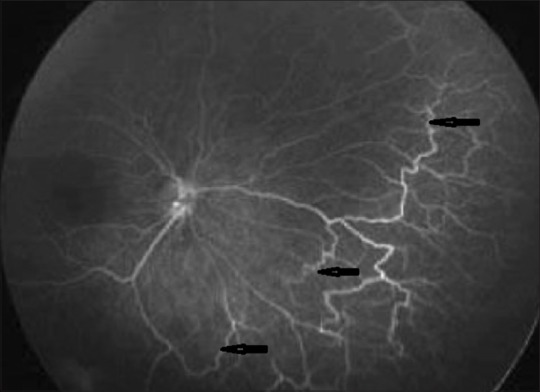
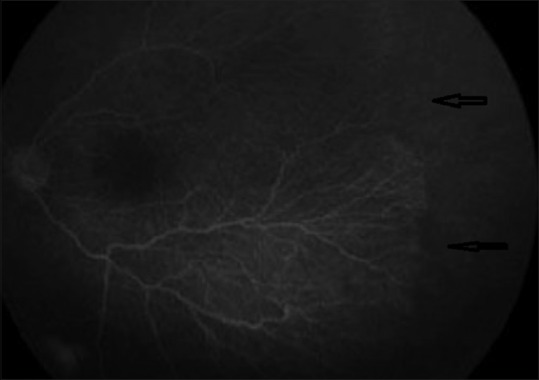
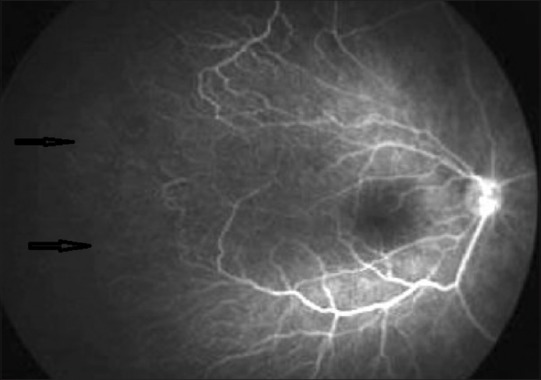
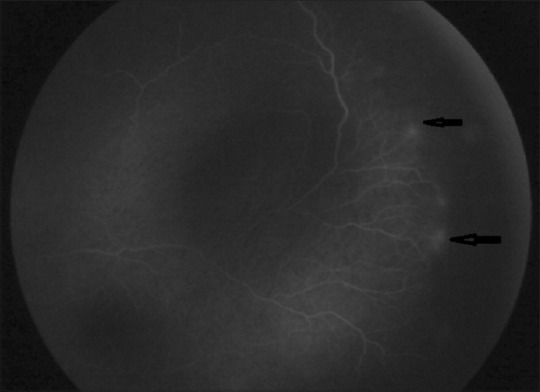
Design: Retrospective--observational study. Infants who had been evaluated for ROP disease between February 2016 and February 2017 were assessed. We retrospectively reviewed the ROP stages, treatment results, and complications. Laser photocoagulation (LPC) and intravitreal bevacizumab (0.16 mg IVB) were used for treatment and fundus fluorescein angiography (FFA) was also performed in some of the cases.
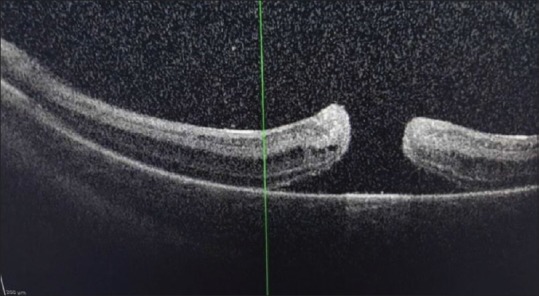
IVB was applied to 43 infants. A macular hole was seen in one infant's eye after IVB. LPC was applied to avascular areas in 21 infants. In three patients, persistence of the disease was observed after administration of a low dose of IVB. Additional LFK was performed in these patients. None of the infants who received LPC had any complications.
IVB is increasingly becoming the first-line treatment for ROP. For severe ROP, 0.16 mg IVB is effective. Using LPC to treat avascular areas after 70 weeks' gestational age (GA) may decrease the risk of late recurrence and appears to be a safe treatment to use.
早产儿视网膜病变(ROP)是早产儿致盲的主要原因。抗血管内皮生长因子(anti-VEGF)治疗作为激光治疗的替代方法,在治疗中的应用越来越多。本研究评估了低剂量 anti-VEGF 治疗的结果。
设计:回顾性-观察性研究。评估了 2016 年 2 月至 2017 年 2 月间患有 ROP 疾病的婴儿。我们回顾性地评估了 ROP 分期、治疗结果和并发症。激光光凝(LPC)和玻璃体内贝伐单抗(0.16mgIVB)用于治疗,并对部分病例进行眼底荧光血管造影(FFA)检查。
43 例婴儿接受 IVB 治疗。1 例婴儿在 IVB 后出现黄斑裂孔。21 例婴儿接受 LPC 治疗无血管区。3 例患者在接受低剂量 IVB 治疗后,疾病仍持续存在。这些患者进行了额外的 LFK 治疗。接受 LPC 治疗的婴儿均无并发症。
IVB 越来越成为 ROP 的一线治疗方法。对于严重的 ROP,0.16mgIVB 是有效的。在 70 周妊娠龄(GA)后使用 LPC 治疗无血管区可能降低晚期复发的风险,且似乎是一种安全的治疗方法。