Schmidt Anna-Maria, Escher Ulrike, Mousavi Soraya, Tegtmeyer Nicole, Boehm Manja, Backert Steffen, Bereswill Stefan, Heimesaat Markus M
Department of Microbiology, Institute of Microbiology, Infectious Diseases and Immunology, Charité-University Medicine Berlin, corporate member of Freie Universität Berlin, Humboldt-Universität zu Berlin, and Berlin Institute of Health, CC5, Campus Benjamin Franklin, FEM, Garystr. 5, 14195 Berlin, Germany.
2Institute for Microbiology, Department of Biology, Friedrich Alexander University Erlangen/Nuremberg, Erlangen, Germany.
Gut Pathog. 2019 May 17;11:24. doi: 10.1186/s13099-019-0306-9. eCollection 2019.
infections constitute serious threats to human health with increasing prevalences worldwide. Our knowledge regarding the molecular mechanisms underlying host-pathogen interactions is still limited. Our group has established a clinical infection model based on abiotic IL-10 mice mimicking key features of human campylobacteriosis. In order to further validate this model for unraveling pathogen-host interactions mounting in acute disease, we here surveyed the immunopathological features of the important virulence factors FlaA and FlaB and the major adhesin CadF ( adhesin to fibronectin), which play a role in bacterial motility, protein secretion and adhesion, respectively.
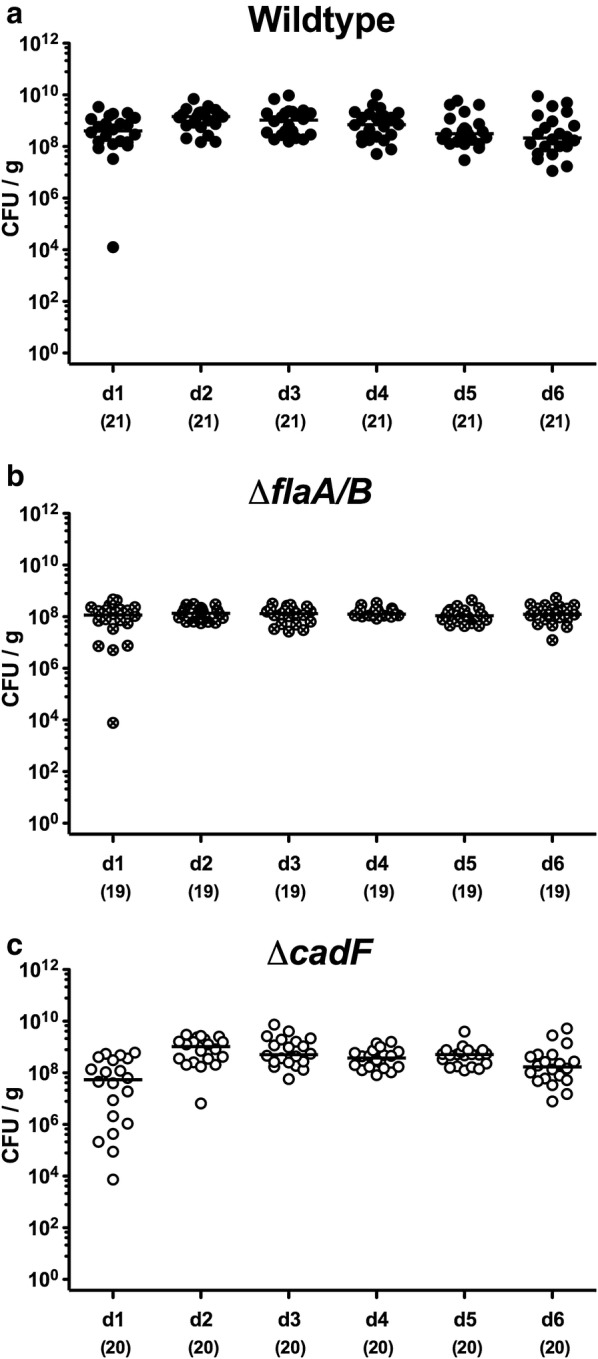
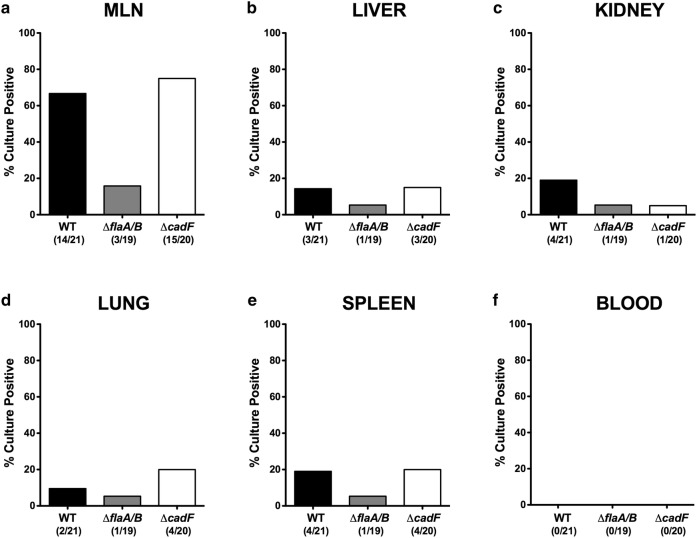
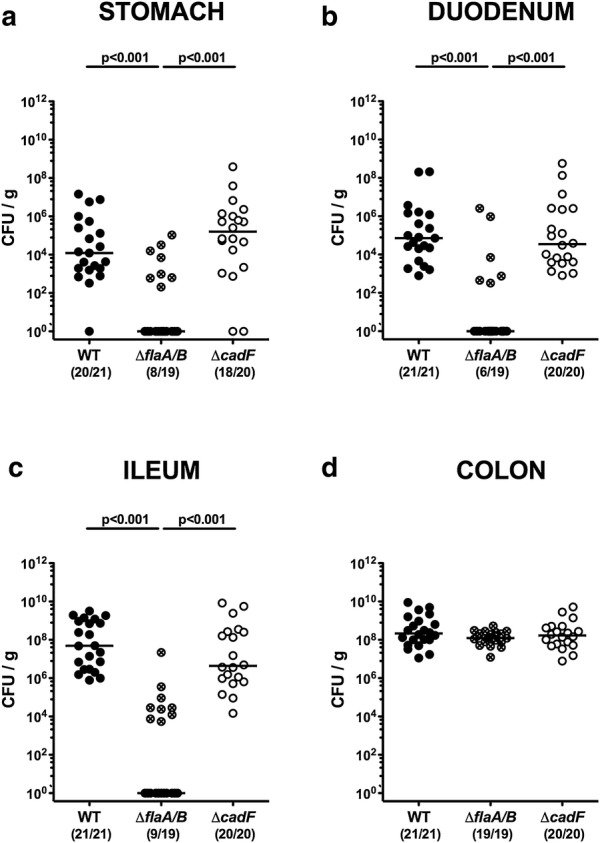
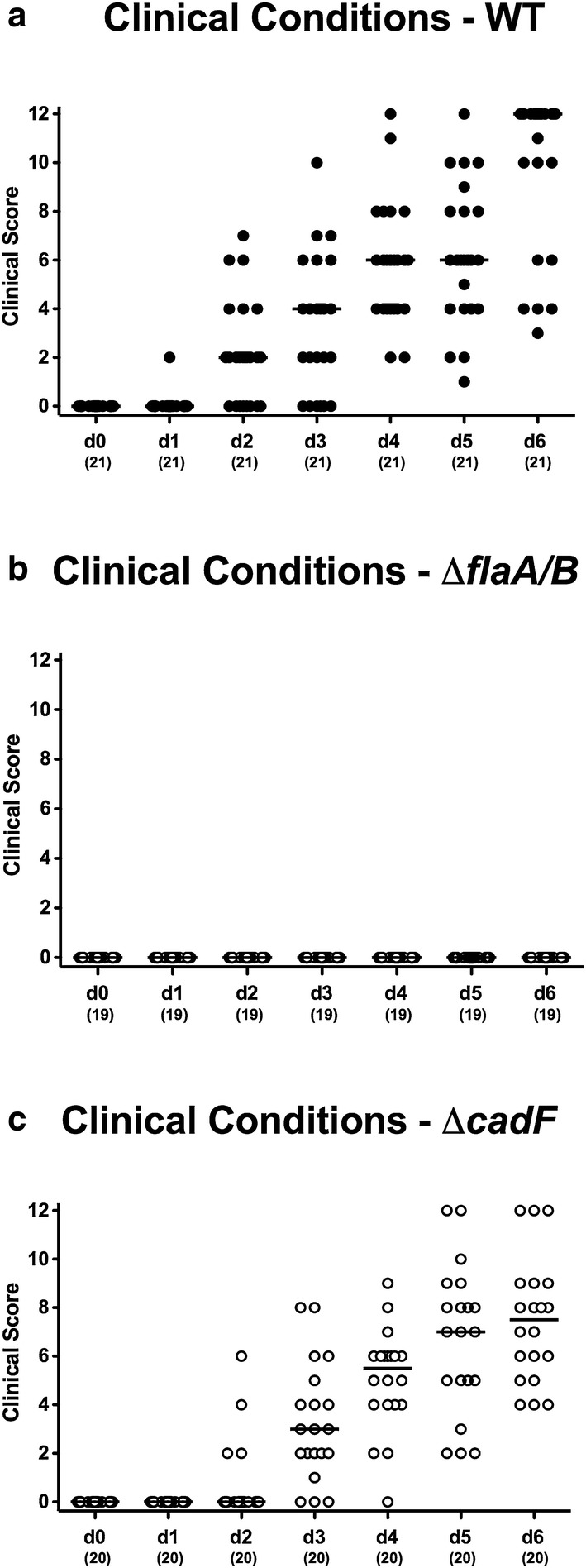
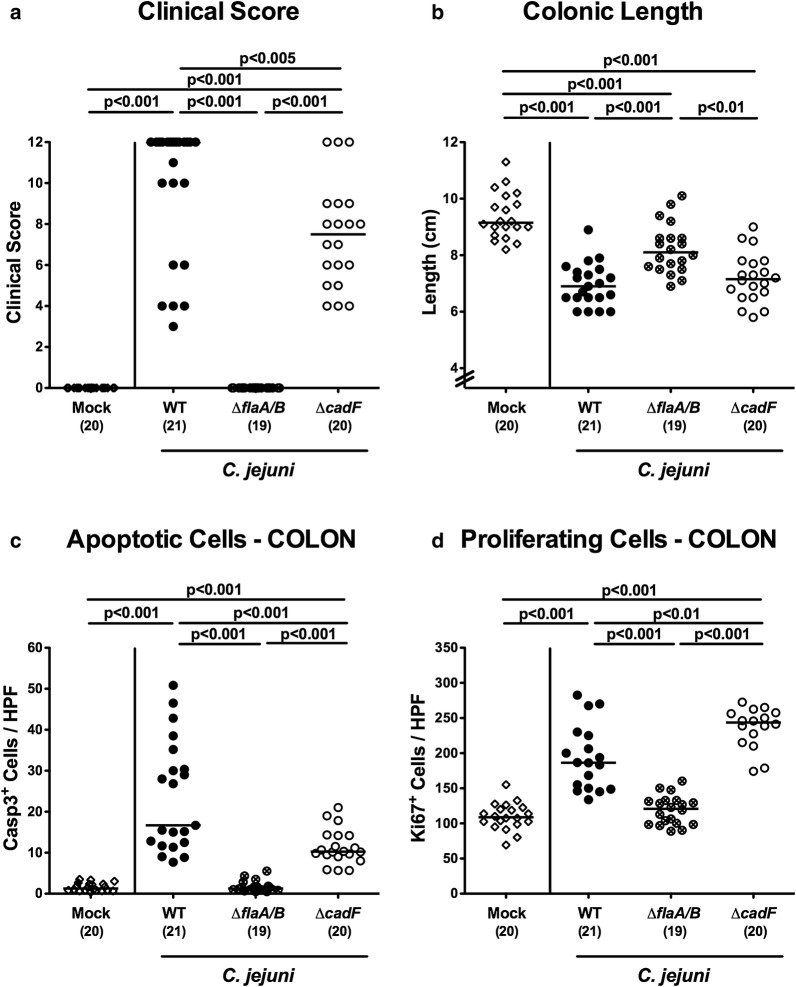
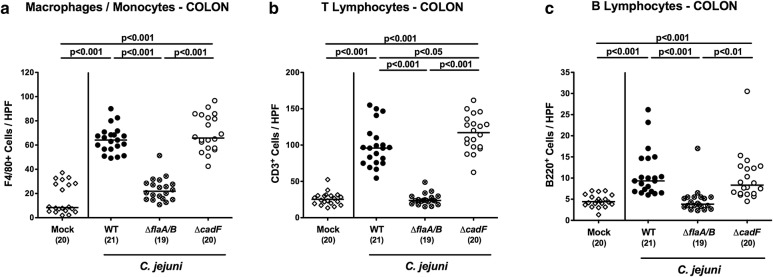
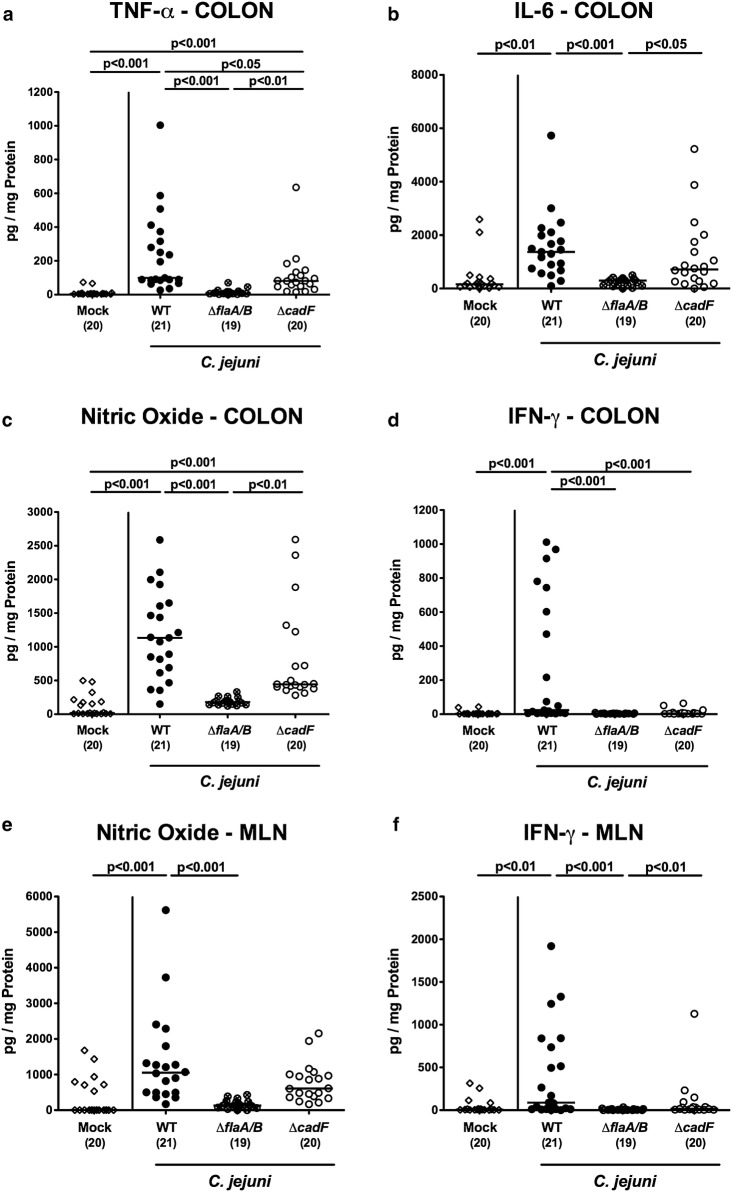
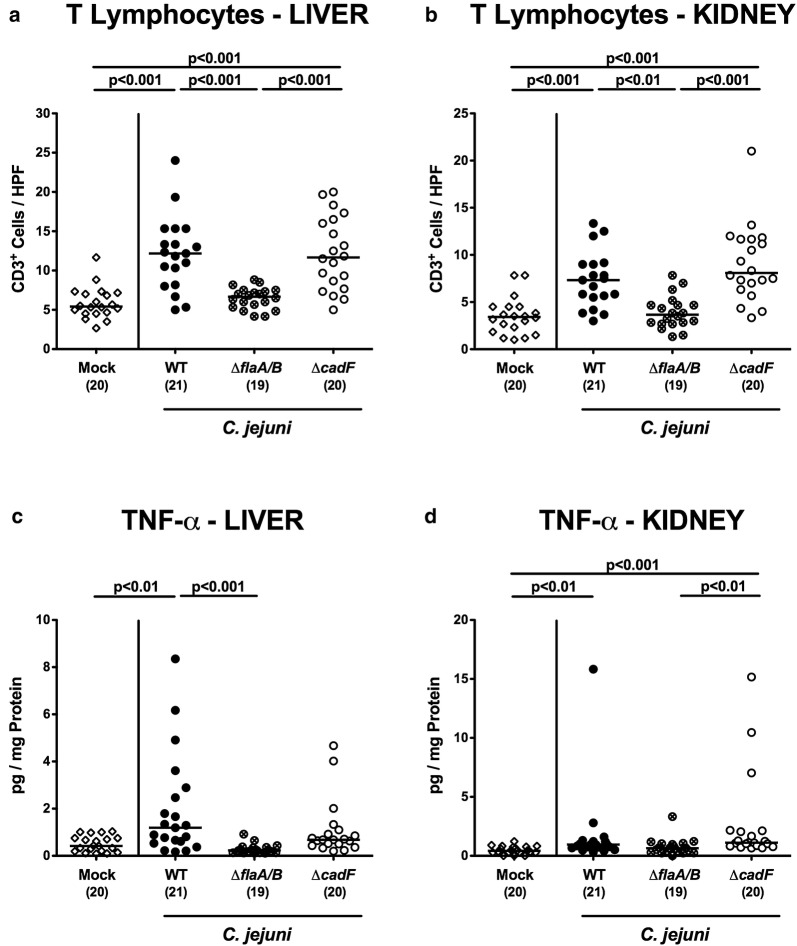
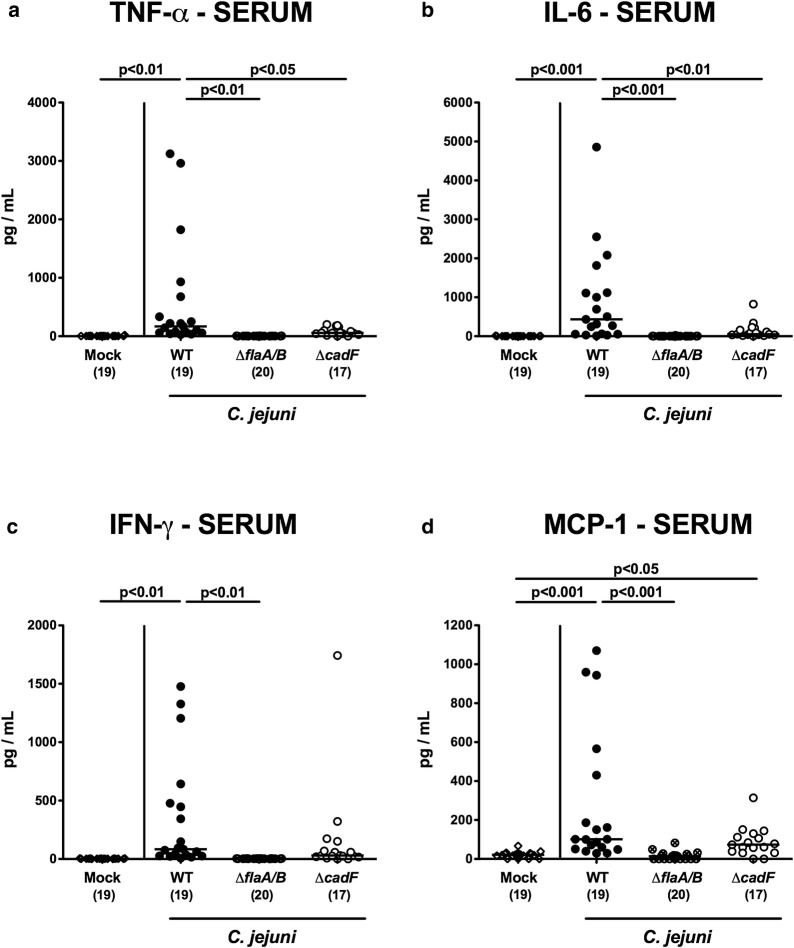
Therefore, abiotic IL-10 mice were perorally infected with strain 81-176 (WT) or with its isogenic (Δ) or (Δ) deletion mutants. Cultural analyses revealed that WT and Δ but not Δ bacteria stably colonized the stomach, duodenum and ileum, whereas all three strains were present in the colon at comparably high loads on day 6 post-infection. Remarkably, despite high colonic colonization densities, murine infection with the Δ strain did not result in overt campylobacteriosis, whereas mice infected with Δ or WT were suffering from acute enterocolitis at day 6 post-infection. These symptoms coincided with pronounced pro-inflammatory immune responses, not only in the intestinal tract, but also in other organs such as the liver and kidneys and were accompanied with systemic inflammatory responses as indicated by increased serum MCP-1 concentrations following Δ or WT, but not Δ strain infection.
For the first time, our observations revealed that the flagellins A/B, but not adhesion mediated by CadF, are essential for inducing murine campylobacteriosis. Furthermore, the secondary abiotic IL-10 infection model has been proven suitable not only for detailed investigations of immunological aspects of campylobacteriosis, but also for differential analyses of the roles of distinct virulence factors in induction and progression of disease.
感染在全球范围内患病率不断上升,对人类健康构成严重威胁。我们对宿主 - 病原体相互作用的分子机制的了解仍然有限。我们的研究小组建立了一种基于无生物活性白细胞介素 -10小鼠的临床感染模型,该模型模拟了人类弯曲菌病的关键特征。为了进一步验证该模型用于揭示急性疾病中不断增加的病原体 - 宿主相互作用,我们在此研究了重要毒力因子鞭毛蛋白A(FlaA)和鞭毛蛋白B(FlaB)以及主要粘附素CadF(纤连蛋白粘附素)的免疫病理特征,它们分别在细菌运动、蛋白质分泌和粘附中发挥作用。
因此,将无生物活性白细胞介素 -10小鼠经口感染81 - 176菌株(野生型)或其同基因(Δ)或(Δ)缺失突变体。培养分析表明,野生型和Δ菌株但不是Δ菌株能稳定定殖于胃、十二指肠和回肠,而在感染后第6天,所有三种菌株在结肠中均以相当高的载量存在。值得注意的是,尽管结肠定殖密度很高,但用Δ菌株感染小鼠并未导致明显的弯曲菌病,而用Δ或野生型菌株感染的小鼠在感染后第6天患有急性小肠结肠炎。这些症状不仅与肠道中明显的促炎免疫反应一致,而且在肝脏和肾脏等其他器官中也有,并且伴随着全身炎症反应,如在感染Δ或野生型菌株后血清MCP - 1浓度升高所示,但感染Δ菌株后未出现这种情况。
我们的观察首次表明,鞭毛蛋白A/B而非CadF介导的粘附对于诱导小鼠弯曲菌病至关重要。此外,已证明继发性无生物活性白细胞介素 -10感染模型不仅适用于详细研究弯曲菌病的免疫学方面,而且适用于差异分析不同毒力因子在疾病诱导和进展中的作用。