a Department of Clinical Pharmacy and Translational Science , College of Pharmacy, University of Tennessee Health Science Center , Memphis , TN , USA.
b Department of Molecular Immunology and Biochemistry , College of Graduate Health Sciences, University of Tennessee Health Science Center , Memphis , TN , USA.
Virulence. 2019 Dec;10(1):511-526. doi: 10.1080/21505594.2019.1620063.
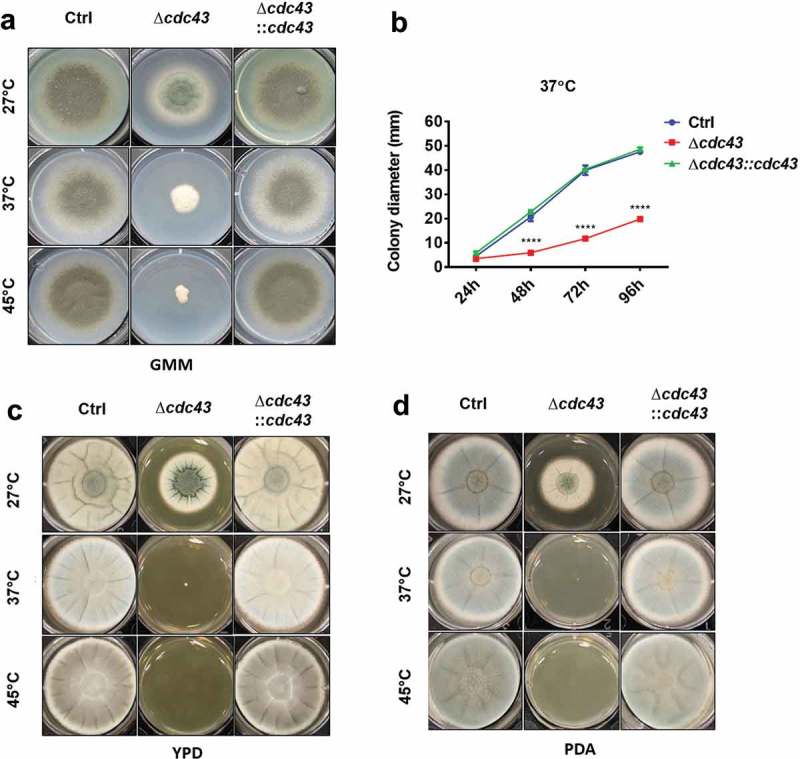
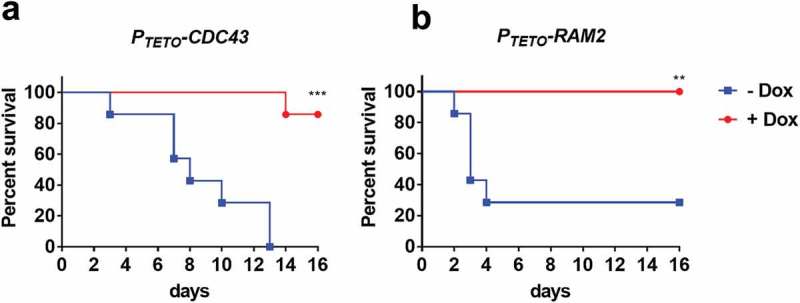
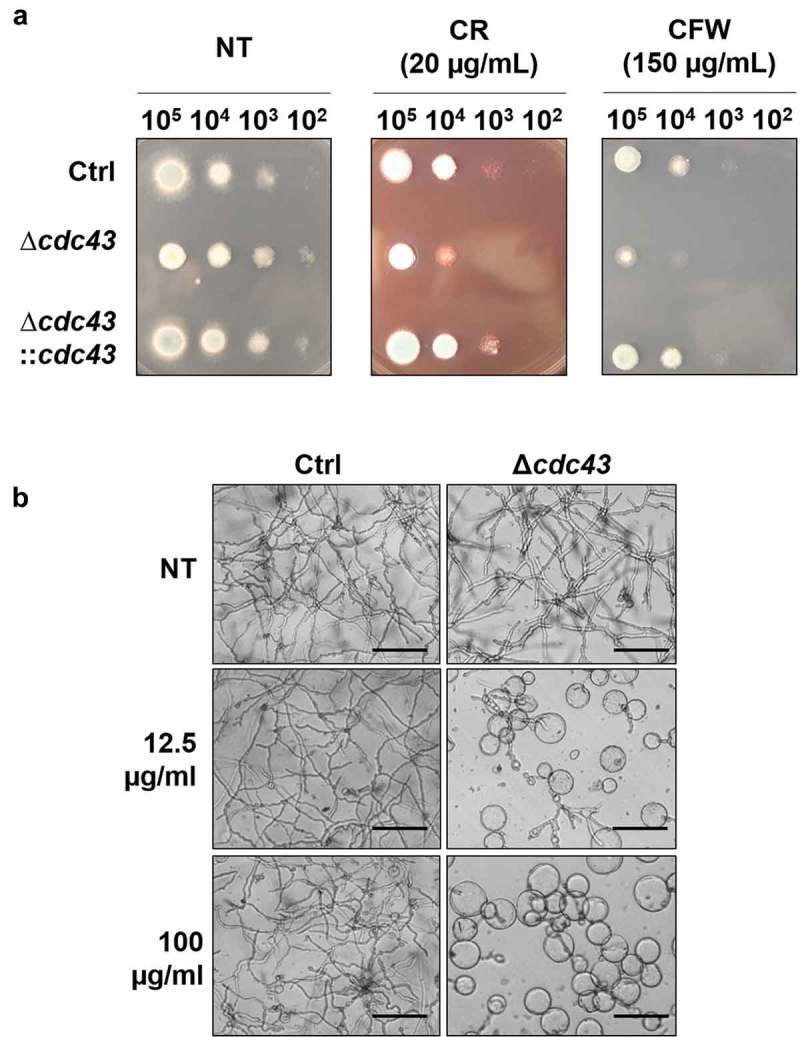
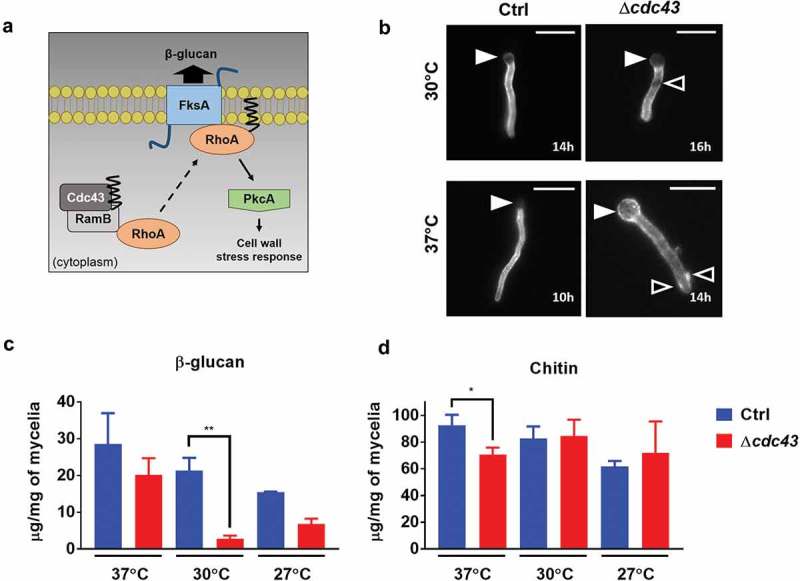
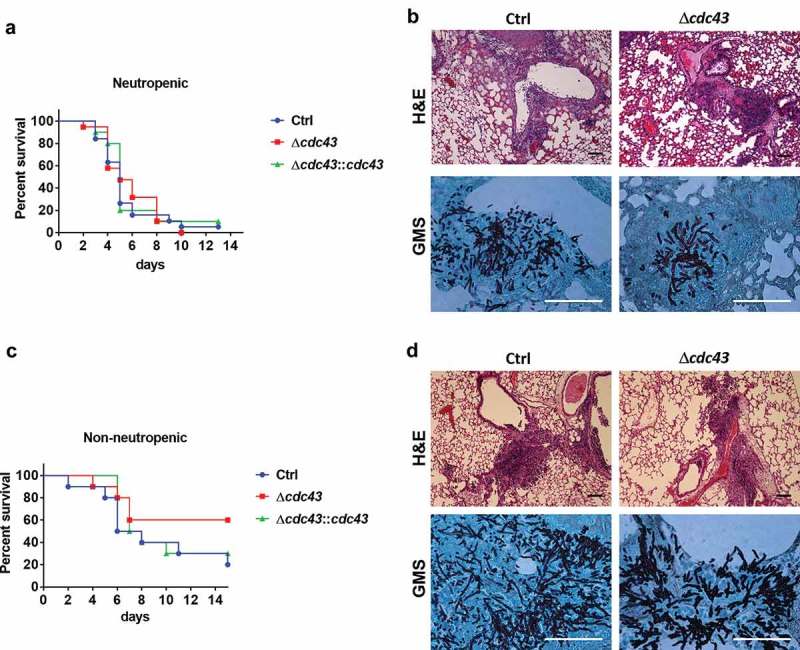
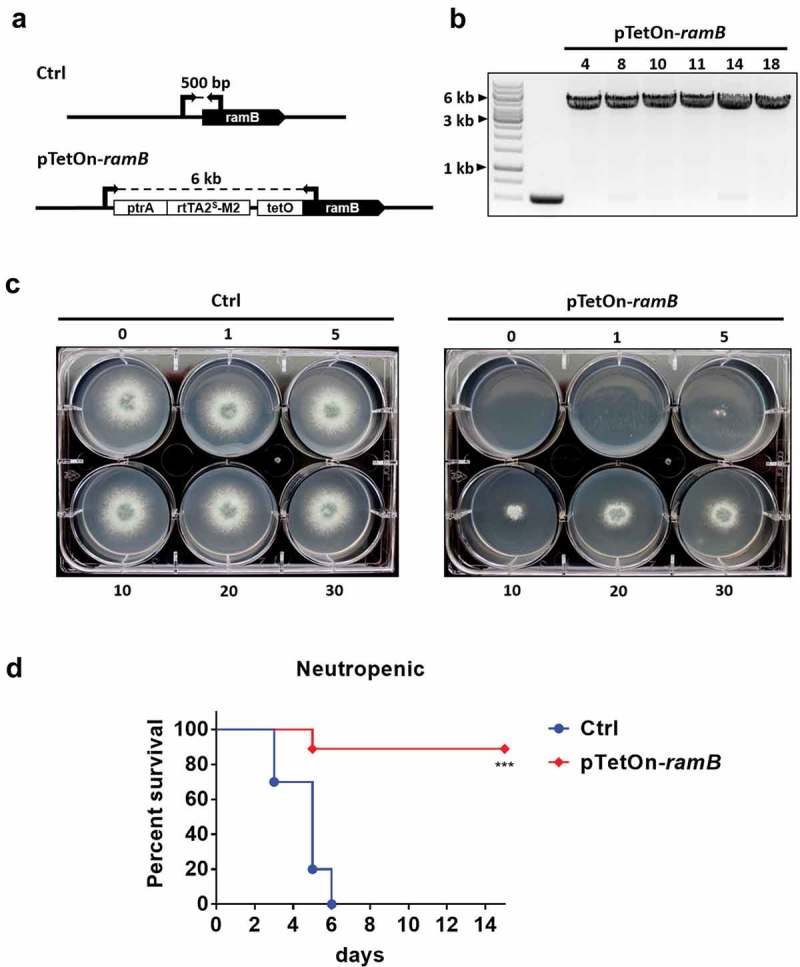
Protein prenylation is a crucial post-translational modification largely mediated by two heterodimeric enzyme complexes, farnesyltransferase and geranylgeranyltransferase type-I (GGTase-I), each composed of a shared α-subunit and a unique β-subunit. GGTase-I enzymes are validated drug targets that contribute to virulence in and to the yeast-to-hyphal transition in . Therefore, we sought to investigate the importance of the α-subunit, RamB, and the β-subunit, Cdc43, of the GGTase-I complex to hyphal growth and virulence. Deletion of resulted in impaired hyphal morphogenesis and thermo-sensitivity, which was exacerbated during growth in rich media. The Δ mutant also displayed hypersensitivity to cell wall stress agents and to cell wall synthesis inhibitors, suggesting alterations of cell wall biosynthesis or stress signaling. In support of this, analyses of cell wall content revealed decreased amounts of β-glucan in the Δ strain. Despite strong phenotypes, the Δ mutant was fully virulent in two models of murine invasive aspergillosis, similar to the control strain. We further found that a strain expressing the α-subunit gene, , from a tetracycline-inducible promoter was inviable under non-inducing growth conditions and was virtually avirulent in both mouse models. Lastly, virulence studies using strains with tetracycline-repressible or expression revealed reduced pathogenicity associated with downregulation of either gene in a murine model of disseminated infection. Together, these findings indicate a differential requirement for protein geranylgeranylation for fungal virulence, and further inform the selection of specific prenyltransferases as promising antifungal drug targets for each pathogen.
蛋白质的类异戊二烯化是一种重要的翻译后修饰过程,主要由两种异二聚体酶复合物——法尼基转移酶和 geranylgeranyltransferase 型-I(GGTase-I)介导,这两种酶复合物均由一个共享的α亚基和一个独特的β亚基组成。GGTase-I 酶是经过验证的药物靶点,对 和 在酵母到菌丝过渡中的毒力有贡献。因此,我们试图研究 GGTase-I 复合物的 α-亚基 RamB 和 β-亚基 Cdc43 对菌丝生长和毒力的重要性。Δ 缺失导致菌丝形态发生受损和热敏性,在丰富培养基中生长时更为严重。Δ 突变体还对细胞壁应激剂和细胞壁合成抑制剂表现出超敏反应,表明细胞壁生物合成或应激信号发生改变。支持这一点的是,细胞壁成分的分析表明 Δ 菌株中β-葡聚糖的含量减少。尽管存在强烈的表型,但Δ 突变体在两种小鼠侵袭性曲霉病模型中均具有完全的毒力,与对照菌株相似。我们进一步发现,一种表达来自四环素诱导启动子的 α-亚基基因的菌株,在非诱导生长条件下无法存活,在两种小鼠模型中几乎没有毒力。最后,使用四环素可诱导表达的 或 菌株进行的毒力研究表明,下调任一基因均可降低与弥散性感染模型相关的致病性。综上所述,这些发现表明蛋白质 geranylgeranylation 对真菌毒力的需求存在差异,并进一步为选择每个病原体的特定 prenyltransferases 作为有前途的抗真菌药物靶点提供了信息。