Deutsches Rheuma-Forschungszentrum Berlin, Berlin, Germany.
Charité-Universitätsmedizin Berlin, Berlin, Germany.
Arthritis Rheumatol. 2019 Oct;71(10):1756-1765. doi: 10.1002/art.40939. Epub 2019 Sep 5.
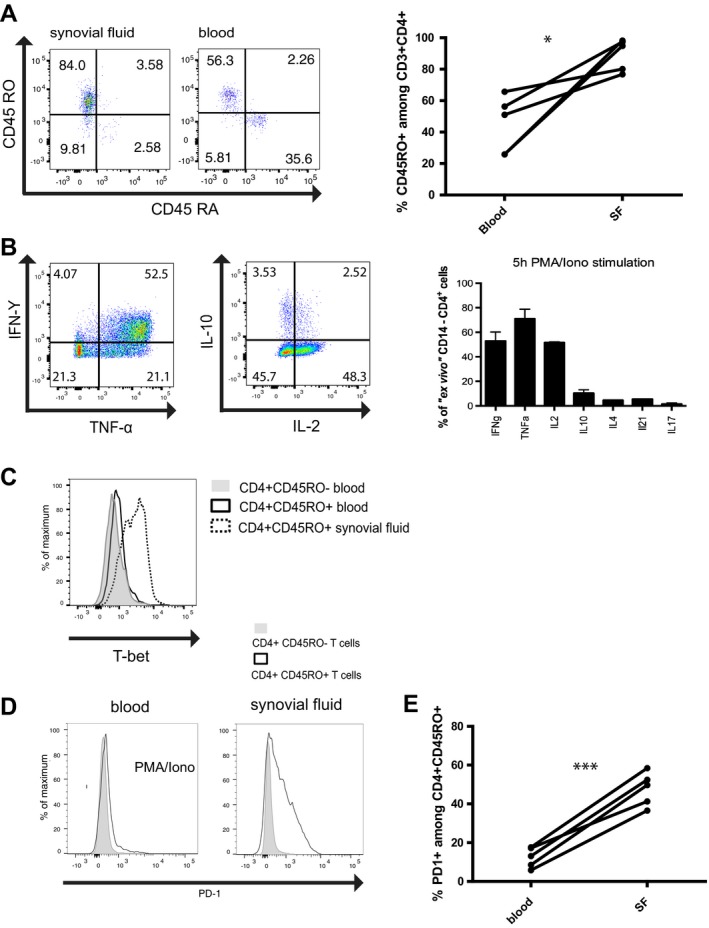
Inflamed tissue is characterized by low availability of oxygen and nutrients. Yet CD4+ T helper lymphocytes persist over time in such tissue and probably contribute to the chronicity of inflammation. This study was undertaken to analyze the metabolic adaptation of these cells to the inflamed environment.
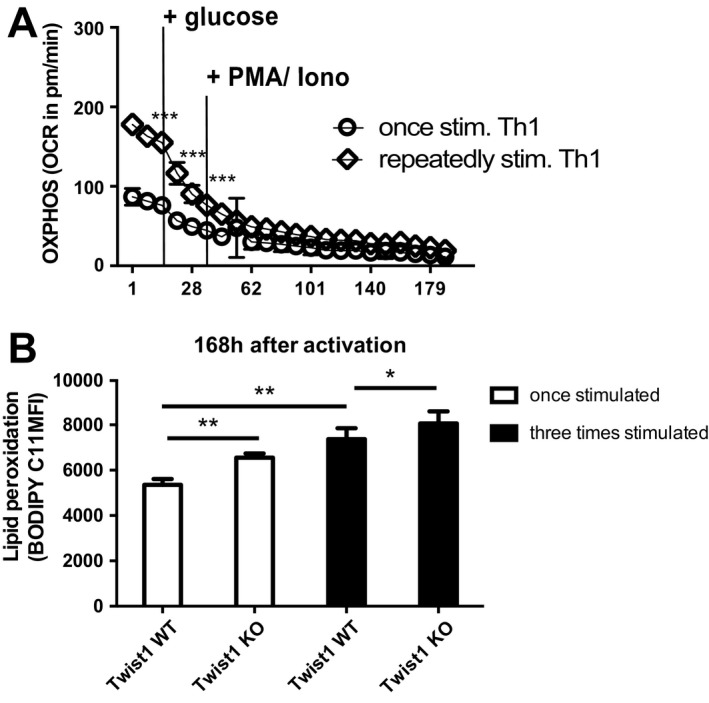
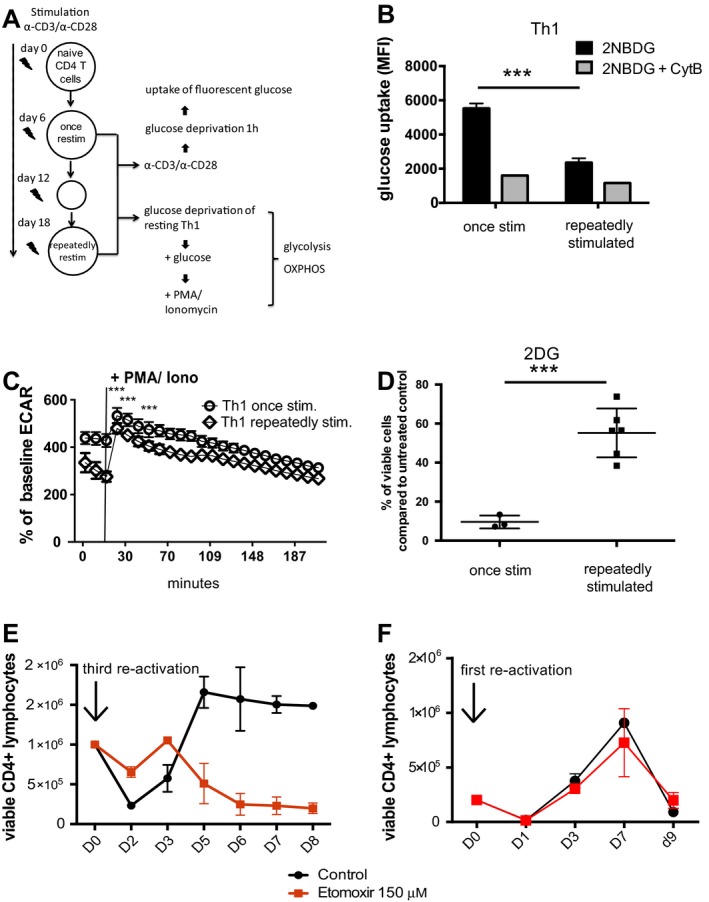
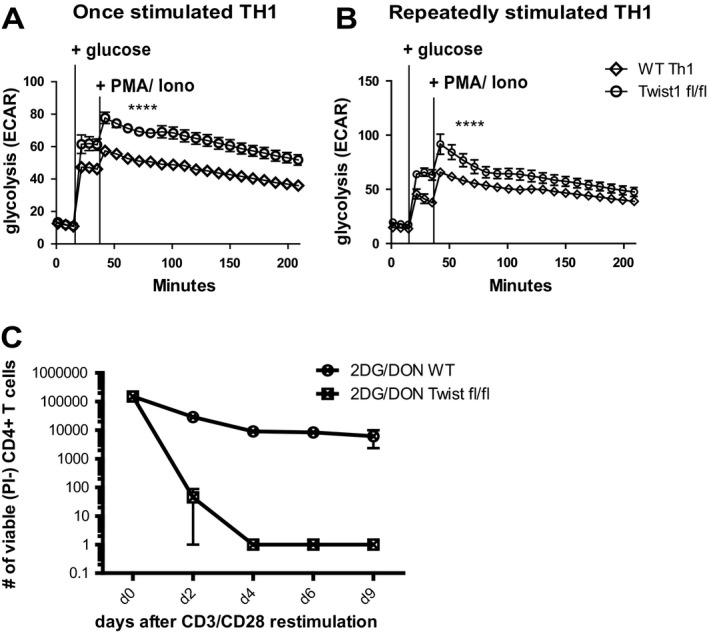
Synovial and blood CD4+ T cells isolated ex vivo from patients with juvenile idiopathic arthritis (JIA) and murine CD4+ T cells were either stimulated once or stimulated repeatedly. Their dependency on particular metabolic pathways for survival was then analyzed using pharmacologic inhibitors. The role of the transcription factor Twist 1 was investigated by determining lactate production and oxygen consumption in Twist1-sufficient and Twist1-deficient murine T cells. The dependency of these murine cells on particular metabolic pathways was analyzed using pharmacologic inhibitors.
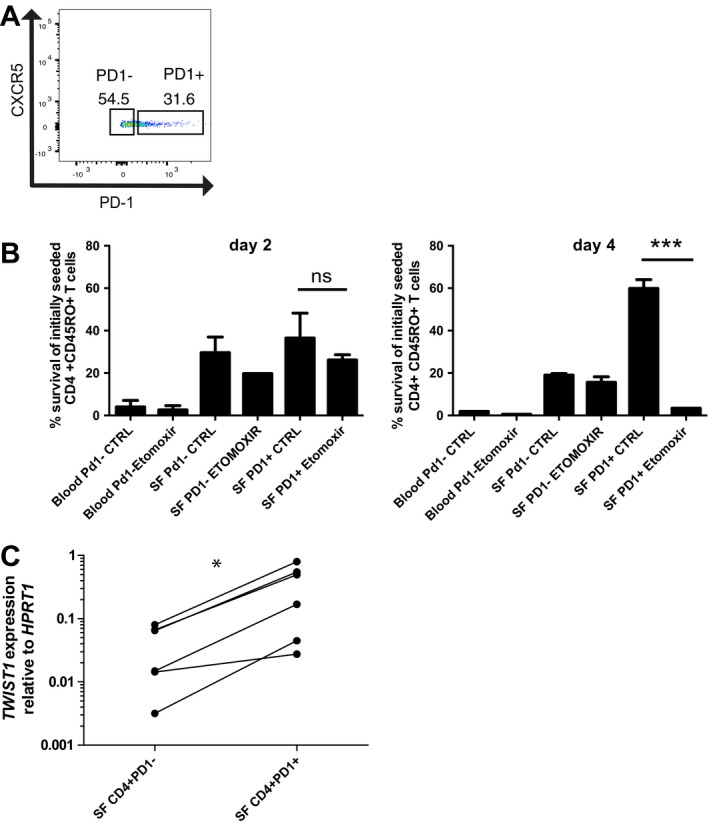
Programmed death 1 (PD-1)+ T helper cells in synovial fluid samples from patients with JIA survived via fatty acid oxidation (mean ± SEM survival of 3.4 ± 2.85% in the presence of etomoxir versus 60 ± 7.08% in the absence of etomoxir on day 4 of culture) (P < 0.0002; n = 6) and expressed the E-box-binding transcription factor TWIST1 (2-14-fold increased expression) (P = 0.0156 versus PD-1- T helper cells; n = 6). Repeatedly restimulated murine T helper cells, which expressed Twist1 as well, needed Twist1 to survive via fatty acid oxidation. In addition, Twist1 protected the cells against reactive oxygen species.
Our findings indicate that TWIST1 is a master regulator of metabolic adaptation of T helper cells to chronic inflammation and a target for their selective therapeutic elimination.
炎症组织的特点是氧气和营养物质供应不足。然而,CD4+辅助性 T 淋巴细胞在这种组织中能持续存在很长时间,并且可能导致炎症的慢性化。本研究旨在分析这些细胞对炎症环境的代谢适应。
从幼年特发性关节炎(JIA)患者的关节滑液和外周血中分离出 CD4+T 细胞,在体外进行一次或重复刺激,然后使用药物抑制剂分析其对特定代谢途径的依赖性。通过检测 Twist1 基因敲除和野生型小鼠 T 细胞的乳酸生成和耗氧量来研究转录因子 Twist1 的作用。使用药物抑制剂分析这些小鼠细胞对特定代谢途径的依赖性。
JIA 患者关节滑液样本中的程序性死亡 1(PD-1)+辅助性 T 细胞通过脂肪酸氧化存活(在存在 etomoxir 的情况下第 4 天的存活率为 3.4 ± 2.85%,而不存在 etomoxir 的情况下为 60 ± 7.08%)(P < 0.0002;n = 6),并表达 E 盒结合转录因子 TWIST1(表达增加 2-14 倍)(P = 0.0156 与 PD-1-T 辅助细胞相比;n = 6)。反复刺激的表达 Twist1 的小鼠辅助性 T 细胞也需要 Twist1 通过脂肪酸氧化存活。此外,Twist1 可保护细胞免受活性氧的伤害。
我们的研究结果表明,TWIST1 是 T 辅助细胞对慢性炎症进行代谢适应的主调控因子,也是其选择性治疗消除的靶点。