Sutherland Kim, Levesque Jean-Frederic
Agency for Clinical Innovation, Chatswood, New South Wales, Australia.
Centre for Primary Health Care and Equity, UNSW Randwick Campus, Randwick, New South Wales, Australia.
J Eval Clin Pract. 2020 Jun;26(3):687-696. doi: 10.1111/jep.13181. Epub 2019 May 28.
RATIONALE, AIMS, AND OBJECTIVES: Unwarranted clinical variation is a topic of heightened interest in health care systems around the world. While there are many publications and reports on clinical variation, few studies are conceptually grounded in a theoretical model. This study describes the empirical foundations of the field and proposes an analytic framework.
Structured construct mapping of published empirical studies which explicitly address unwarranted clinical variation.
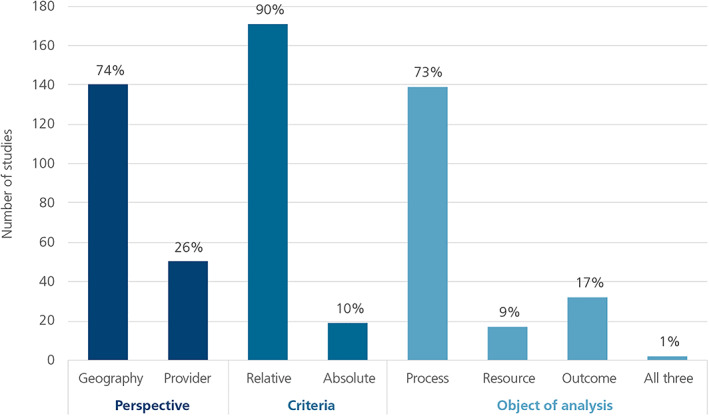
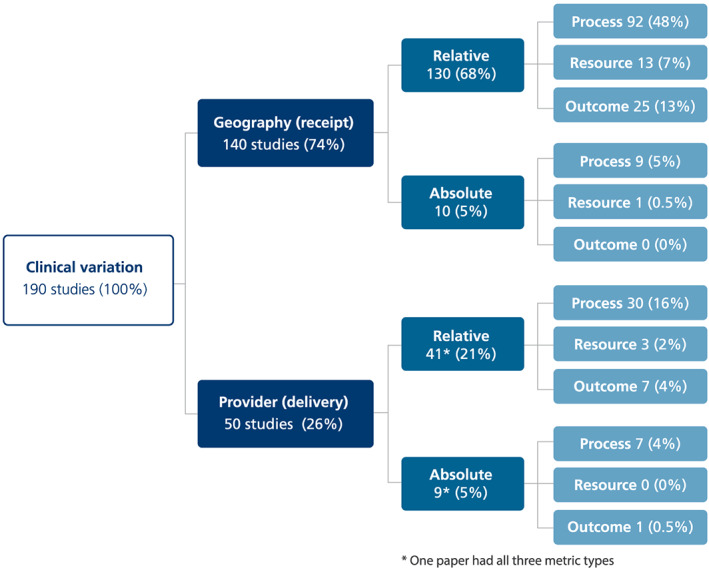
A total of 190 studies were classified in terms of three key dimensions: perspective (assessing variation across geographical areas or across providers); criteria for assessment (measuring absolute variation against a standard, or relative variation within a comparator group); and object of analysis (using process, structure/resource, or outcome metrics).
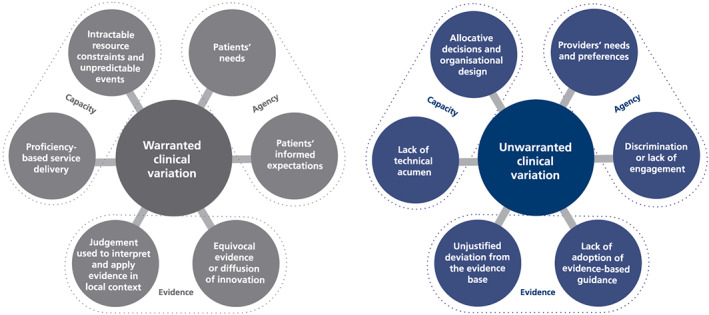
Consideration of the results of the mapping exercise-together with a review of adjustment, explanatory and stratification variables, and the factors associated with residual variation-informed the development of an analytic framework. This framework highlights the role that agency and motivation, evidence and judgement, and personal and organizational capacity play in clinical decision making and reveals key facets that distinguish warranted from unwarranted clinical variation. From a measurement perspective, it underlines the need for careful consideration of attribution, aggregation, models of care, and temporality in any assessment.
原理、目的和目标:不必要的临床差异是全球医疗保健系统中备受关注的一个话题。虽然有许多关于临床差异的出版物和报告,但很少有研究在理论模型上有概念基础。本研究描述了该领域的实证基础并提出了一个分析框架。
对明确涉及不必要临床差异的已发表实证研究进行结构化构建映射。
共190项研究按照三个关键维度进行了分类:视角(评估地理区域间或提供者间的差异);评估标准(根据标准衡量绝对差异或在比较组内衡量相对差异);以及分析对象(使用过程、结构/资源或结果指标)。
对映射练习结果的考量——连同对调整、解释和分层变量以及与残余差异相关因素的回顾——为分析框架的制定提供了参考。该框架突出了能动性与动机、证据与判断以及个人和组织能力在临床决策中所起的作用,并揭示了区分合理与不合理临床差异的关键方面。从测量角度来看,它强调在任何评估中都需要仔细考虑归因、汇总、护理模式和时间性。