Division of Biological Sciences, The University of Montana, Missoula, MT, United States of America.
Center for Biomolecular Structure and Dynamics, The University of Montana, Missoula, MT, United States of America.
PLoS One. 2019 May 28;14(5):e0217497. doi: 10.1371/journal.pone.0217497. eCollection 2019.
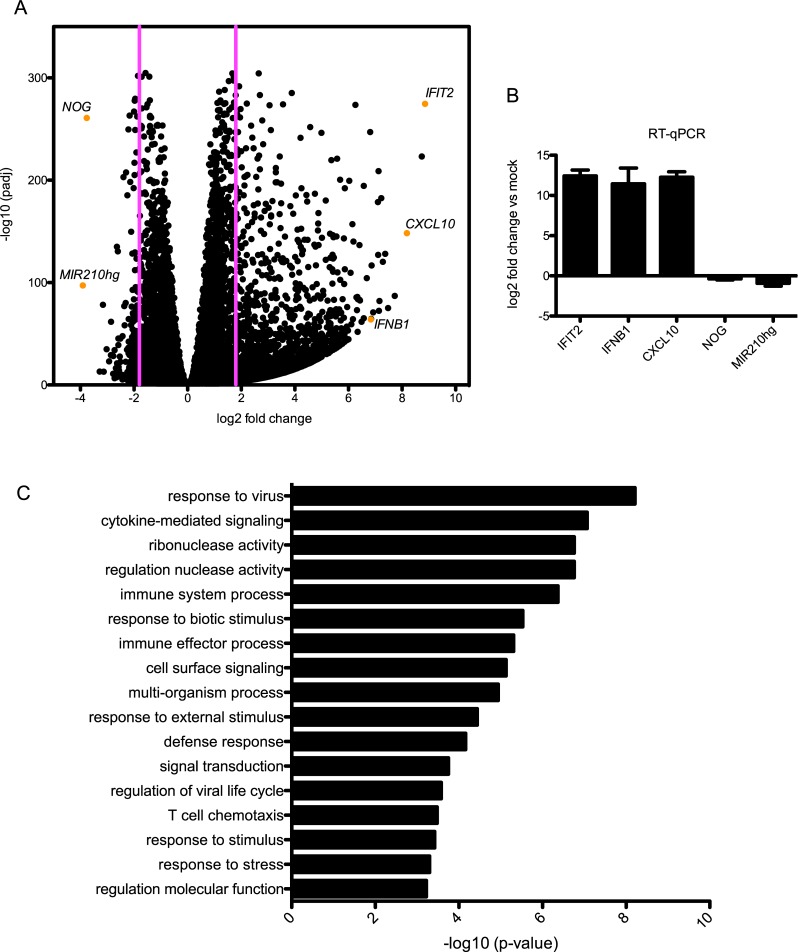
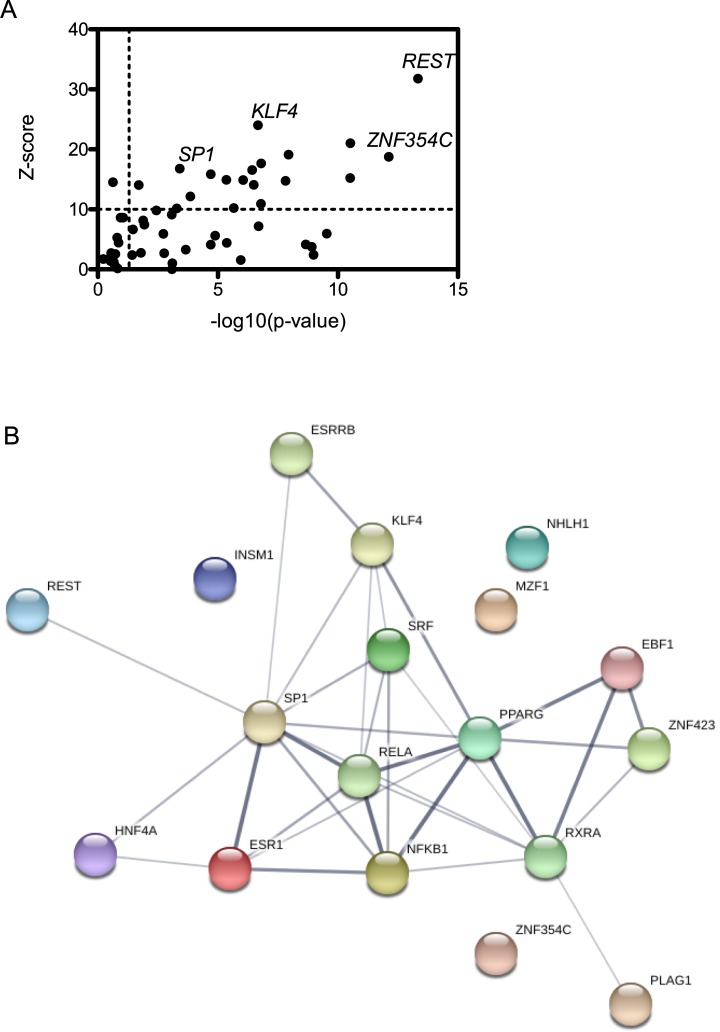
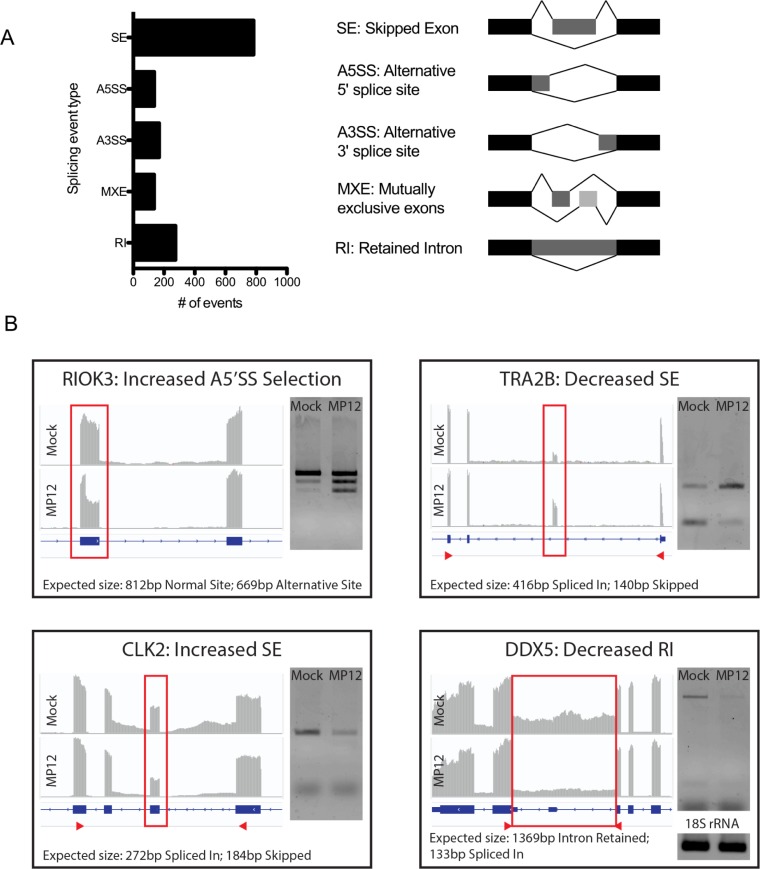
Rift Valley fever virus (RVFV) is a negative-sense RNA virus belonging to the Phenuiviridae family that infects both domestic livestock and humans. The NIAID has designated RVFV as a Category A priority emerging pathogen due to the devastating public health outcomes associated with epidemic outbreaks. However, there is no licensed treatment or vaccine approved for human use. Therefore it is of great interest to understand RVFV pathogenesis in infected hosts in order to facilitate creation of targeted therapies and treatment options. Here we provide insight into the host-pathogen interface in human HEK293 cells during RVFV MP-12 strain infection using high-throughput mRNA sequencing technology. Gene ontology (GO) and Kyoto Encyclopedia of Genes and Genomes (KEGG) analysis of differentially expressed genes showed robust innate immune and cytokine-mediated inflammatory pathway activation as well as alterations in pathways associated with fatty acid metabolism and extracellular matrix receptor signaling. We also analyzed the promoter regions of DEGs for patterns in transcription factor binding sites, and found several that are known to act synergistically to impact apoptosis, immunity, metabolism, and cell growth and differentiation. Lastly, we noted dramatic changes in host alternative splicing patterns in genes associated with mRNA decay and surveillance, RNA transport, and DNA repair. This study has improved our understanding of RVFV pathogenesis and has provided novel insight into pathways and signaling modules important for RVFV diagnostics and therapeutic development.
裂谷热病毒(RVFV)是一种负义 RNA 病毒,属于 Phenuiviridae 科,可感染家畜和人类。由于与流行疫情相关的破坏性公共卫生后果,NIAID 将 RVFV 指定为 A 类优先新兴病原体。然而,目前尚无获准用于人类的 RVFV 治疗方法或疫苗。因此,了解感染宿主中的 RVFV 发病机制对于促进靶向治疗和治疗方案的制定具有重要意义。在这里,我们使用高通量 mRNA 测序技术,提供了在感染 RVFV MP-12 株的人 HEK293 细胞中宿主-病原体界面的深入见解。差异表达基因的基因本体论(GO)和京都基因与基因组百科全书(KEGG)分析显示,固有免疫和细胞因子介导的炎症途径的激活以及与脂肪酸代谢和细胞外基质受体信号转导相关的途径的改变非常明显。我们还分析了差异表达基因的启动子区域中转录因子结合位点的模式,发现了一些已知协同作用影响细胞凋亡、免疫、代谢和细胞生长分化的转录因子。最后,我们注意到与 mRNA 降解和监测、RNA 转运和 DNA 修复相关的基因中宿主可变剪接模式的剧烈变化。这项研究提高了我们对 RVFV 发病机制的理解,并为 RVFV 诊断和治疗开发的重要途径和信号模块提供了新的见解。