Nephrology, Hannover Medical School, 30625 Hannover, Germany.
Pediatric Nephrology, Hannover Medical School, 30625 Hannover, Germany.
Int J Mol Sci. 2019 May 24;20(10):2552. doi: 10.3390/ijms20102552.
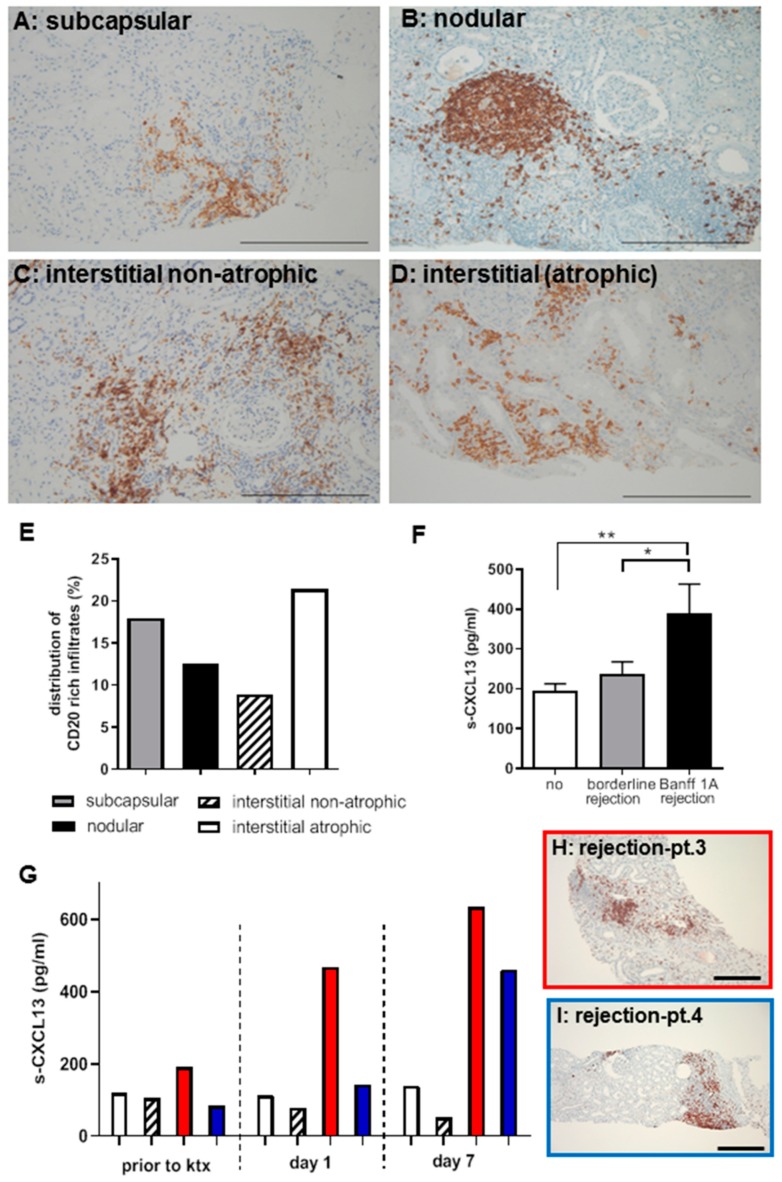
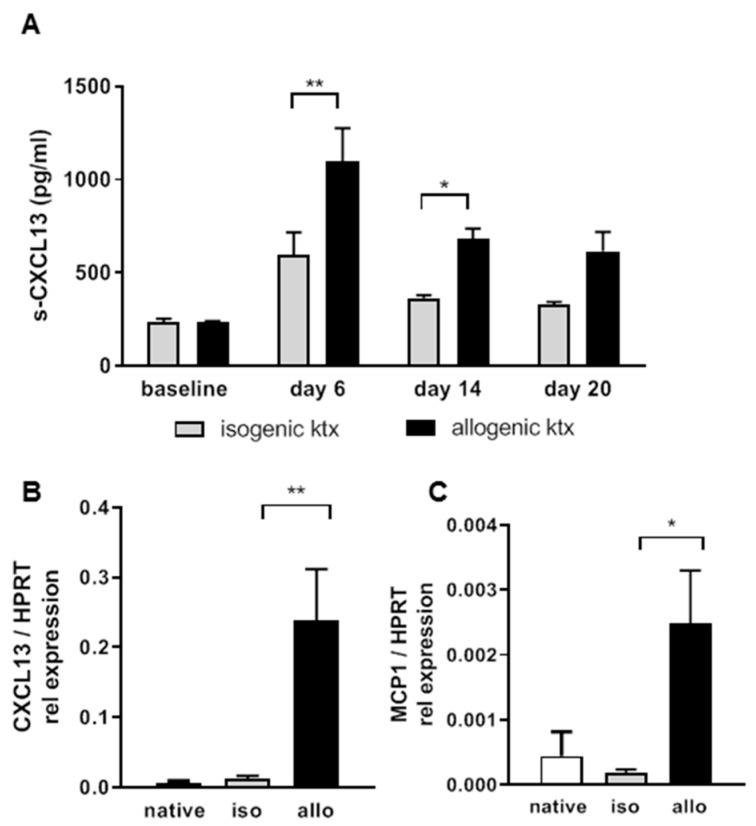
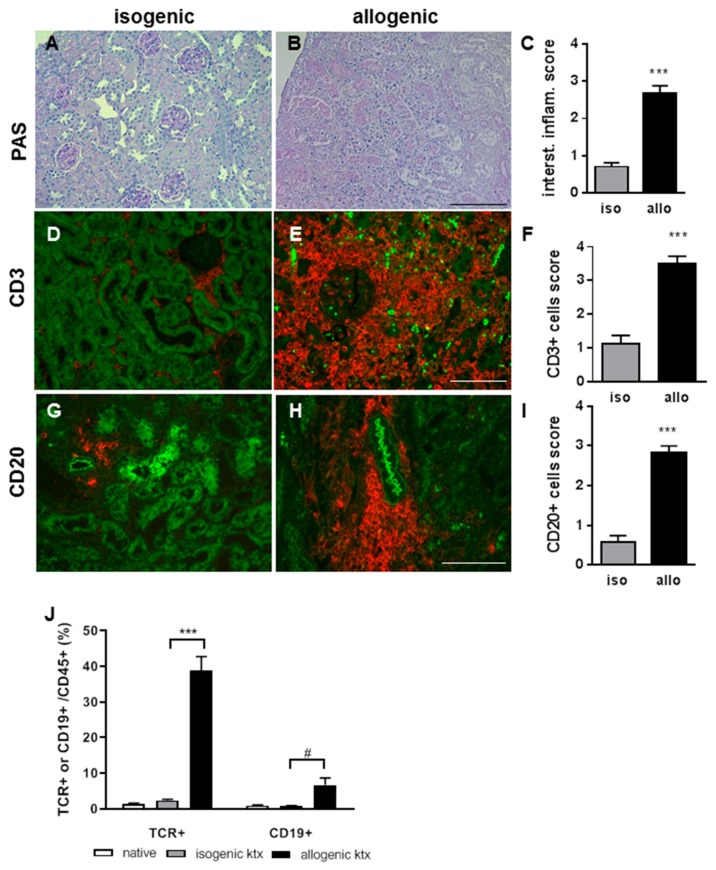
The presence of B-cell clusters in allogenic T cell-mediated rejection (TCMR) of kidney allografts is linked to more severe disease entities. In this study we characterized B-cell infiltrates in patients with TCMR and examined the role of serum CXCL-13 in these patients and experimentally. CXCL-13 serum levels were analyzed in 73 kidney allograft recipients at the time of allograft biopsy. In addition, four patients were evaluated for CXCL13 levels during the first week after transplantation. ELISA was done to measure CXCL-13 serum levels. For further mechanistic understanding, a translational allogenic kidney transplant (ktx) mouse model for TCMR was studied in BalbC recipients of fully mismatched transplants with C57BL/6 donor kidneys. CXCL-13 serum levels were measured longitudinally, CD20 and CD3 composition and CXCL13 mRNA in tissue were examined by flow cytometry and kidneys were examined by histology and immunohistochemistry. We found significantly higher serum levels of the B-cell chemoattractant CXCL13 in patients with TCMR compared to controls and patients with borderline TCMR. Moreover, in patients with acute rejection within the first week after ktx, a >5-fold CXCL13 increase was measured and correlated with B-cell infiltrates in the biopsies. In line with the clinical findings, TCMR in mice correlated with increased systemic serum-CXCL13 levels. Moreover, renal allografts had significantly higher CXCL13 mRNA expression than isogenic controls and showed interstitial CD20+ B-cell clusters and CD3+ cell infiltrates accumulating in the vicinity of renal vessels. CXCL13 blood levels correlate with B-cell involvement in TCMR and might help to identify patients at risk of a more severe clinical course of rejection.
同种异体 T 细胞介导的排斥反应(TCMR)中 B 细胞簇的存在与更严重的疾病实体有关。在这项研究中,我们对 TCMR 患者的 B 细胞浸润进行了特征描述,并在这些患者和实验中检查了血清 CXCL-13 的作用。在进行移植肾活检时,分析了 73 例移植肾受者的血清 CXCL-13 水平。此外,在移植后第一周对 4 例患者进行了 CXCL13 水平评估。通过 ELISA 测量血清 CXCL-13 水平。为了进一步了解机制,在 BalbC 受体中研究了同种异体肾移植(ktx)TCMR 的转化模型,这些受体接受了完全不匹配的移植,供体肾脏为 C57BL/6。通过流式细胞术检测组织中 CD20 和 CD3 组成和 CXCL13 mRNA,纵向测量 CXCL-13 血清水平,并通过组织学和免疫组织化学检查肾脏。我们发现,与对照组和边界 TCMR 患者相比,TCMR 患者的 B 细胞趋化因子 CXCL-13 血清水平显著升高。此外,在 ktx 后第一周内发生急性排斥反应的患者中,测量到 CXCL13 增加了 5 倍以上,与活检中的 B 细胞浸润相关。与临床发现一致,小鼠 TCMR 与系统性血清-CXCL13 水平升高相关。此外,同种异体肾移植的 CXCL13 mRNA 表达明显高于同基因对照,并且显示出间质 CD20+B 细胞簇和 CD3+细胞浸润在肾血管附近积聚。CXCL13 血液水平与 TCMR 中的 B 细胞参与相关,可能有助于识别具有更严重排斥反应临床病程风险的患者。