Division of Gastroenterology, Department of Medicine, Vanderbilt University Medical Center, Nashville, Tennessee, USA.
Department of Pathology and Laboratory Medicine, University of Pennsylvania, Philadelphia, Pennsylvania, USA.
mBio. 2019 May 28;10(3):e00955-19. doi: 10.1128/mBio.00955-19.
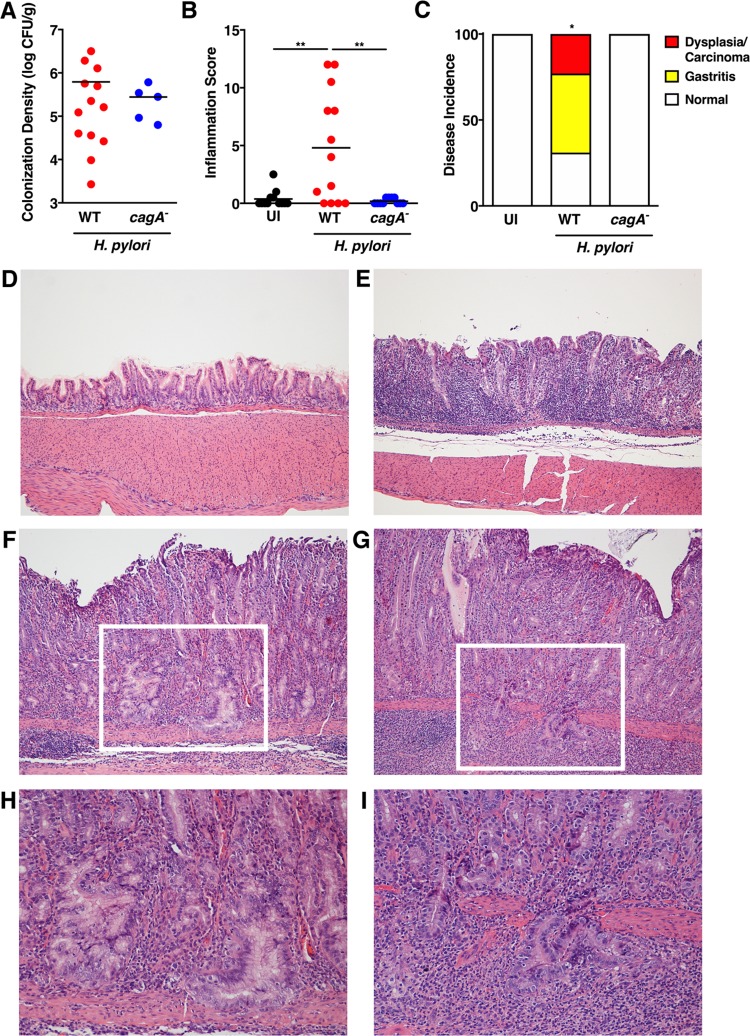
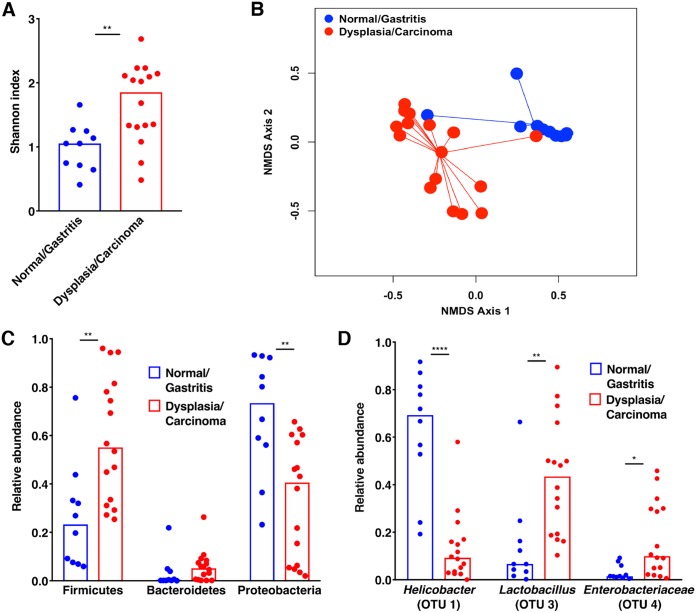
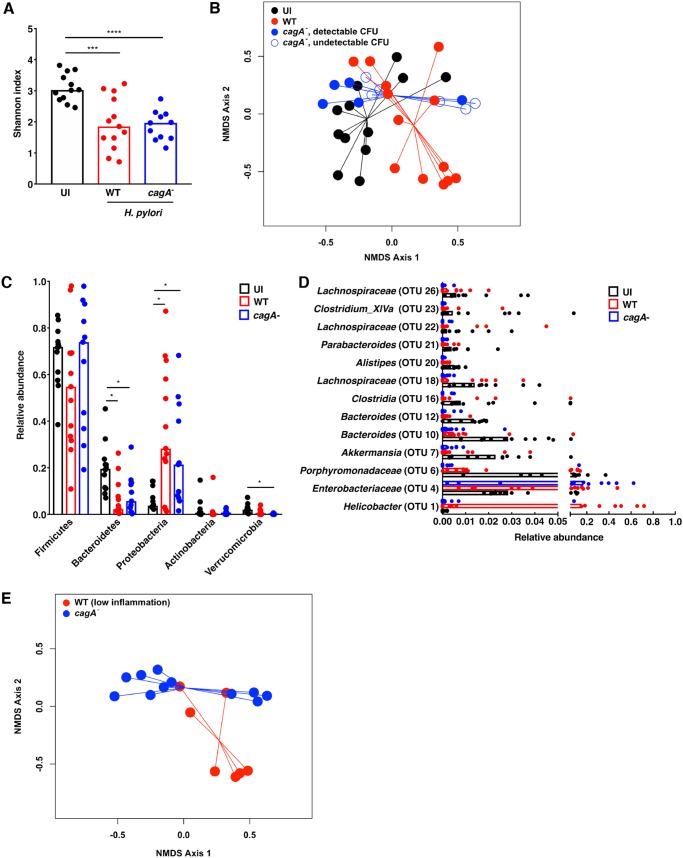
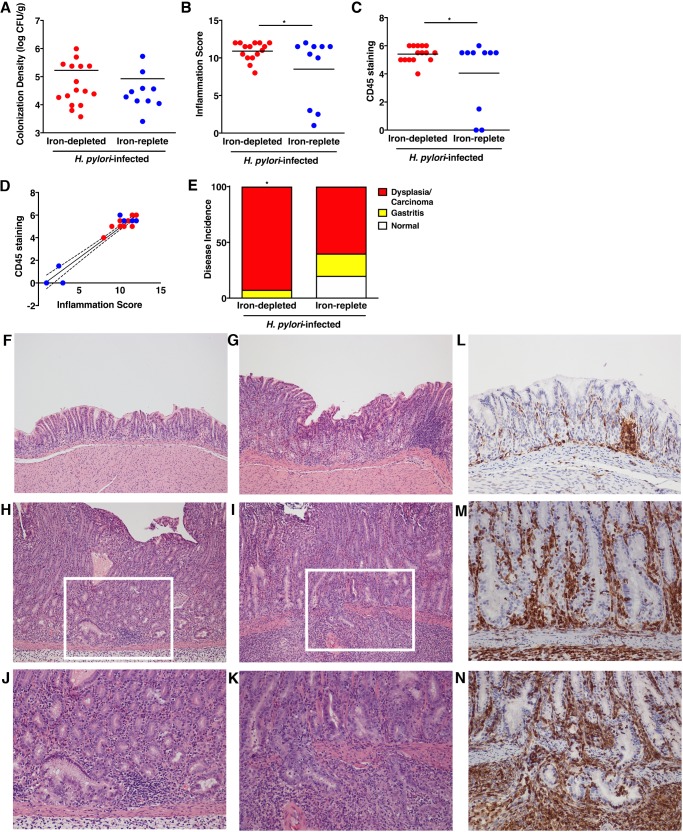
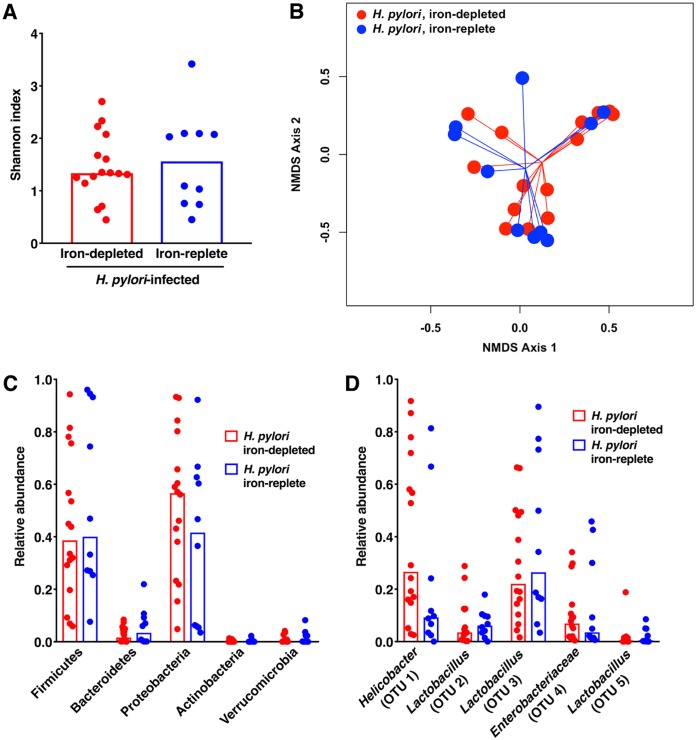
is the strongest risk factor for gastric adenocarcinoma; however, most infected individuals never develop this malignancy. Strain-specific microbial factors, such as the oncoprotein CagA, as well as environmental conditions, such as iron deficiency, augment cancer risk. Importantly, dysbiosis of the gastric microbiota is also associated with gastric cancer. To investigate the combinatorial effects of these determinants in an model of gastric cancer, Mongolian gerbils were infected with the carcinogenic strain 7.13 or a 7.13 isogenic mutant, and microbial DNA extracted from gastric tissue was analyzed by 16S rRNA sequencing. Infection with significantly increased gastric inflammation and injury, decreased α-diversity, and altered microbial community structure in a dependent manner. The effect of iron deficiency on gastric microbial communities was also investigated within the context of infection. -induced injury was augmented under conditions of iron deficiency, but despite differences in gastric pathology, there were no significant differences in α- or β-diversity, phyla, or operational taxonomic unit (OTU) abundance among infected gerbils maintained on iron-replete or iron-depleted diets. However, when microbial composition was stratified based solely on the severity of histologic injury, significant differences in α- and β-diversity were present among gerbils harboring premalignant or malignant lesions compared to gerbils with gastritis alone. This study demonstrates that decreases gastric microbial diversity and community structure in a dependent manner and that as carcinogenesis progresses, there are corresponding alterations in community structure that parallel the severity of disease. Microbial communities are essential for the maintenance of human health, and when these communities are altered, hosts can become susceptible to inflammation and disease. Dysbiosis contributes to gastrointestinal cancers, and specific bacterial species are associated with this phenotype. This study uses a robust and reproducible animal model to demonstrate that infection induces gastric dysbiosis in a -dependent manner and further that dysbiosis and altered microbial community structure parallel the severity of -induced gastric injury. Ultimately, such models of infection and cancer that can effectively evaluate multiple determinants simultaneously may yield effective strategies for manipulating the gastric microbiota to prevent the development of gastric cancer.
是胃腺癌的最强危险因素;然而,大多数感染个体从未发展为这种恶性肿瘤。菌株特异性微生物因素,如致癌蛋白 CagA,以及环境条件,如缺铁,会增加癌症风险。重要的是,胃微生物群落的失调也与胃癌有关。为了在胃癌模型中研究这些决定因素的组合效应,蒙古沙鼠感染致癌菌株 7.13 或其 7.13 同源突变株,并用 16S rRNA 测序分析胃组织中的微生物 DNA。感染 显著增加了胃的炎症和损伤,降低了α多样性,并以依赖的方式改变了微生物群落结构。在感染的背景下,还研究了缺铁对胃微生物群落的影响。在缺铁的情况下, 诱导的损伤加剧,但尽管胃病理学存在差异,在感染沙鼠中,无论是在铁充足还是铁缺乏的饮食中,α多样性或β多样性、门或操作分类单元(OTU)丰度都没有显著差异。然而,当仅根据组织学损伤的严重程度对微生物组成进行分层时,与仅患有胃炎的沙鼠相比,患有癌前或恶性病变的沙鼠的α和β多样性存在显著差异。这项研究表明, 以依赖的方式降低胃微生物的多样性和群落结构,并且随着癌变的进展,群落结构会发生相应的改变,与疾病的严重程度平行。微生物群落对于维持人类健康至关重要,当这些群落发生改变时,宿主会容易受到炎症和疾病的影响。肠道菌群失调与胃肠道癌症有关,特定的细菌物种与这种表型有关。本研究使用一种稳健且可重复的动物模型,证明 感染以依赖的方式诱导胃微生物失调,并且进一步表明,失调和改变的微生物群落结构与 诱导的胃损伤的严重程度平行。最终,这种能够同时有效评估多种决定因素的 感染和癌症模型,可能会产生有效策略来操纵胃微生物群,以预防胃癌的发生。