Keller Jonathan M, Steinbach Trevor C, Adamson Rosemary, Carlbom David J, Johnson Nicholas J, Clark Jennifer, Kritek Patricia A, Çoruh Başak
Fellow, Department of Medicine, Division of Pulmonary, Critical Care and Sleep Medicine, University of Washington School of Medicine.
Assistant Professor, Department of Medicine, Division of Pulmonary, Critical Care and Sleep Medicine, University of Washington School of Medicine.
MedEdPORTAL. 2019 Mar 15;15:10813. doi: 10.15766/mep_2374-8265.10813.
The management of neurologic emergencies is an important component of critical care fellowship training. Additional training in neurocritical care has been demonstrated to improve clinical outcomes, though exposure to these emergencies during training can be limited.
Three simulation cases are presented as part of a comprehensive neurologic emergencies curriculum for critical care trainees. The cases represent neurologic catastrophes encountered in the intensive care unit consisting of symptomatic hyponatremia, severe alcohol withdrawal syndrome, and brain herniation syndrome. The case descriptions are complete with learning objectives, critical actions checklists, and debriefing material for facilitators, as well as all necessary personnel briefs and required equipment.
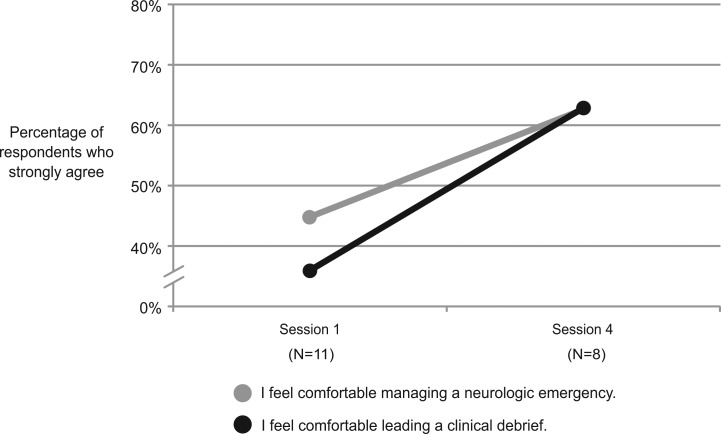
The scenarios were completed over the course of the 2016-2017 academic year by first-year critical care fellows. Following curriculum implementation, there was an improvement in self-perceived confidence of fellows in neurologic emergency management skills.
The cases were felt to be realistic and beneficial and led to perceived improvement in management of neurologic emergencies and leadership during clinical crises.
神经系统急症的管理是重症医学专科培训的重要组成部分。尽管在培训期间接触这些急症的机会可能有限,但神经重症监护方面的额外培训已被证明可改善临床结局。
作为重症医学学员综合神经系统急症课程的一部分,展示了三个模拟病例。这些病例代表了重症监护病房中遇到的神经系统灾难,包括症状性低钠血症、严重酒精戒断综合征和脑疝综合征。病例描述配有学习目标、关键行动清单以及供指导教师使用的汇报材料,还有所有必要的人员简报和所需设备。
这些模拟场景在2016 - 2017学年由一年级重症医学专科住院医师完成。课程实施后,学员对神经系统急症管理技能的自我感知信心有所提高。
这些病例被认为是真实且有益的,并使学员在临床危机期间对神经系统急症的管理和领导力有了明显改善。