Department of Clinical and Translational Science, The Peekie Nash Carpenter Endowed Chair in Medicine, Creighton University School of Medicine, CRISS II Room 510, 2500 California Plaza, Omaha, NE, 68178, USA.
Department of Orthopedic Surgery, Creighton University School of Medicine, Omaha, NE, 68178, USA.
J Bone Miner Metab. 2019 Sep;37(5):759-767. doi: 10.1007/s00774-019-01013-z. Epub 2019 Jun 1.
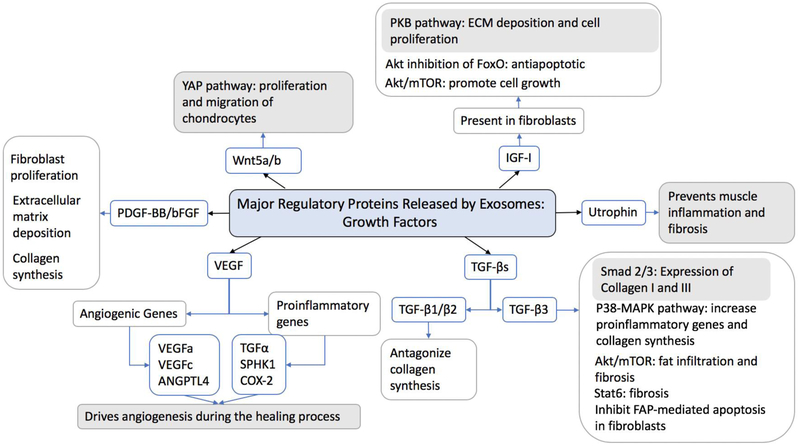
Rotator cuff tears are common musculoskeletal injuries that can cause significant pain and disability. While the clinical results of rotator cuff repair can be good, failure of tendon healing remains a significant problem. Molecular mechanisms underlying structural failure following surgical repair remain unclear. Histologically, enhanced inflammation, disorganization of the collagen fibers, calcification, apoptosis and tissue necrosis affect the normal healing process. Mesenchymal stem cells (MSCs) have the ability to provide improved healing following rotator cuff repair via the release of mediators from secreted 30-100 nm extracellular vesicles called exosomes. They carry regulatory proteins, mRNA and miRNA and have the ability to increase collagen synthesis and angiogenesis through increased expression of mRNA and release of proangiogenic factors and regulatory proteins that play a major role in proper tissue remodeling and preventing extracellular matrix degradation. Various studies have shown the effect of exosomes on improving outcome of cutaneous wound healing, scar tissue formation, degenerative bone disease and Duchenne Muscular Dystrophy. In this article, we critically reviewed the potential role of exosomes in tendon regeneration and propose the novel use of exosomes alone or seeded onto biomaterial matrices to stimulate secretion of favorable cellular factors in accelerating the healing response following rotator cuff repair.
肩袖撕裂是常见的肌肉骨骼损伤,可导致明显的疼痛和残疾。虽然肩袖修复的临床效果可能很好,但肌腱愈合失败仍然是一个重大问题。手术修复后结构失效的分子机制仍不清楚。组织学上,增强的炎症、胶原纤维的紊乱、钙化、细胞凋亡和组织坏死会影响正常的愈合过程。间充质干细胞 (MSC) 通过释放 30-100nm 细胞外囊泡(称为外泌体)中的分泌介质,具有在肩袖修复后提供更好愈合的能力。它们携带调节蛋白、mRNA 和 miRNA,并通过增加 mRNA 的表达和释放促血管生成因子和调节蛋白来增加胶原蛋白合成和血管生成,这些因子在适当的组织重塑和防止细胞外基质降解中起主要作用。各种研究表明,外泌体在改善皮肤伤口愈合、瘢痕组织形成、退行性骨病和杜氏肌营养不良症的效果。在本文中,我们批判性地回顾了外泌体在肌腱再生中的潜在作用,并提出了单独使用外泌体或接种到生物材料基质上的新用途,以刺激分泌有利的细胞因子,加速肩袖修复后的愈合反应。