Sports Medicine Center, Affiliated Hospital of Nanjing University of Chinese Medicine, Nanjing, 210029, China.
Stem Cell Res Ther. 2020 Nov 25;11(1):496. doi: 10.1186/s13287-020-02005-x.
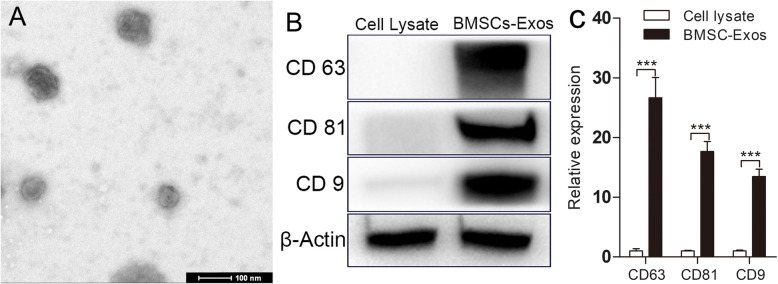
Rotator cuff tears (RCTs) often require reconstructive surgery. Tendon-bone healing is critical for the outcome of rotator cuff reconstruction, but the process of tendon-bone healing is complex and difficult. Mesenchymal stem cells (MSCs) are considered to be an effective method to promote tendon-bone healing. MSCs have strong paracrine, anti-inflammatory, immunoregulatory, and angiogenic potential. Recent studies have shown that MSCs achieve many regulatory functions through exosomes. The purpose of this study was to explore the role of bone marrow mesenchymal stem cell-derived exosomes (BMSC-Exos) in tendon-bone healing.
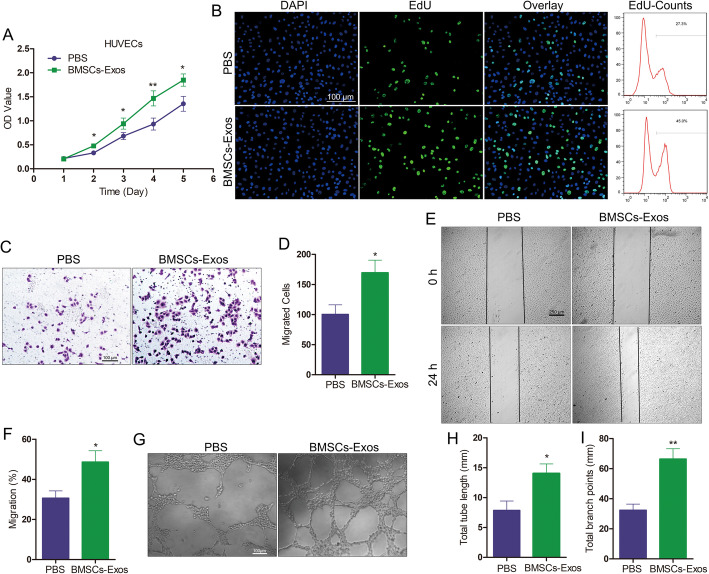
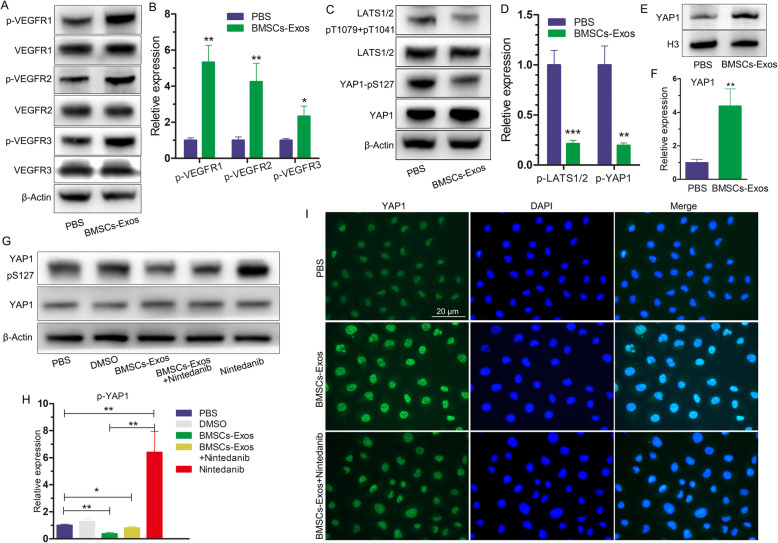
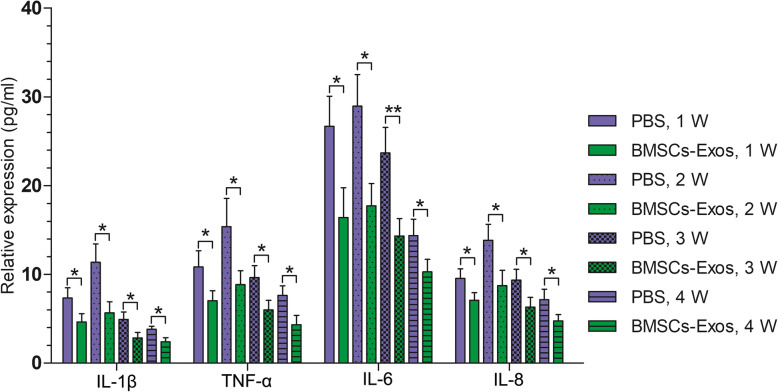
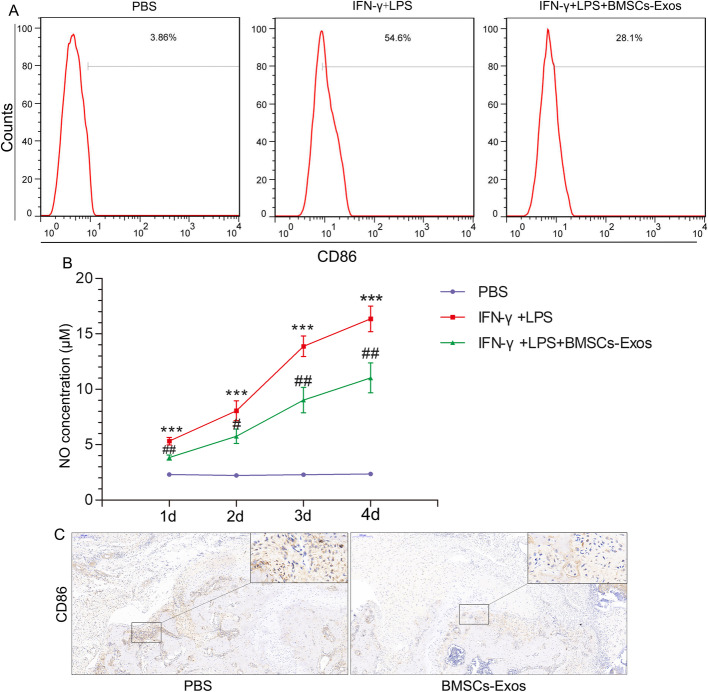
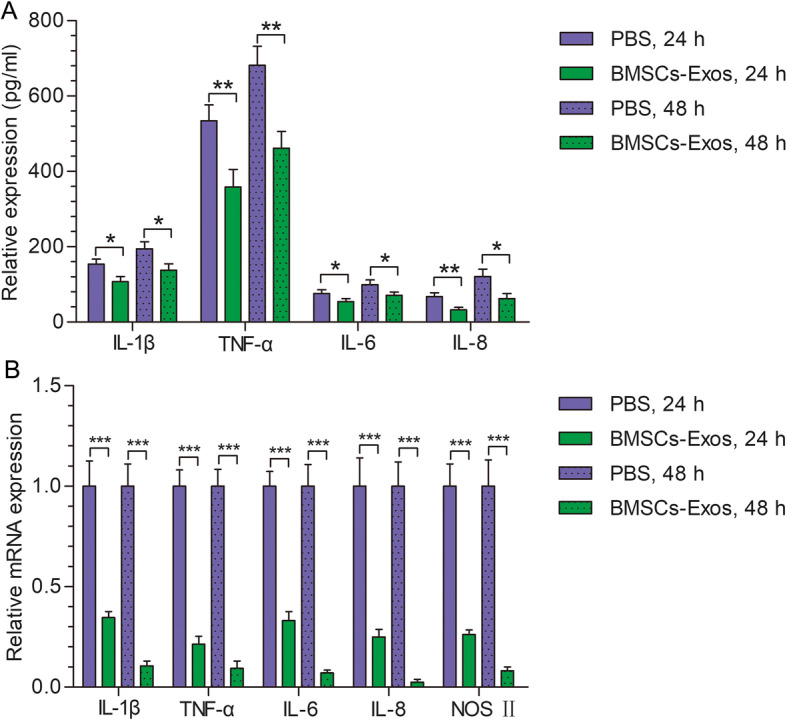
Our study found that BMSC-Exos promote the proliferation, migration, and angiogenic tube formation of human umbilical vein endothelial cells (HUVECs). The mechanism by which BMSC-Exos achieve this may be through the regulation of the angiogenic signaling pathway. In addition, BMSC-Exos can inhibit the polarization of M1 macrophages and inhibit the secretion of proinflammatory factors by M1 macrophages. After rotator cuff reconstruction in rats, BMSC-Exos were injected into the tail vein to analyze their effect on the rotator cuff tendon-bone interface healing.
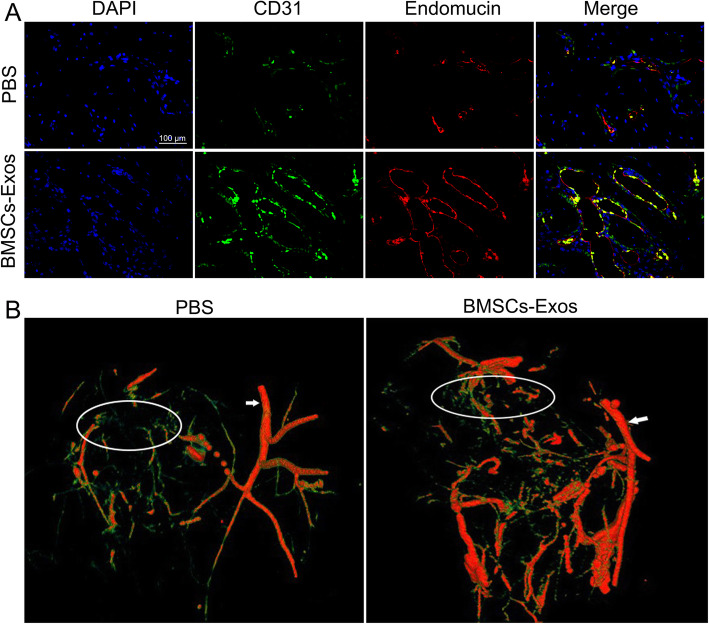
It was confirmed that BMSC-Exos increased the breaking load and stiffness of the rotator cuff after reconstruction in rats, induced angiogenesis around the rotator cuff endpoint, and promoted growth of the tendon-bone interface.
BMSC-Exos promote tendon-bone healing after rotator cuff reconstruction in rats by promoting angiogenesis and inhibiting inflammation.
肩袖撕裂(RCT)常需要进行重建手术。肌腱-骨愈合对于肩袖重建的结果至关重要,但肌腱-骨愈合的过程复杂且困难。间充质干细胞(MSCs)被认为是促进肌腱-骨愈合的有效方法。MSCs 具有强大的旁分泌、抗炎、免疫调节和血管生成潜力。最近的研究表明,MSCs 通过外泌体实现许多调节功能。本研究旨在探讨骨髓间充质干细胞衍生的外泌体(BMSC-Exos)在肌腱-骨愈合中的作用。
我们的研究发现,BMSC-Exos 促进人脐静脉内皮细胞(HUVECs)的增殖、迁移和血管生成管形成。BMSC-Exos 实现这一目标的机制可能是通过调节血管生成信号通路。此外,BMSC-Exos 可以抑制 M1 巨噬细胞的极化,并抑制 M1 巨噬细胞分泌促炎因子。在大鼠肩袖重建后,将 BMSC-Exos 注入尾静脉,分析其对肩袖肌腱-骨界面愈合的影响。
证实 BMSC-Exos 增加了大鼠重建后肩袖的断裂负荷和刚度,诱导肩袖终点周围的血管生成,并促进了肌腱-骨界面的生长。
BMSC-Exos 通过促进血管生成和抑制炎症来促进大鼠肩袖重建后的肌腱-骨愈合。