a Department of Dermatology , University Medical Center Schleswig-Holstein, Campus Kiel , Kiel , Germany.
b Klinik und Poliklinik für Dermatologie und Allergologie, Fakultät für Medizin , Technische Universität München , Munich , Germany.
Cell Cycle. 2019 Jun;18(12):1316-1334. doi: 10.1080/15384101.2019.1618125. Epub 2019 Jun 3.
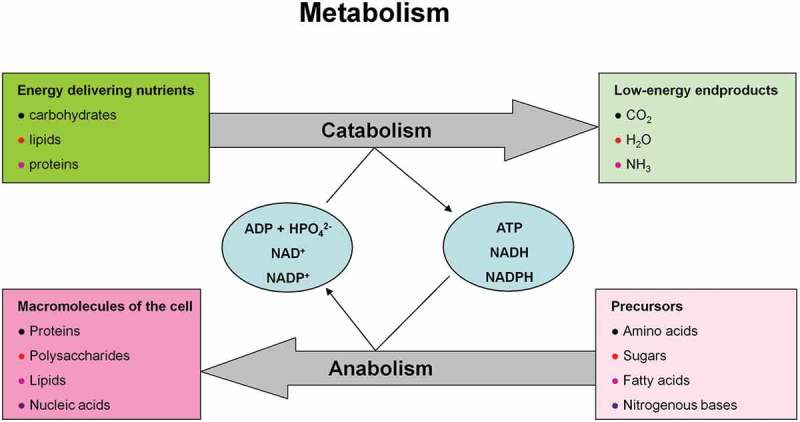
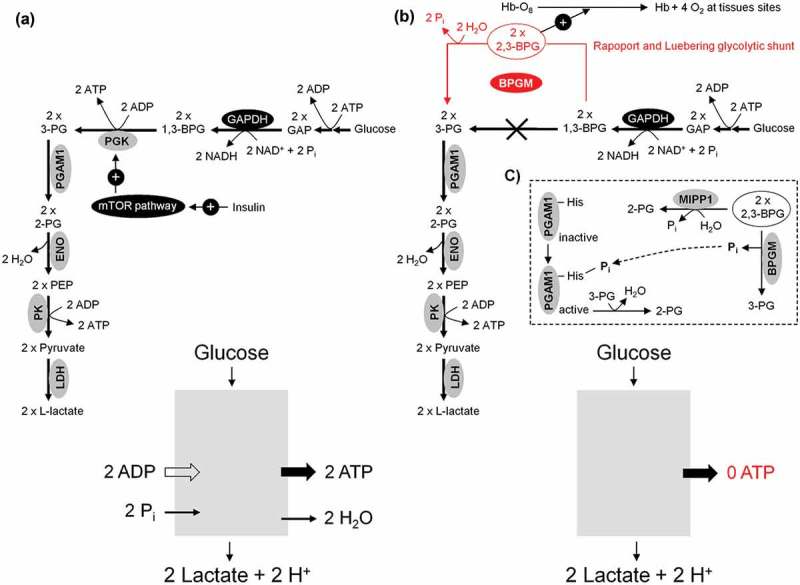
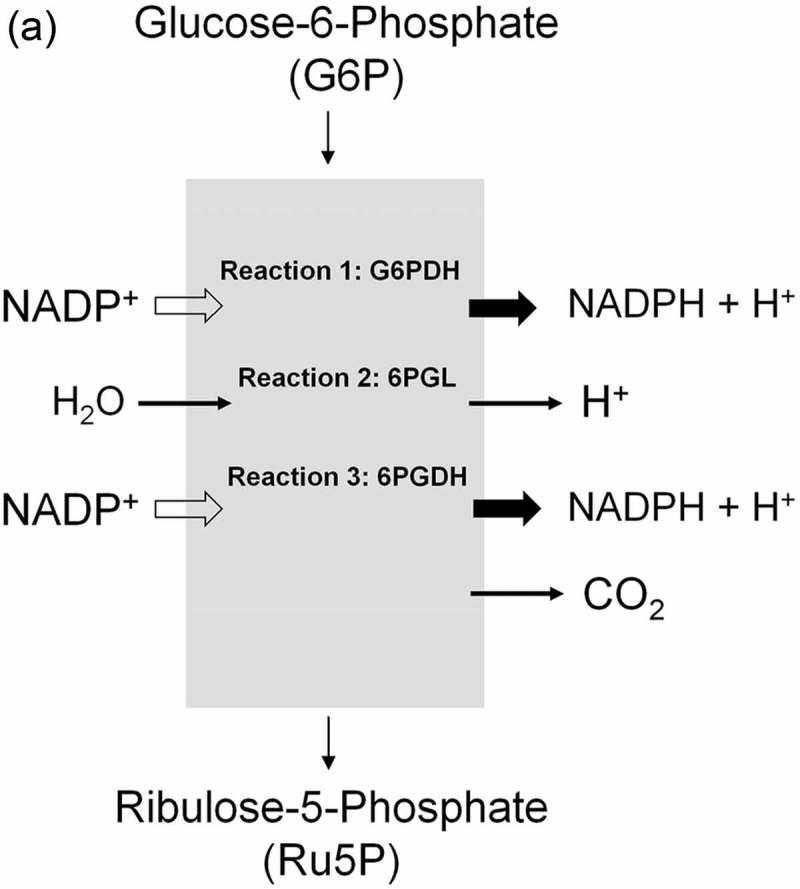
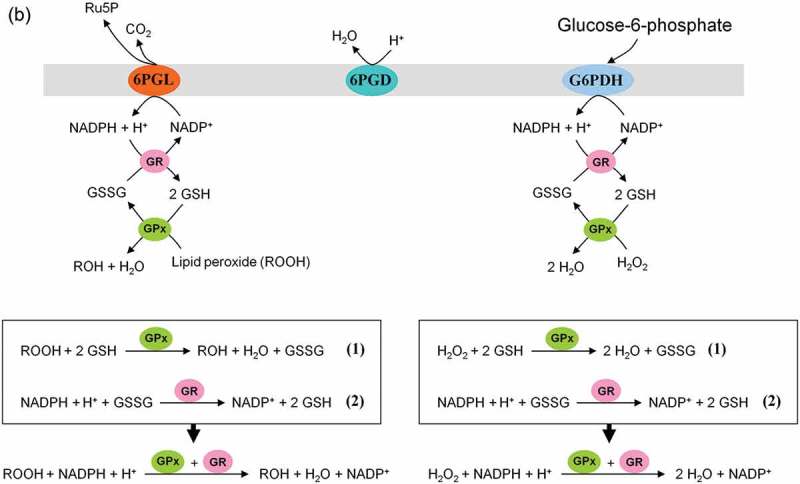
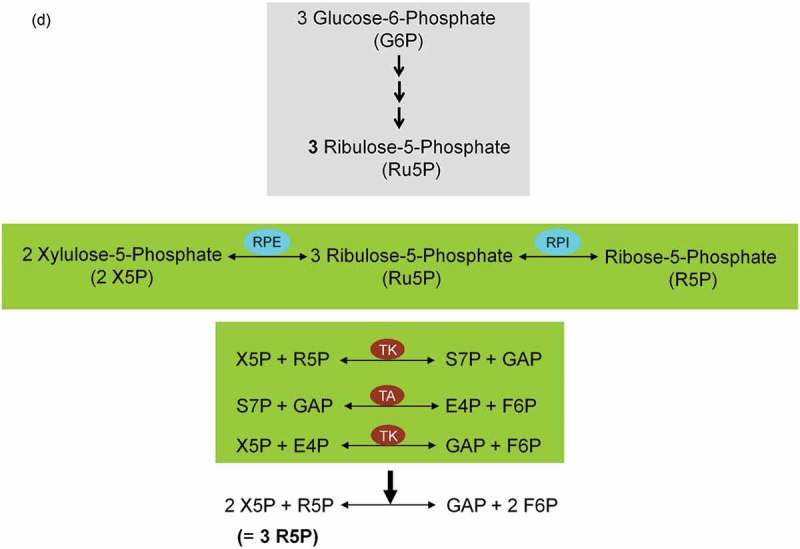
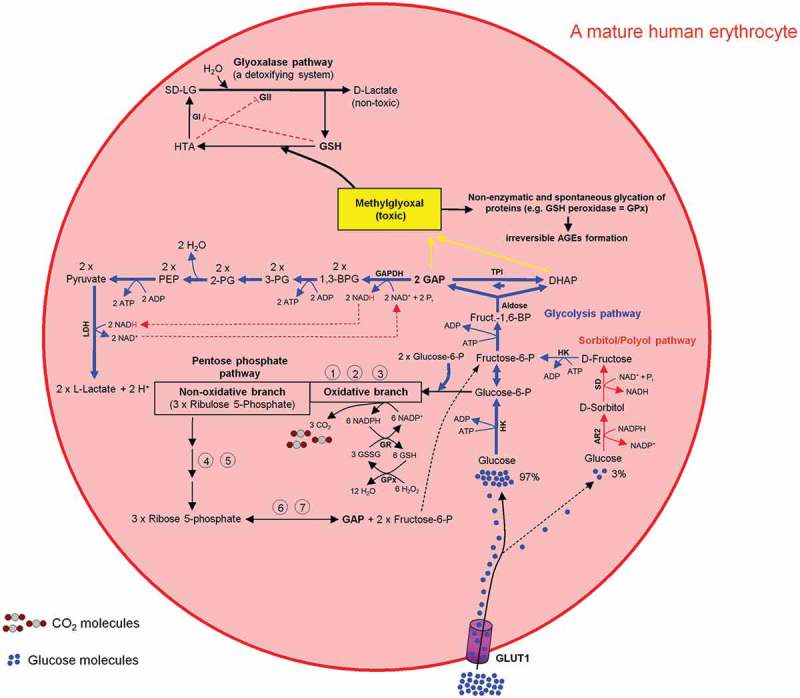
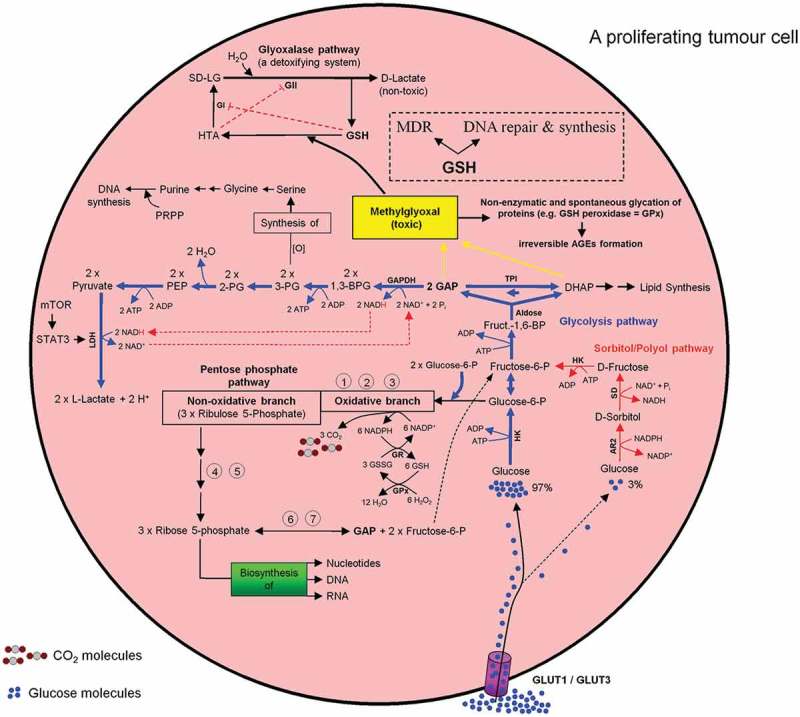
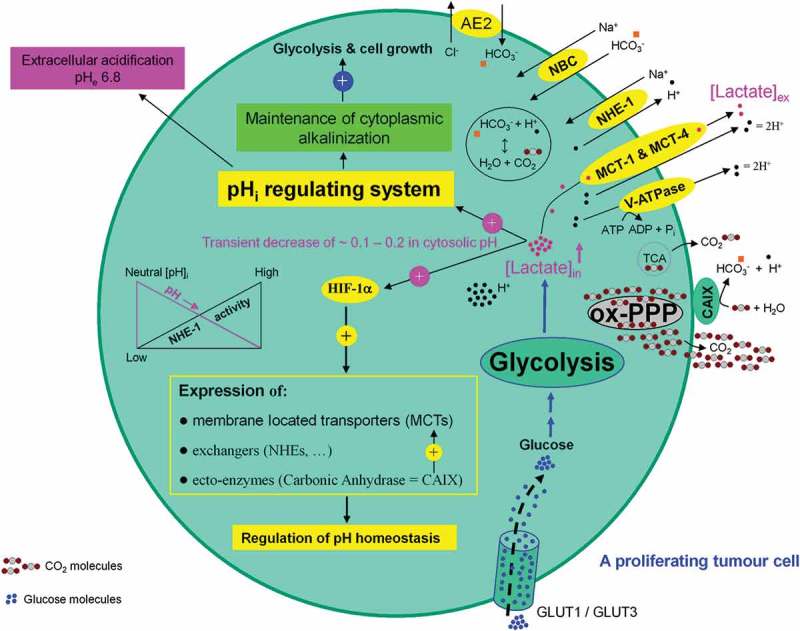
Mature human erythrocytes are dependent on anerobic glycolysis, i.e. catabolism (oxidation) of one glucose molecule to produce two ATP and two lactate molecules. Proliferating tumor cells mimick mature human erythrocytes to glycolytically generate two ATP molecules. They deliberately avoid or switch off their respiration, i.e. tricarboxylic acid (TCA) cycle and oxidative phosphorylation (OXPHOS) machinery and consequently dispense with the production of additional 36 ATP molecules from one glucose molecule. This phenomenon is named aerobic glycolysis or Warburg effect. The present review deals with the fate of a glucose molecule after entering a mature human erythrocyte or a proliferating tumor cell and describes why it is useful for a proliferating tumor cell to imitate a mature erythrocyte. Blood consisting of plasma and cellular components (99% of the cells are erythrocytes) may be regarded as a mobile organ, constantly exercising a direct interaction with other organs. Therefore, the use of drugs, which influences the biological activity of erythrocytes, has an immediate effect on the entire organism. : TCA: tricarboxylic acid cycle; OXPHOS: oxidative phosphorylation; GSH: reduced state of glutathione; NFκB: Nuclear factor of kappa B; PKB (Akt): protein kinase B; NOS: nitric oxide synthase; IgG: immune globulin G; HS: hydrogen sulfide; slanDCs: Human 6-sulfo LacNAc-expressing dendritic cells; IL-8: interleukin-8; LPS: lipopolysaccharide; ROS: reactive oxygen species; PPP: pentose phosphate pathway; NADPH: nicotinamide adenine dinucleotide phosphate hydrogen; R5P: ribose-5-phophate; NAD: nicotinamide adenine dinucleotide; FAD: flavin adenine dinucleotide; O: superoxide anion; G6P: glucose 6-phosphate; HbO: Oxyhemoglobin; GAPDH: glyceraldehyde-3-phosphate dehydrogenase; GAP: glyceraldehyde-3-phosphate; 1,3-BPG: 1,3-bis-phosphoglycerate; 2,3-BPG: 2,3-bisphosphoglycerte; PGAM1: phosphoglycerate mutase 1; 3-PG: 3-phosphoglycerate; 2-PG: 2-phosphoglycerate; MIPP1: Multiple inositol polyphosphate phosphatase; mTORC1: mammalian target of rapamycin complex 1; Ru5P: ribulose 5-phosphate; ox-PPP: oxidative branch of pentose phosphate pathway; PGK: phosphoglycerate kinase; IFN-γ: interferon-γ; LDH: lactate dehydrogenase; STAT3: signal transducer and activator of transcription 3; Rheb: Ras homolog enriched in Brain; HO: hydrogen peroxide; ROOH: lipid peroxide; SOD: superoxide dismutase; MRC: mitochondrial respiratory chain; MbFe-O: methmyoglobin; RNR: ribonucleotide reductase; PRPP: phosphoribosylpyrophosphate; PP: pyrophosphate; GSSG: oxidized state of glutathione; non-ox-PPP: non-oxidative branch of pentose phosphate pathway; RPI: ribose-5-phosphate isomerase; RPE: ribulose 5-phosphate 3-epimerase; X5P: xylulose 5-phosphate; TK: transketolase; TA: transaldolase; F6P: fructose-6-phosphate; AR2: aldose reductase 2; SD: sorbitol dehydrogenase; HK: hexokinase; MG: mehtylglyoxal; DHAP: dihydroxyacetone phosphate; TILs: tumor-infiltrating lymphocytes; MCTs: monocarboxylate transporters; pHi: intracellular pH; Hif-1α: hypoxia-induced factor 1; NHE1: sodium/H (Na/H) antiporter 1; V-ATPase: vacuolar-type proton ATPase; CAIX: carbonic anhydrase; CO: carbon dioxide; HCO: bicarbonate; NBC: sodium/bicarbonate (Na/HCO) symporter; pHe: extracellular pH; GLUT-1: glucose transporter 1; PGK-1: phosphoglycerate kinase 1.
成熟的人类红细胞依赖于无氧糖酵解,即一个葡萄糖分子的分解(氧化)产生两个 ATP 和两个乳酸分子。增殖的肿瘤细胞模仿成熟的人类红细胞,通过糖酵解产生两个 ATP 分子。它们故意避免或关闭呼吸作用,即三羧酸 (TCA) 循环和氧化磷酸化 (OXPHOS) 机制,因此从一个葡萄糖分子中不再产生额外的 36 个 ATP 分子。这种现象被称为有氧糖酵解或瓦伯格效应。本综述涉及葡萄糖分子进入成熟的人类红细胞或增殖的肿瘤细胞后的命运,并描述了为什么增殖的肿瘤细胞模仿成熟的红细胞是有益的。由血浆和细胞成分组成的血液(99%的细胞是红细胞)可被视为一个移动的器官,它与其他器官不断进行直接的相互作用。因此,影响红细胞生物活性的药物的使用会对整个机体立即产生影响。: TCA: 三羧酸循环; OXPHOS: 氧化磷酸化; GSH: 还原型谷胱甘肽; NFκB: 核因子 κB; PKB (Akt): 蛋白激酶 B; NOS: 一氧化氮合酶; IgG: 免疫球蛋白 G; HS: 硫化氢; slanDCs: 表达 6-硫酸唾液酸的人类树突细胞; IL-8: 白细胞介素-8; LPS: 脂多糖; ROS: 活性氧; PPP: 戊糖磷酸途径; NADPH: 烟酰胺腺嘌呤二核苷酸磷酸氢; R5P: 核糖-5-磷酸; NAD: 烟酰胺腺嘌呤二核苷酸; FAD: 黄素腺嘌呤二核苷酸; O: 超氧阴离子; G6P: 葡萄糖 6-磷酸; HbO: 氧合血红蛋白; GAPDH: 甘油醛-3-磷酸脱氢酶; GAP: 甘油醛-3-磷酸; 1,3-BPG: 1,3-双磷酸甘油酸; 2,3-BPG: 2,3-双磷酸甘油酯; PGAM1: 磷酸甘油酸变位酶 1; 3-PG: 3-磷酸甘油酸; 2-PG: 2-磷酸甘油酸; MIPP1: 多磷酸肌醇多磷酸酶; mTORC1: 雷帕霉素靶蛋白复合体 1; Ru5P: 核酮糖 5-磷酸; ox-PPP: 戊糖磷酸途径的氧化分支; PGK: 磷酸甘油酸激酶; IFN-γ: 干扰素-γ; LDH: 乳酸脱氢酶; STAT3: 信号转导和转录激活因子 3; Rheb: 富含脑的 Ras 同源物; HO: 过氧化氢; ROOH: 脂质过氧化物; SOD: 超氧化物歧化酶; MRC: 线粒体呼吸链; MbFe-O: 甲硫血红蛋白; RNR: 核糖核苷酸还原酶; PRPP: 磷酸核糖焦磷酸; PP: 焦磷酸; GSSG: 氧化型谷胱甘肽; non-ox-PPP: 戊糖磷酸途径的非氧化分支; RPI: 核糖-5-磷酸异构酶; RPE: 核酮糖 5-磷酸 3-差向异构酶; X5P: 木酮糖 5-磷酸; TK: 转酮醇酶; TA: 转醛醇酶; F6P: 果糖-6-磷酸; AR2: 醛糖还原酶 2; SD: 山梨醇脱氢酶; HK: 己糖激酶; MG: 甲基乙二醛; DHAP: 二羟丙酮磷酸; TILs: 肿瘤浸润淋巴细胞; MCTs: 单羧酸转运蛋白; pHi: 细胞内 pH; Hif-1α: 缺氧诱导因子 1; NHE1: 钠/H (Na/H) 反向转运体 1; V-ATPase: 液泡型质子 ATP 酶; CAIX: 碳酸酐酶; CO: 二氧化碳; HCO: 碳酸氢盐; NBC: 钠/碳酸氢盐 (Na/HCO) 转运体; pHe: 细胞外 pH; GLUT-1: 葡萄糖转运蛋白 1; PGK-1: 磷酸甘油激酶 1。