Ebaid Deena, Crewther Sheila G
Department of Psychology and Counselling, School of Psychology and Public Health, La Trobe University, Melbourne Campus, VIC, Australia.
Front Aging Neurosci. 2019 May 16;11:116. doi: 10.3389/fnagi.2019.00116. eCollection 2019.
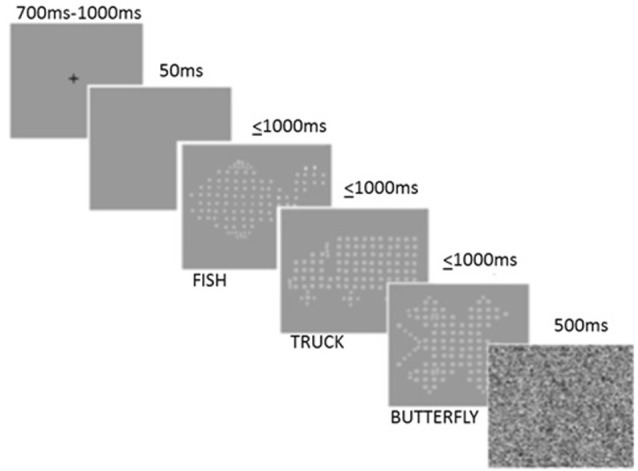
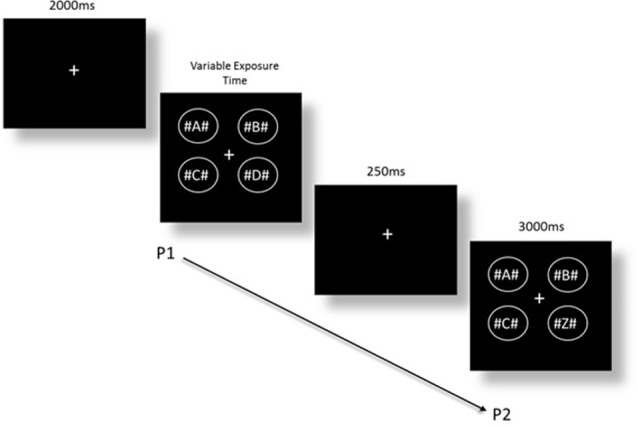
Decline in information processing with age is well-documented in the scientific literature. However, some discrepancy remains in relation to which cognitive domains are most susceptible to the aging process and which may remain intact. Furthermore, information processing has not been investigated nor considered as a function of affect, familiarity and complexity of tasks in a single experimental study. Thus, the current study investigated rate of visual information processing in 67 young university students ( age = 19.64 years) and 33 educated healthy older adults ( age = 70.33 years), while accounting for depression, anxiety and stress symptoms using the DASS. Rates of visual processing were measured as minimum time of stimulus exposure duration required for correct object recognition on a simple visual task [Inspection Time (IT)], and on a more complex visual cognitive task known as Change Detection (CD)] as well as words per minute on a text reading task (FastaReada). The results demonstrated significantly slower performance by older adults on the IT and CD, but comparable rates of text reading on a semantically more complex, but ecologically valid and familiar visual task that requires organized sequential shifts in attention eye movements, continuous visual processing, access to working memory and semantic comprehension. The results also demonstrated that affective influences did not play a role in the older adults task performance, and that changes in cognitive domains may begin with older adults being slower to attend to and identify newly appearing familiar objects, as well as slower to encode and embed new information in memory during tasks that require a less practiced/familiar task strategy.
年龄增长导致信息处理能力下降,这在科学文献中有充分记载。然而,在哪些认知领域最容易受到衰老过程影响以及哪些领域可能保持完好方面,仍存在一些差异。此外,在单一实验研究中,信息处理尚未作为情感、熟悉度和任务复杂性的函数进行调查或考虑。因此,本研究调查了67名年轻大学生(年龄 = 19.64岁)和33名受过教育的健康老年人(年龄 = 70.33岁)的视觉信息处理速度,同时使用抑郁、焦虑和压力量表(DASS)评估抑郁、焦虑和压力症状。视觉处理速度通过在简单视觉任务[检查时间(IT)]上正确识别物体所需的最短刺激暴露持续时间来衡量,在更复杂的视觉认知任务即变化检测(CD)中进行测量,以及在文本阅读任务(FastaReada)中每分钟阅读的单词数。结果表明,老年人在IT和CD任务上的表现明显较慢,但在语义上更复杂但生态上有效且熟悉的视觉任务上的文本阅读速度相当,该任务需要有组织的注意力顺序转移、眼球运动、持续视觉处理、访问工作记忆和语义理解。结果还表明,情感影响在老年人的任务表现中不起作用,并且认知领域的变化可能始于老年人在注意和识别新出现的熟悉物体时速度较慢,以及在需要较少练习/熟悉的任务策略的任务中,将新信息编码和嵌入记忆的速度较慢。