Tóth Viktor R, Villa Paolo, Pinardi Monica, Bresciani Mariano
Balaton Limnological Institute, MTA Centre for Ecological Research, Hungarian Academy of Sciences, Tihany, Hungary.
Institute for Electromagnetic Sensing of the Environment, National Research Council, Milan, Italy.
Front Plant Sci. 2019 May 16;10:647. doi: 10.3389/fpls.2019.00647. eCollection 2019.
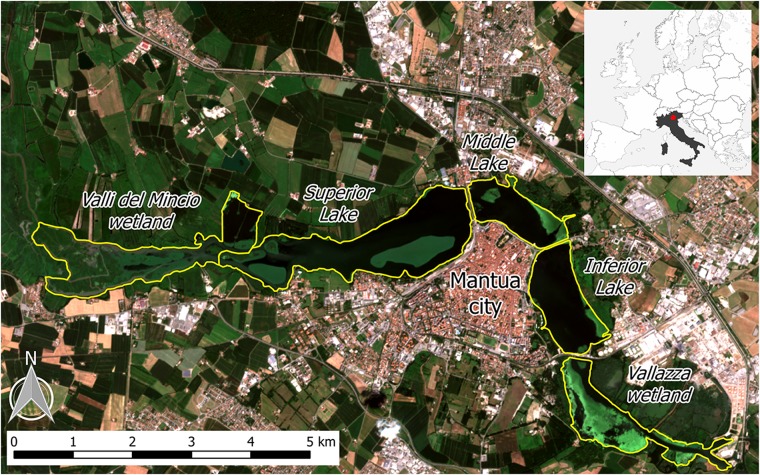
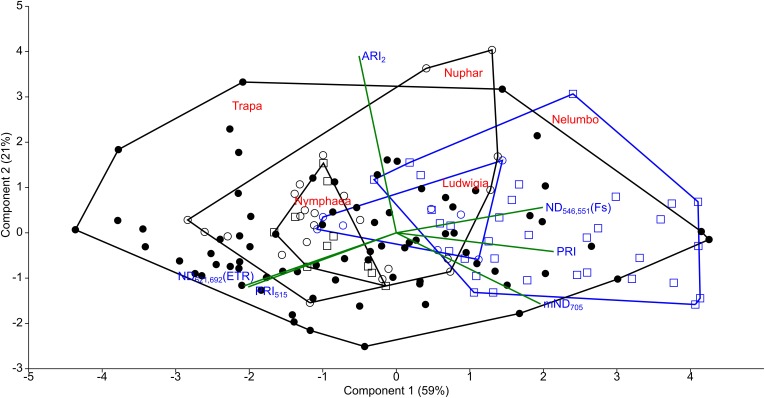
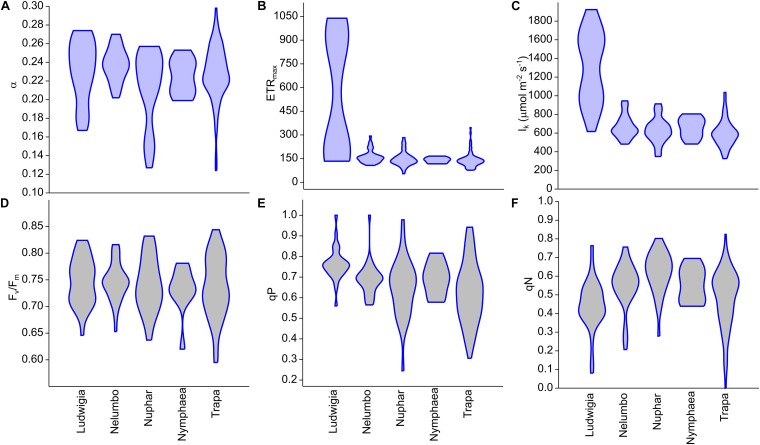
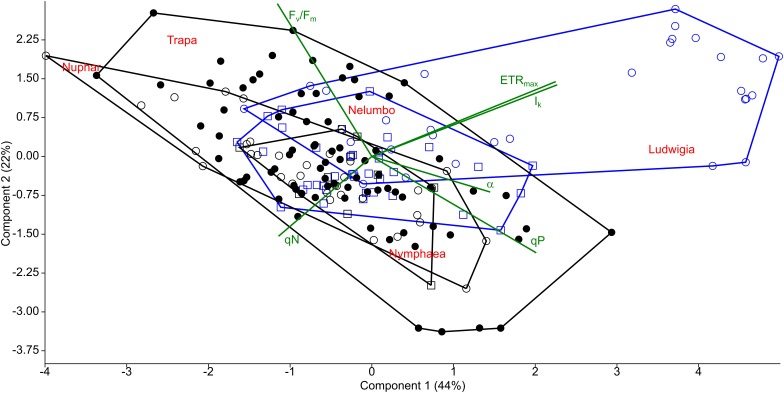
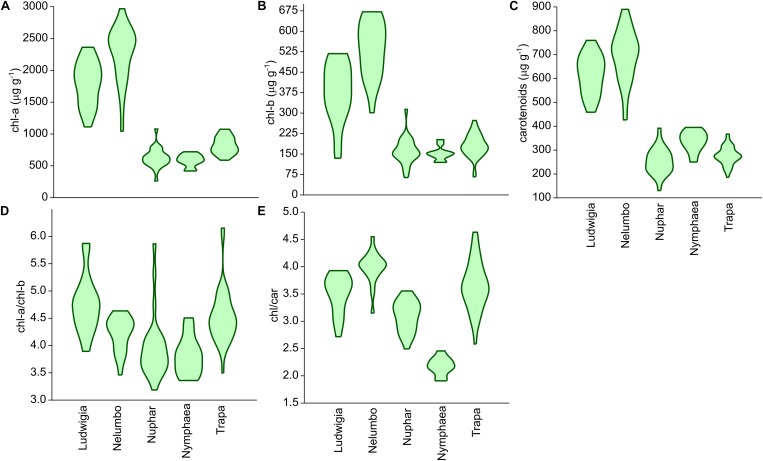
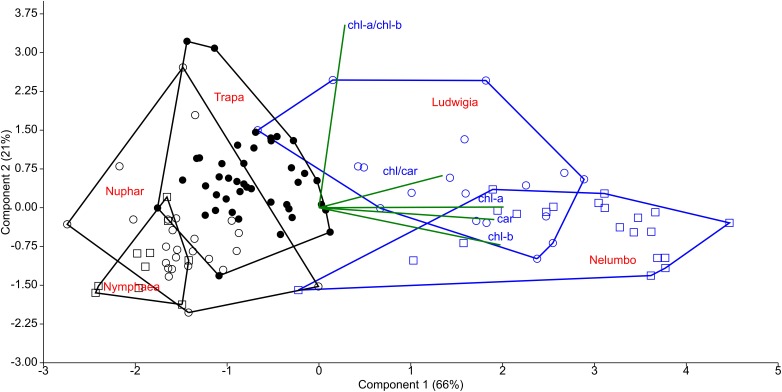
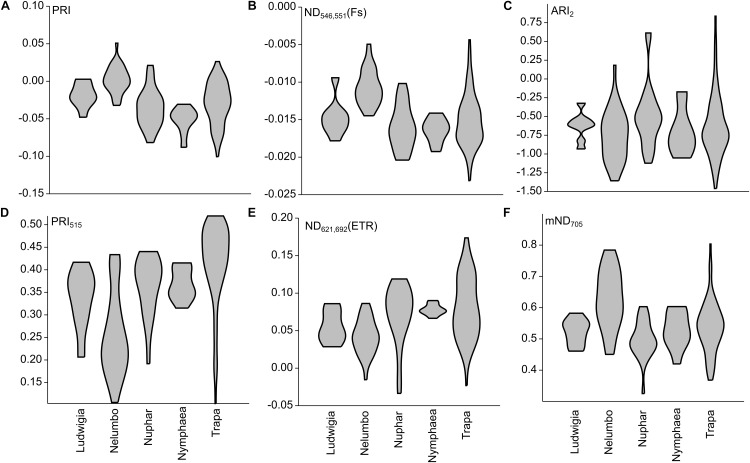
The relationship between invasive plant functional traits and their invasiveness is still the subject of scientific investigation, and the backgrounds of transition from non-native to invasive species in ecosystems are therefore poorly understood. Furthermore, our current knowledge on species invasiveness is heavily biased toward terrestrial species; we know much less about the influence of allochthonous plant traits on their invasiveness in aquatic ecosystems. In this paper, we present the results of a study on physiological and ecological traits of two introduced and three native macrophyte species in the Mantua lakes system (northern Italy). We compared their photophysiology, pigment content, leaf reflectance, and phenology in order to assess how the invasive and perform compared to native species, , , and . We found to have higher photosynthetic efficiency and to tolerate higher light intensities than and the native species especially at extreme weather conditions (prolonged exposure to high light and higher temperatures). Chlorophyll a and b, and carotenoids content of both allochthonous species were substantially higher than those of native plants, suggesting adaptive response to the ecosystem of Mantua lakes system. Higher variability of recorded data in invasive species was also observed. These observations suggest advanced photosynthetic efficiency of the invasive species, especially , resulting in faster growth rates and higher productivity. This was supported by the evaluation of seasonal dynamics mapped from satellite remote sensing data. This study provides empirical evidence for the relationship between specific plant physiological traits and invasiveness of aquatic plant species, highlighting the importance of trait studies in predicting ecosystem-level impacts of invasive plant species.
入侵植物功能性状与其入侵性之间的关系仍是科学研究的课题,因此,生态系统中物种从非本地物种转变为入侵物种的背景仍知之甚少。此外,我们目前对物种入侵性的了解严重偏向陆地物种;我们对外来植物性状对其在水生生态系统中入侵性的影响了解较少。在本文中,我们展示了对意大利北部曼图亚湖系统中两种外来大型植物物种和三种本地大型植物物种的生理和生态性状的研究结果。我们比较了它们的光生理学、色素含量、叶片反射率和物候,以评估入侵物种与本地物种相比的表现。我们发现,尤其是在极端天气条件下(长时间暴露于强光和高温),入侵物种的光合效率更高,并且比本地物种更能耐受更高的光照强度。两种外来物种的叶绿素a、叶绿素b和类胡萝卜素含量均显著高于本地植物,这表明它们对曼图亚湖系统生态系统有适应性反应。我们还观察到入侵物种记录数据的变异性更高。这些观察结果表明入侵物种,尤其是具有先进的光合效率,从而导致更快的生长速度和更高的生产力。这得到了从卫星遥感数据绘制的季节动态评估的支持。本研究为特定植物生理性状与水生植物物种入侵性之间的关系提供了实证证据,强调了性状研究在预测入侵植物物种对生态系统水平影响方面的重要性。