Graduate School of Pharmaceutical Sciences, Nagoya City University, Nagoya, Japan.
Institute for Molecular Science, National Institutes of Natural Sciences, Okazaki, Japan.
Life Sci Alliance. 2019 Jun 3;2(3). doi: 10.26508/lsa.201900368. Print 2019 Jun.
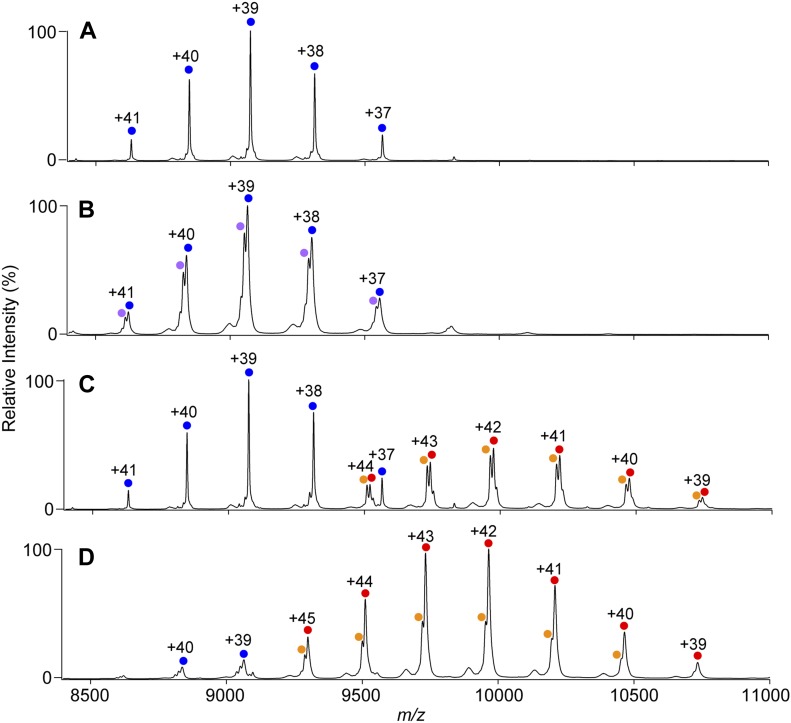
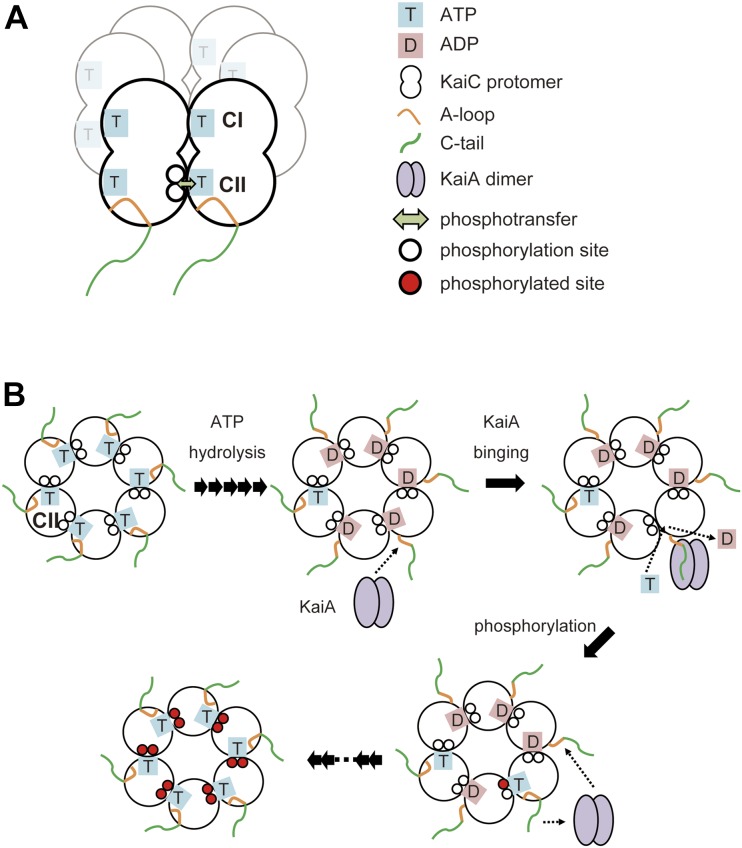
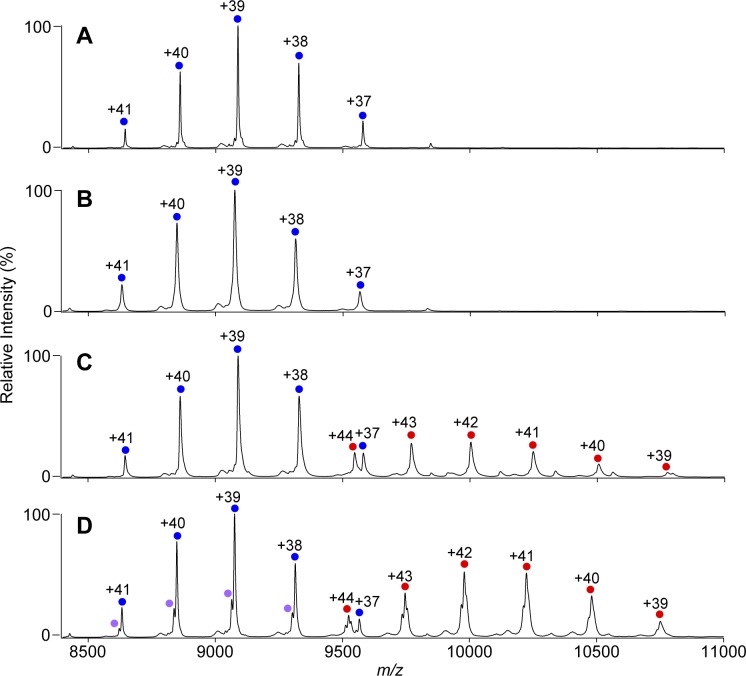
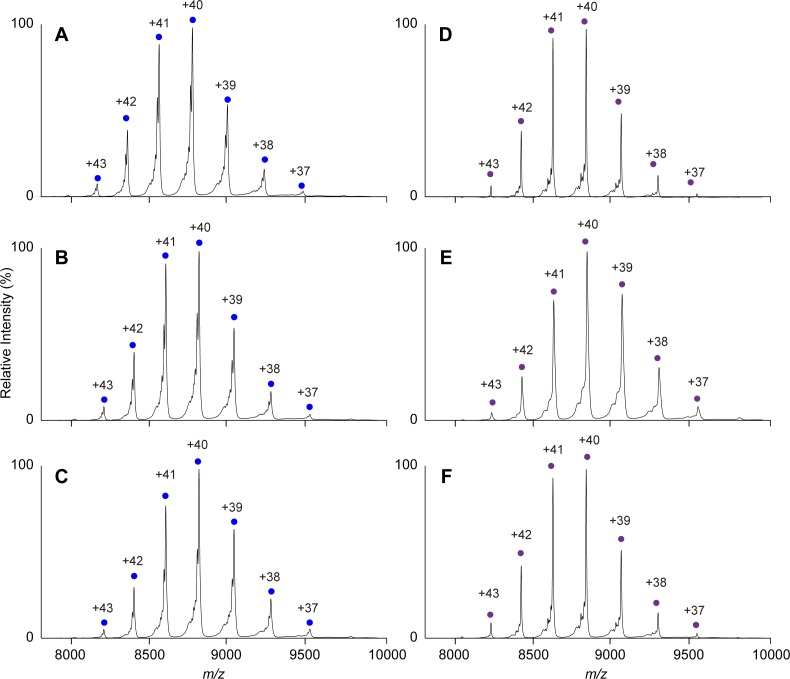
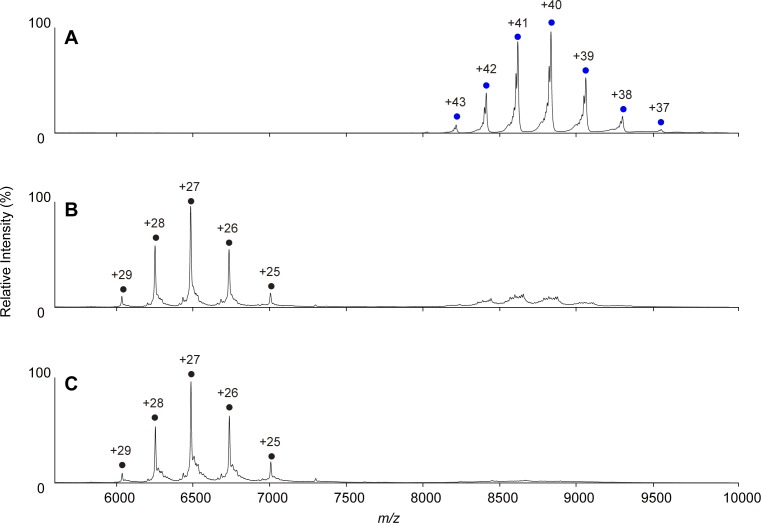
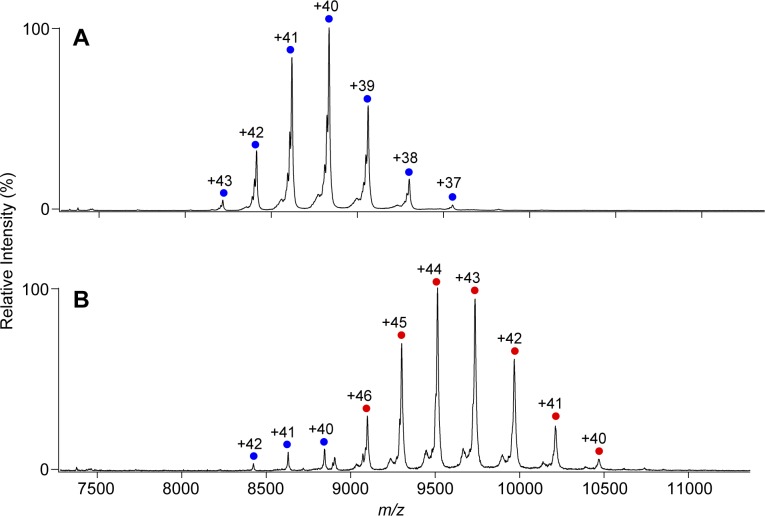
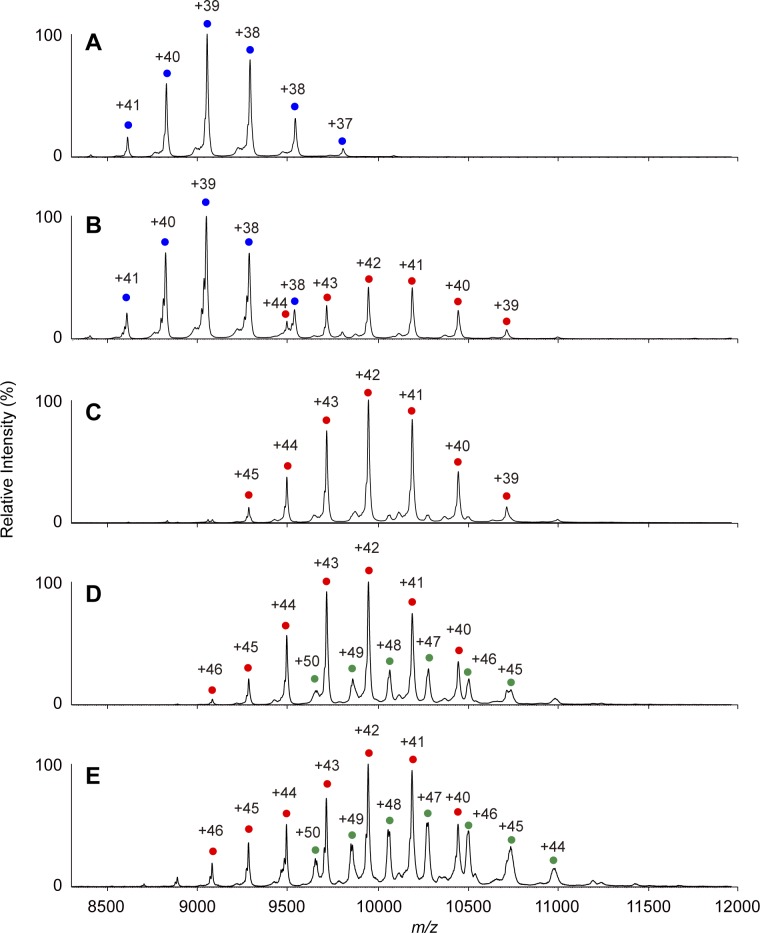
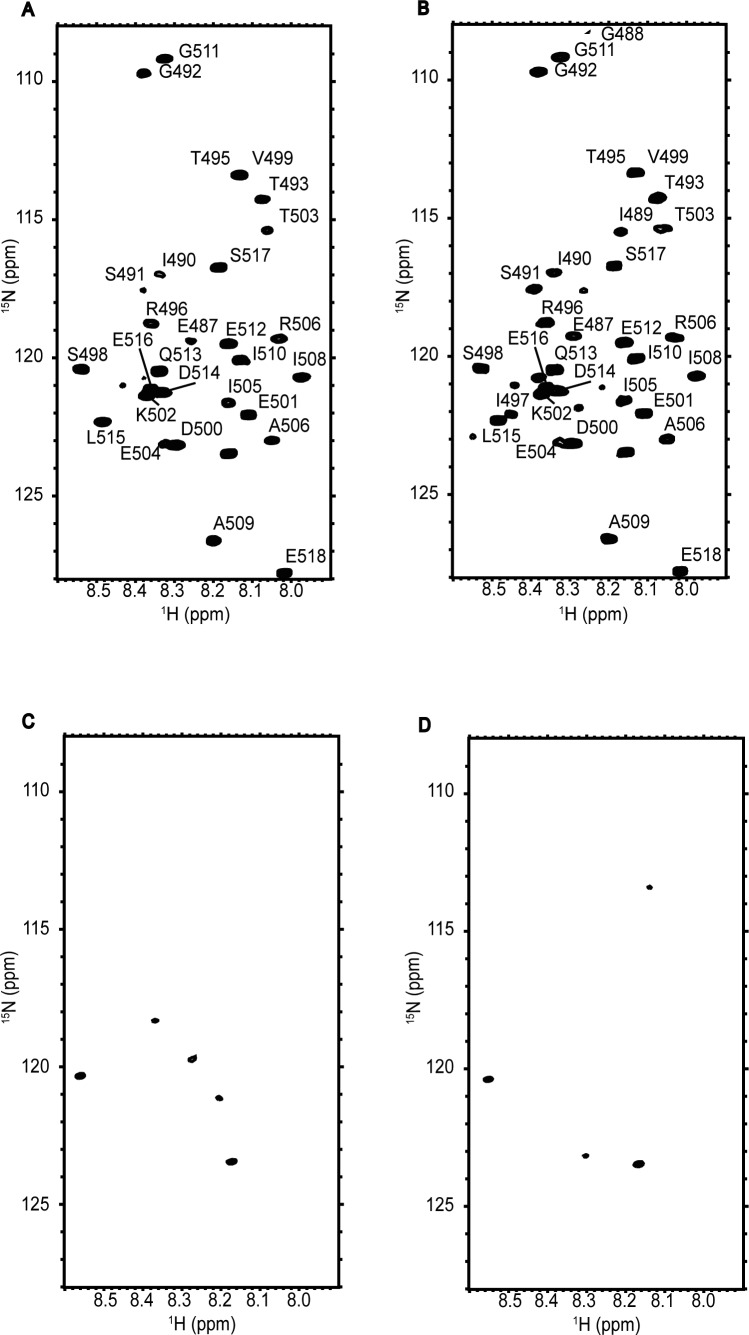
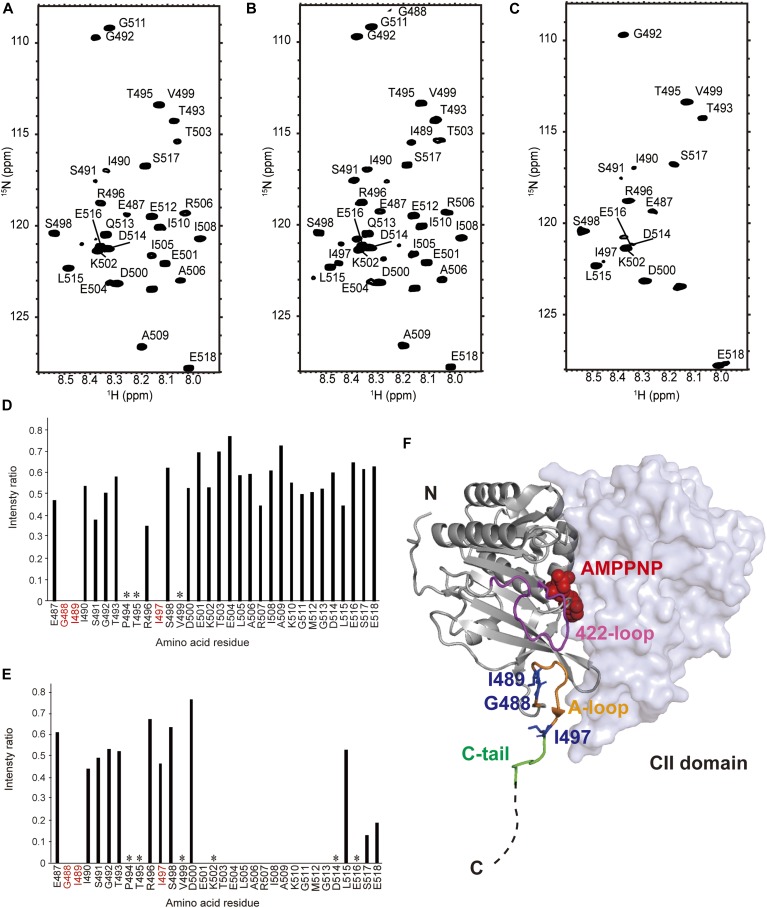
The cyanobacterial clock is controlled via the interplay among KaiA, KaiB, and KaiC, which generate a periodic oscillation of KaiC phosphorylation in the presence of ATP. KaiC forms a homohexamer harboring 12 ATP-binding sites and exerts ATPase activities associated with its autophosphorylation and dephosphorylation. The KaiC nucleotide state is a determining factor of the KaiB-KaiC interaction; however, its relationship with the KaiA-KaiC interaction has not yet been elucidated. With the attempt to address this, our native mass spectrometric analyses indicated that ATP hydrolysis in the KaiC hexamer promotes its interaction with KaiA. Furthermore, our nuclear magnetic resonance spectral data revealed that ATP hydrolysis is coupled with conformational changes in the flexible C-terminal segments of KaiC, which carry KaiA-binding sites. From these data, we conclude that ATP hydrolysis in KaiC is coupled with the exposure of its C-terminal KaiA-binding sites, resulting in its high affinity for KaiA. These findings provide mechanistic insights into the ATP-mediated circadian periodicity.
蓝藻钟是通过 KaiA、KaiB 和 KaiC 之间的相互作用来控制的,在 ATP 的存在下,KaiC 会发生周期性的磷酸化振荡。KaiC 形成一个含有 12 个 ATP 结合位点的同六聚体,并发挥与其自身磷酸化和去磷酸化相关的 ATP 酶活性。KaiC 的核苷酸状态是决定 KaiB-KaiC 相互作用的因素;然而,其与 KaiA-KaiC 相互作用的关系尚未阐明。为了解决这个问题,我们的天然质谱分析表明,KaiC 六聚体中的 ATP 水解促进了它与 KaiA 的相互作用。此外,我们的核磁共振波谱数据显示,ATP 水解与 KaiC 柔性 C 末端片段的构象变化相关联,这些片段携带 KaiA 结合位点。根据这些数据,我们得出结论,KaiC 中的 ATP 水解与 C 末端 KaiA 结合位点的暴露相关联,导致其与 KaiA 具有高亲和力。这些发现为 ATP 介导的生物钟周期性提供了机制上的见解。