Department of Psychiatry, University of North Carolina at Chapel Hill, Chapel Hill, NC, USA.
Neuroscience Center, University of North Carolina at Chapel Hill, Chapel Hill, NC, USA.
Nat Neurosci. 2019 Jul;22(7):1110-1121. doi: 10.1038/s41593-019-0408-1. Epub 2019 Jun 3.
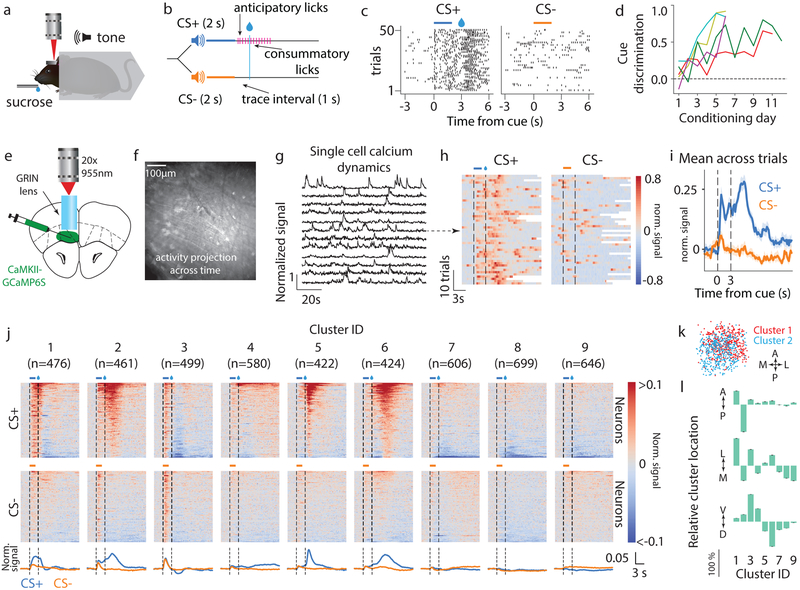
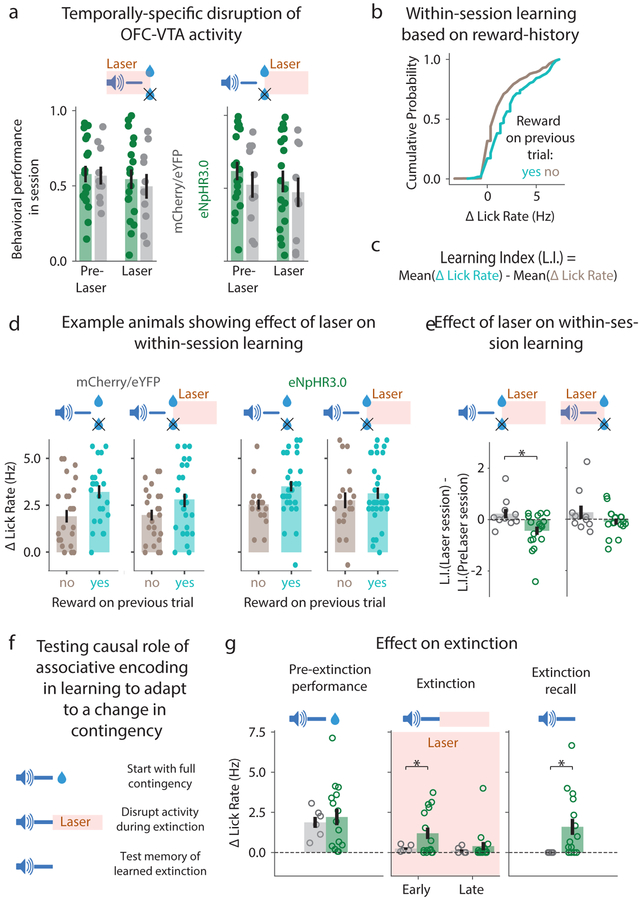
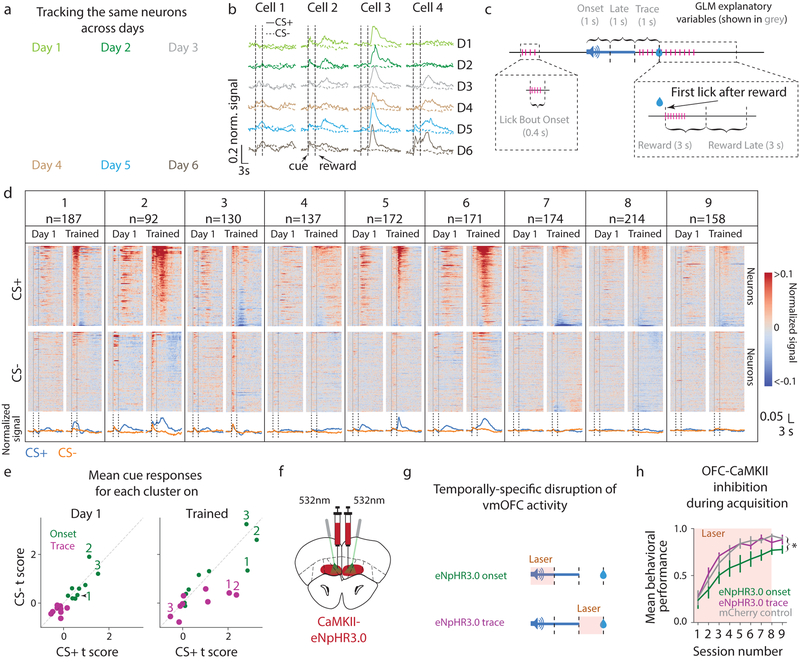
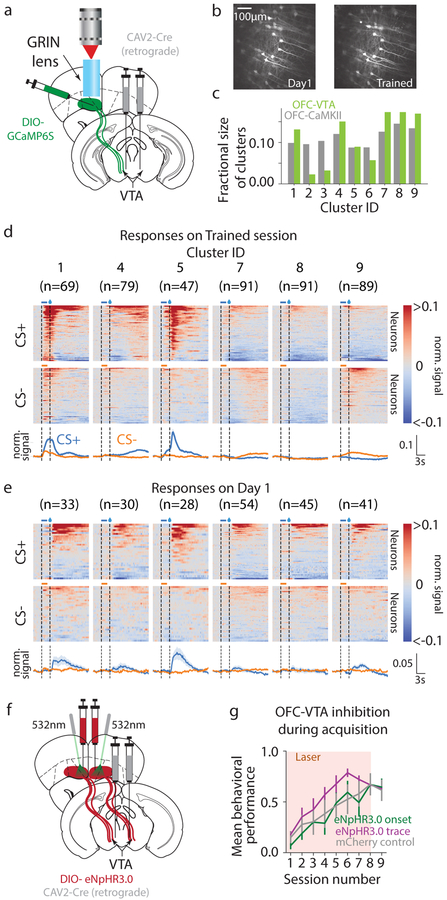
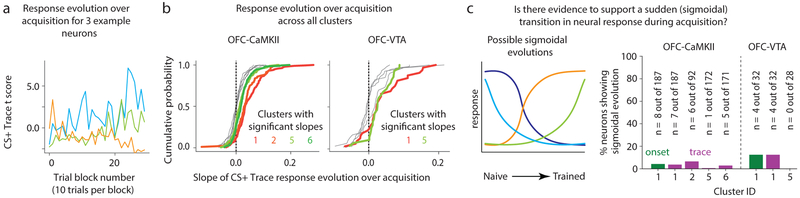
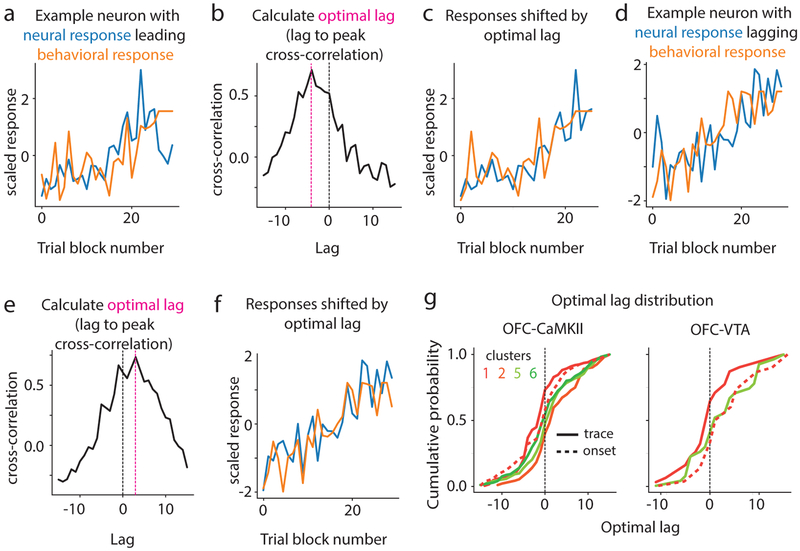
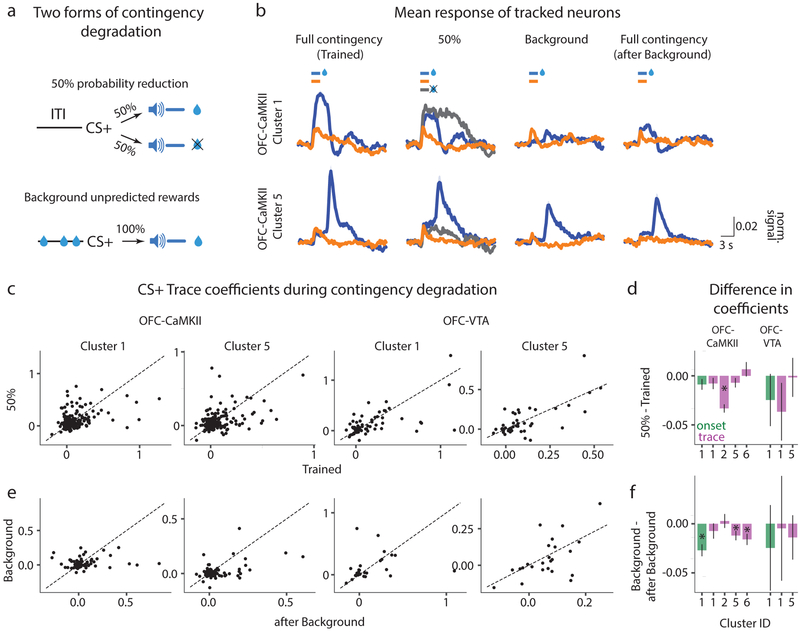
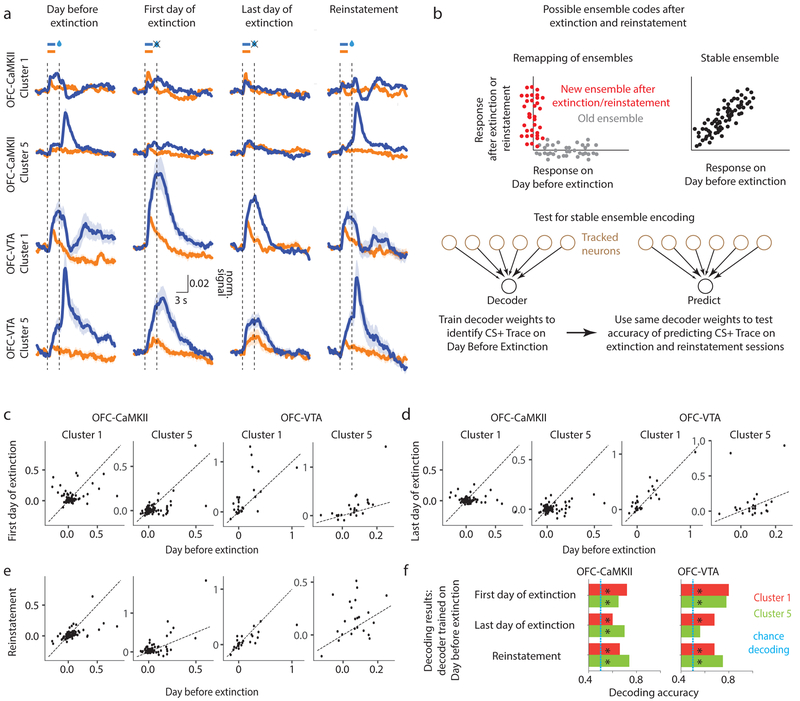
Learning to predict rewards based on environmental cues is essential for survival. The orbitofrontal cortex (OFC) contributes to such learning by conveying reward-related information to brain areas such as the ventral tegmental area (VTA). Despite this, how cue-reward memory representations form in individual OFC neurons and are modified based on new information is unknown. To address this, using in vivo two-photon calcium imaging in mice, we tracked the response evolution of thousands of OFC output neurons, including those projecting to VTA, through multiple days and stages of cue-reward learning. Collectively, we show that OFC contains several functional clusters of neurons distinctly encoding cue-reward memory representations, with only select responses routed downstream to VTA. Unexpectedly, these representations were stably maintained by the same neurons even after extinction of the cue-reward pairing, and supported behavioral learning and memory. Thus, OFC neuronal activity represents a long-term cue-reward associative memory to support behavioral adaptation.
学习根据环境线索预测奖励对于生存至关重要。眶额皮层(OFC)通过将与奖励相关的信息传递到腹侧被盖区(VTA)等大脑区域,有助于这种学习。尽管如此,基于新信息,单个 OFC 神经元中的线索-奖励记忆代表如何形成以及如何被修改尚不清楚。为了解决这个问题,我们使用活体双光子钙成像技术在小鼠中进行研究,通过多日和多个阶段的线索-奖励学习,跟踪了数千个 OFC 输出神经元的反应演变,包括那些投射到 VTA 的神经元。总的来说,我们表明 OFC 包含几个功能神经元簇,这些神经元簇明显编码线索-奖励记忆代表,只有少数反应被下游传递到 VTA。出乎意料的是,即使在线索-奖励配对被消除后,这些代表仍然由相同的神经元稳定维持,并支持行为学习和记忆。因此,OFC 神经元活动代表了一种长期的线索-奖励联想记忆,以支持行为适应。