Department of Molecular & Cell Biology, University of California, Berkeley, Berkeley, CA, USA.
Molecular Biophysics and Bioimaging Division, Lawrence Berkeley National Laboratory, Berkeley, CA, USA.
Nat Struct Mol Biol. 2019 Jun;26(6):501-509. doi: 10.1038/s41594-019-0236-8. Epub 2019 Jun 3.
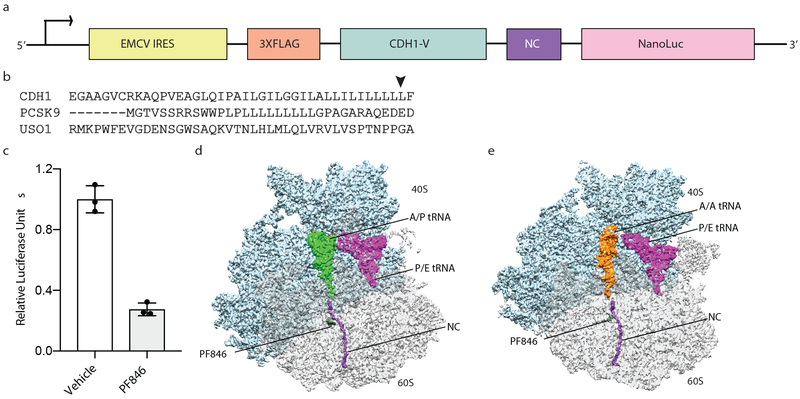
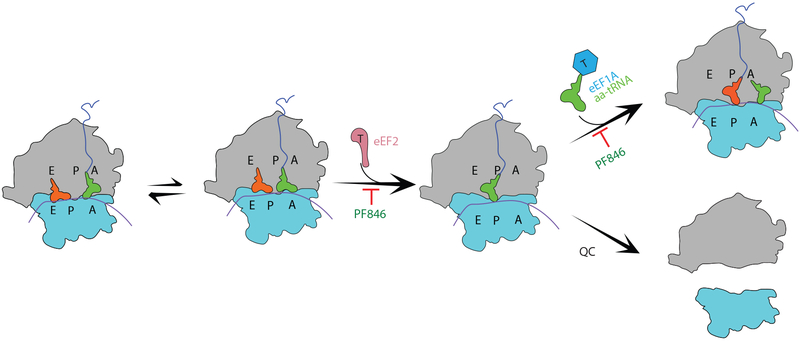
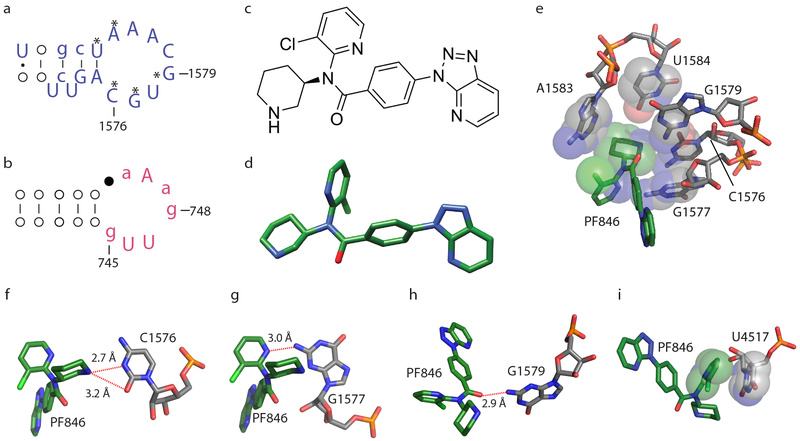
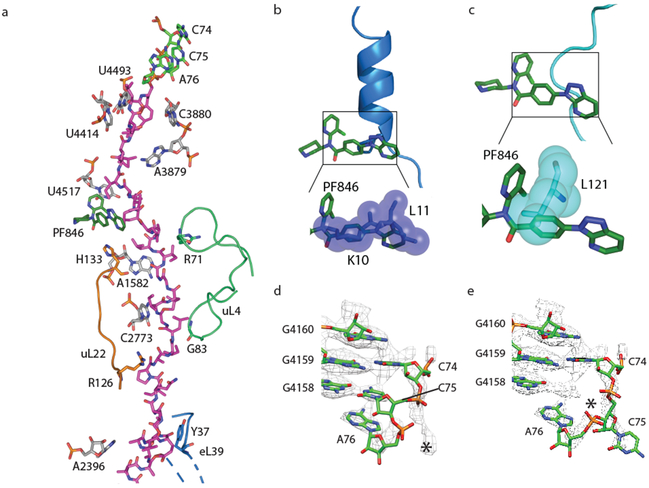
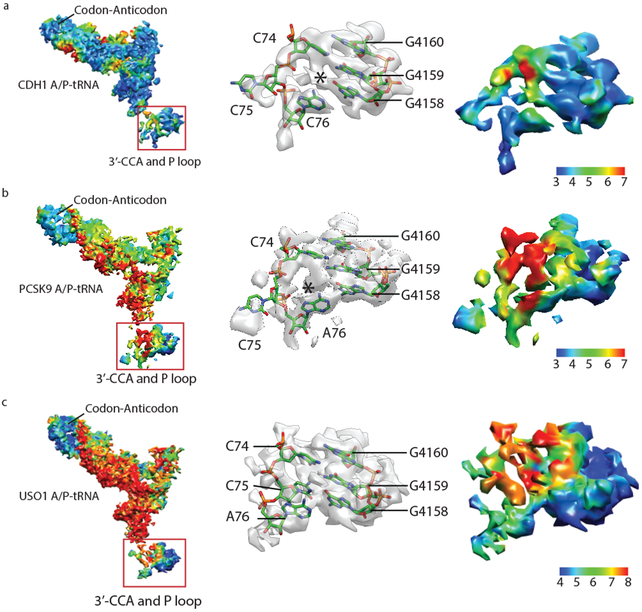
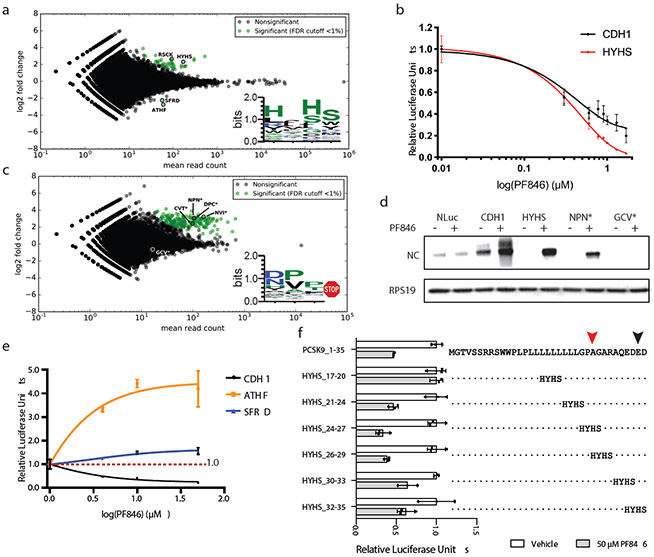
The drug-like molecule PF-06446846 (PF846) binds the human ribosome and selectively blocks the translation of a small number of proteins by an unknown mechanism. In structures of PF846-stalled human ribosome nascent chain complexes, PF846 binds in the ribosome exit tunnel in a eukaryotic-specific pocket formed by 28S ribosomal RNA, and alters the path of the nascent polypeptide chain. PF846 arrests the translating ribosome in the rotated state of translocation, in which the peptidyl-transfer RNA 3'-CCA end is improperly docked in the peptidyl transferase center. Selections of messenger RNAs from mRNA libraries using translation extracts reveal that PF846 can stall translation elongation, arrest termination or even enhance translation, depending on nascent chain sequence context. These results illuminate how a small molecule selectively targets translation by the human ribosome, and provides a foundation for developing small molecules that modulate the production of proteins of therapeutic interest.
PF-06446846(PF846)是一种类似药物的分子,它与人类核糖体结合,并通过一种未知的机制选择性地阻止少数蛋白质的翻译。在 PF846 阻断的人类核糖体新生链复合物的结构中,PF846 结合在由 28S 核糖体 RNA 形成的真核生物特有的核糖体出口隧道中,并改变新生多肽链的路径。PF846 将翻译核糖体固定在转位的旋转状态,其中肽基转移 RNA 3'-CCA 末端未正确对接在肽基转移酶中心。使用翻译提取物从 mRNA 文库中选择信使 RNA 揭示,PF846 可以阻断翻译延伸、终止或甚至增强翻译,具体取决于新生链序列的上下文。这些结果阐明了小分子如何选择性地靶向人类核糖体的翻译,并为开发调节治疗相关蛋白质产生的小分子提供了基础。