Evans Lisa J, Cutting Brian T, Jochym Mateusz, Janke Milena A, Felman Crystal, Cross Sarah, Jacob Marine, Goodwin Mark
Plant & Food Research Australia c/o Queensland University of Technology Brisbane Queensland Australia.
The New Zealand Institute for Plant & Food Research Limited Hamilton New Zealand.
Ecol Evol. 2019 Apr 29;9(10):5708-5719. doi: 10.1002/ece3.5154. eCollection 2019 May.
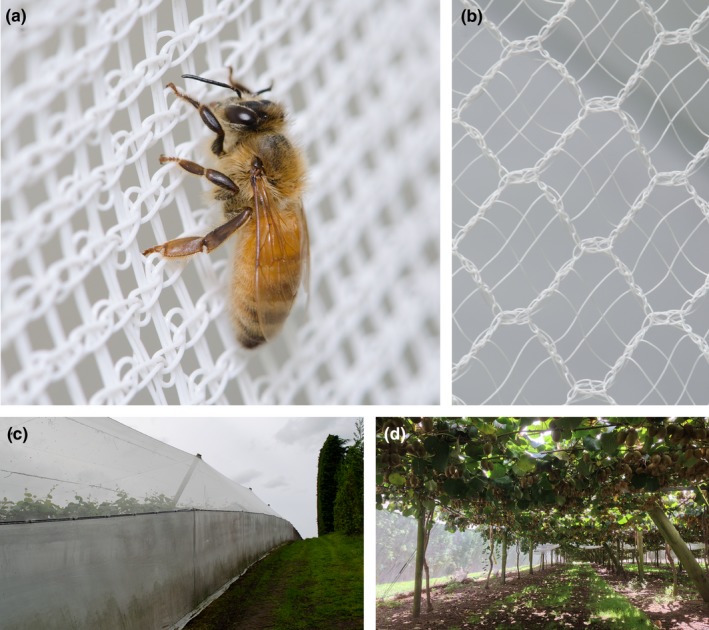
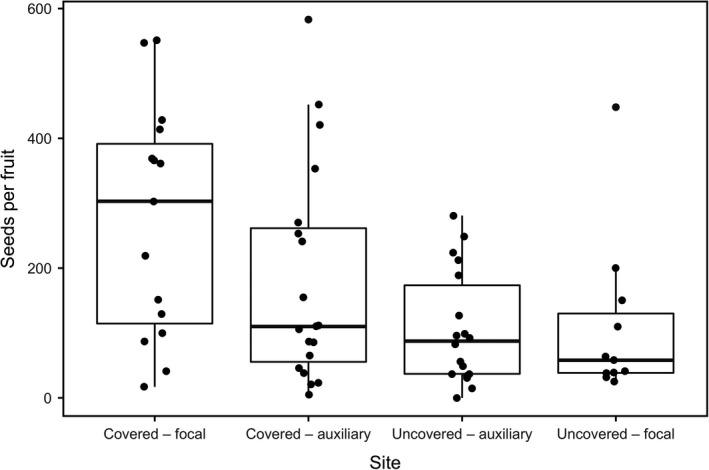
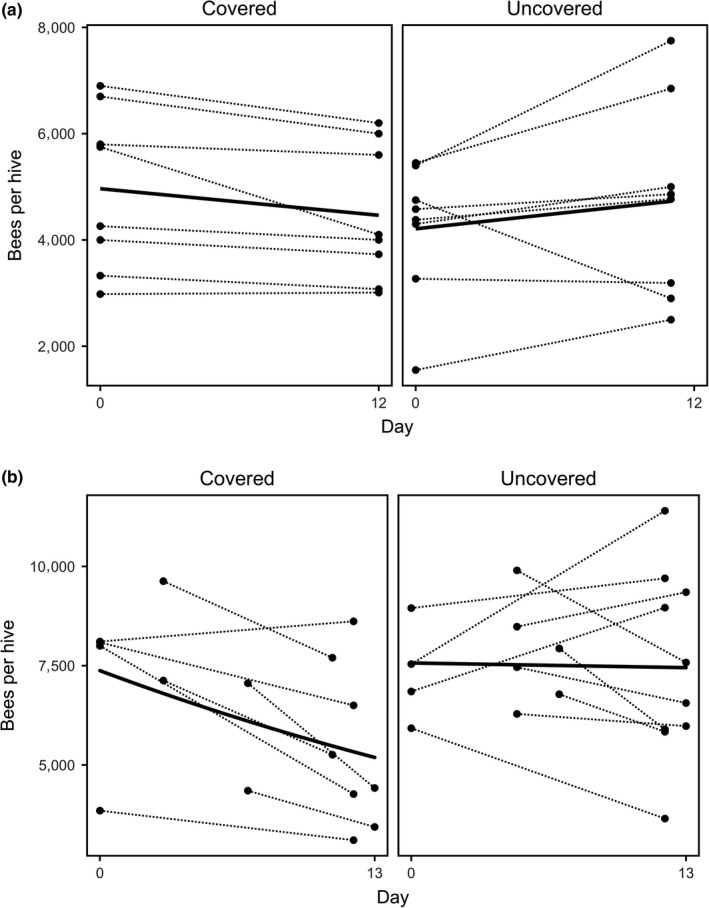
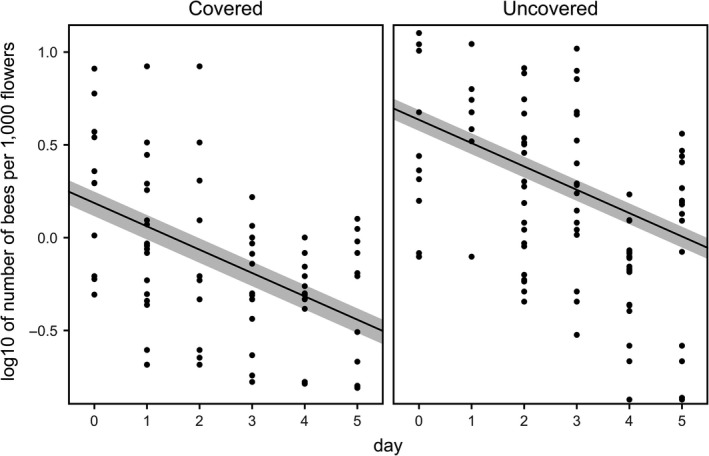
The widespread use of protective covers in horticulture represents a novel landscape-level change, presenting the challenges for crop pollination. Honeybees ( L) are pollinators of many crops, but their behavior can be affected by conditions under covers. To determine how netting crop covers can affect honeybee foraging dynamics, colony health, and pollination services, we assessed the performance of 52 nucleus honeybee colonies in five covered and six uncovered kiwifruit orchards. Colony strength was estimated pre- and postintroduction, and the foraging of individual bees (including pollen, nectar, and naïve foragers) was monitored in a subset of the hives fitted with RFID readers. Simultaneously, we evaluated pollination effectiveness by measuring flower visitation rates and the number of seeds produced after single honeybee visits. Honeybee colonies under cover exhibited both an acute loss of foragers and changes in the behavior of successful foragers. Under cover, bees were roughly three times less likely to return after their first trip outside the hive. Consequently, the number of adult bees in hives declined at a faster rate in these orchards, with colonies losing on average 1,057 ± 274 of their bees in under two weeks. Bees that did forage under cover completed fewer trips provisioning their colony, failing to reenter after a few short-duration trips. These effects are likely to have implications for colony health and productivity. We also found that bee density (bees/thousand flowers) and visitation rates to flowers were lower under cover; however, we did not detect a resultant change in pollination. Our findings highlight the need for environment-specific management techniques for pollinators. Improving honeybee orientation under covers and increasing our understanding of the effects of covers on bee nutrition and brood rearing should be primary objectives for maintaining colonies and potentially improving pollination in these systems.
保护罩在园艺中的广泛使用代表了一种新的景观层面的变化,给作物授粉带来了挑战。蜜蜂(意大利蜜蜂)是许多作物的传粉者,但其行为会受到保护罩下环境条件的影响。为了确定防虫网作物保护罩如何影响蜜蜂的觅食动态、蜂群健康和授粉服务,我们评估了52个小核蜂群在5个有保护罩和6个无保护罩的猕猴桃果园中的表现。在引入蜂群前后估计蜂群强度,并在一部分装有射频识别阅读器的蜂箱中监测个体蜜蜂(包括采集花粉、花蜜的蜜蜂和初出茅庐的觅食者)的觅食情况。同时,我们通过测量花朵访花率和单只蜜蜂访花后产生的种子数量来评估授粉效果。处于保护罩下的蜜蜂蜂群既出现了觅食者的急剧减少,成功觅食者的行为也发生了变化。在保护罩下,蜜蜂首次离开蜂箱外出后返回的可能性大约降低了三倍。因此,这些果园中蜂箱里成年蜜蜂数量的下降速度更快,蜂群在不到两周的时间里平均损失了1057±274只蜜蜂。在保护罩下觅食的蜜蜂为蜂群采集食物的行程减少,在几次短时间外出后就不再返回。这些影响可能会对蜂群健康和生产力产生影响。我们还发现,保护罩下的蜜蜂密度(每千朵花中的蜜蜂数量)和花朵访花率较低;然而,我们并未检测到授粉结果有相应变化。我们的研究结果凸显了针对传粉者采用因地制宜的管理技术的必要性。改善保护罩下蜜蜂的定向能力,加深我们对保护罩对蜜蜂营养和育雏影响的理解,应该成为维持蜂群以及潜在改善这些系统中授粉情况的首要目标。