Sears Rhiannon M, May Danielle G, Roux Kyle J
Enabling Technology Group, Sanford Research, Sioux Falls, SD, USA.
Basic Biomedical Sciences, Sanford School of Medicine, University of South Dakota, Vermillion, SD, USA.
Methods Mol Biol. 2019;2012:299-313. doi: 10.1007/978-1-4939-9546-2_15.
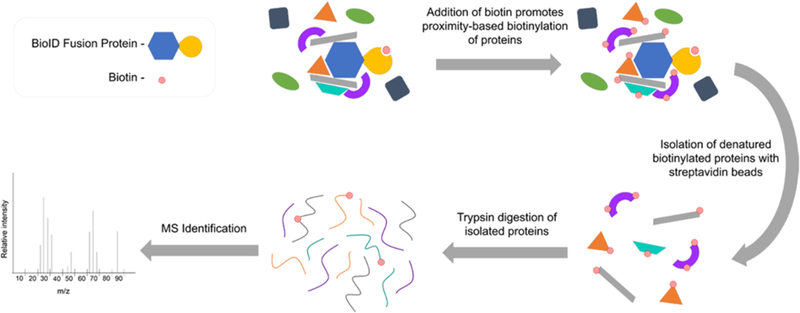
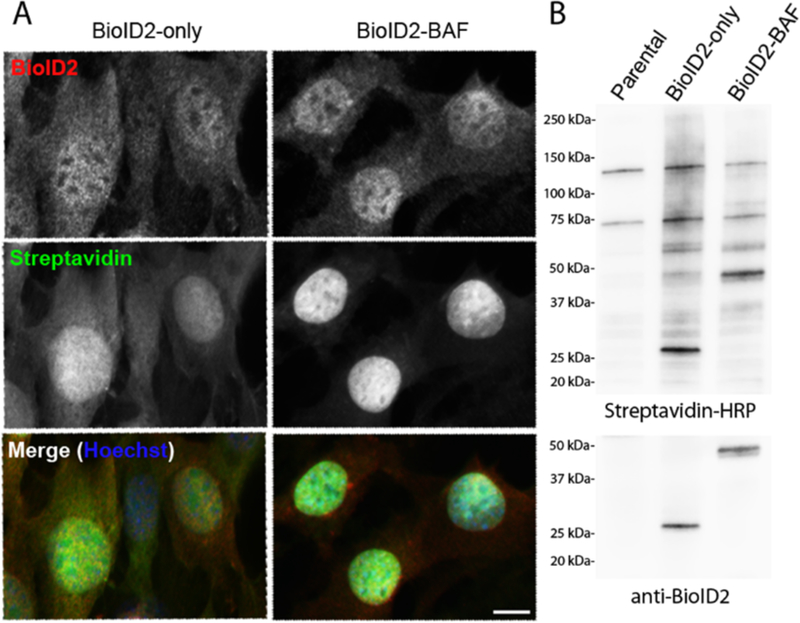
BioID has become an increasingly utilized tool for identifying candidate protein-protein interactions (PPIs) in living cells. This method utilizes a promiscuous biotin ligase, called BioID, fused to a protein of interest that when expressed in cells can be induced to biotinylate interacting and proximate proteins over a period of hours, thus generating a history of protein associations. These biotinylated proteins are subsequently purified and identified via mass spectrometry. Compared to other conventional methods typically used to screen strong PPIs, BioID allows for the detection of weak and transient interactions within a relevant biological setting over a defined period of time. Here we briefly review the scientific progress enabled by the BioID technology, detail an updated protocol for applying the method to proteins in living cells, and offer insights for troubleshooting commonly encountered setbacks.
生物识别技术(BioID)已成为一种在活细胞中识别候选蛋白质-蛋白质相互作用(PPI)的越来越常用的工具。该方法利用一种名为BioID的混杂生物素连接酶,它与感兴趣的蛋白质融合,当在细胞中表达时,可在数小时内诱导其对相互作用和邻近的蛋白质进行生物素化,从而生成蛋白质关联的历史记录。随后通过质谱法对这些生物素化的蛋白质进行纯化和鉴定。与通常用于筛选强PPI的其他传统方法相比,BioID能够在特定的生物环境中,在规定的时间内检测到弱的和短暂的相互作用。在此,我们简要回顾BioID技术所取得的科学进展,详细介绍将该方法应用于活细胞中蛋白质的最新方案,并针对常见挫折提供故障排除的见解。