Department of Clinical Biochemistry and Laboratory Diagnostics, Institute of Medicine, University of Opole, Oleska 48, 45-052, Opole, Poland.
Institute of Biotechnology, University of Opole, Kard. B. Kominka 6a, 45-032, Opole, Poland.
Neurotox Res. 2019 Oct;36(3):503-514. doi: 10.1007/s12640-019-00040-y. Epub 2019 Jun 3.
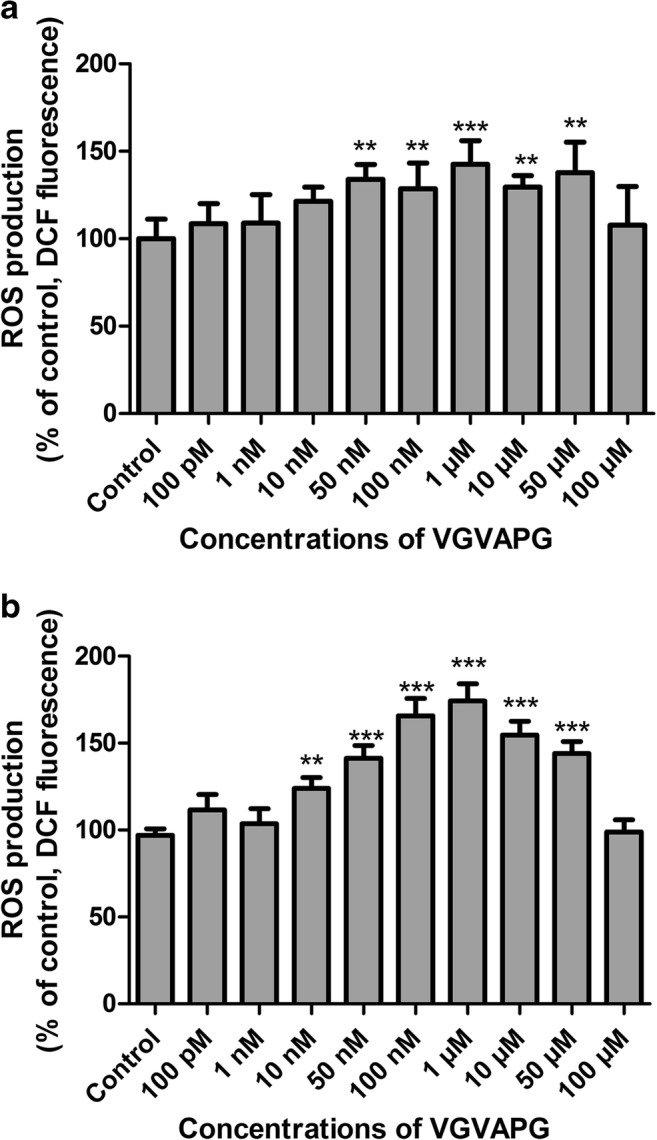
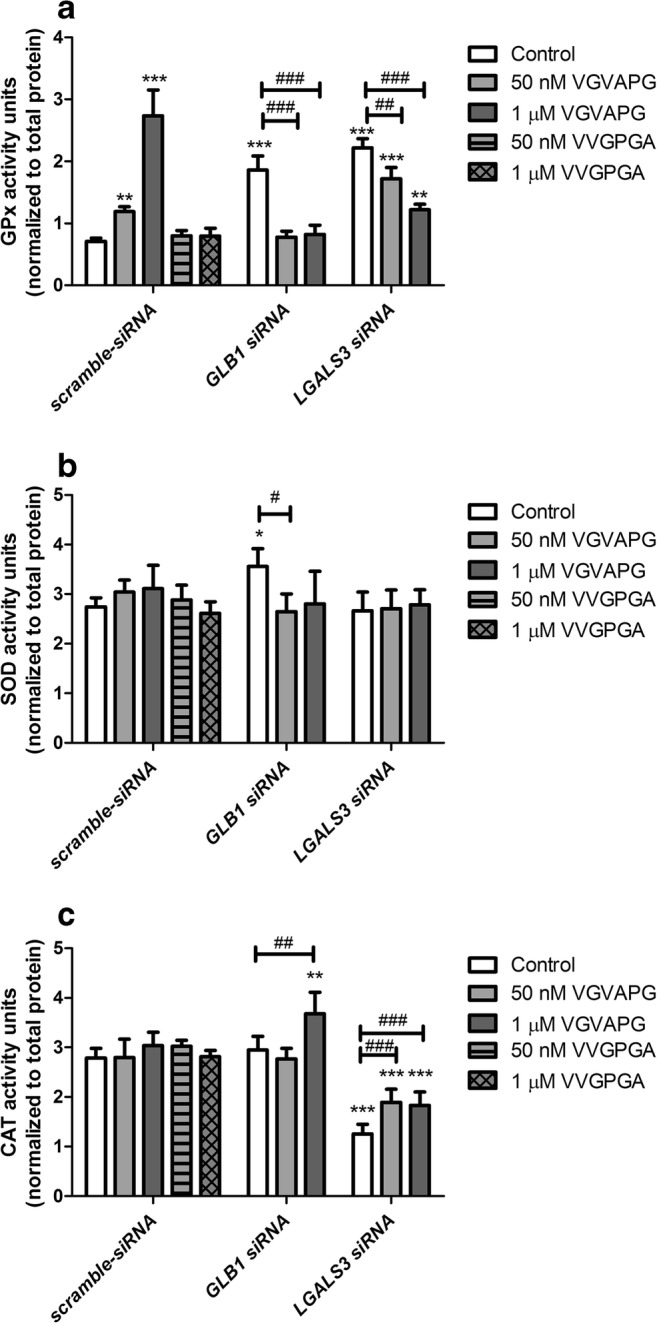
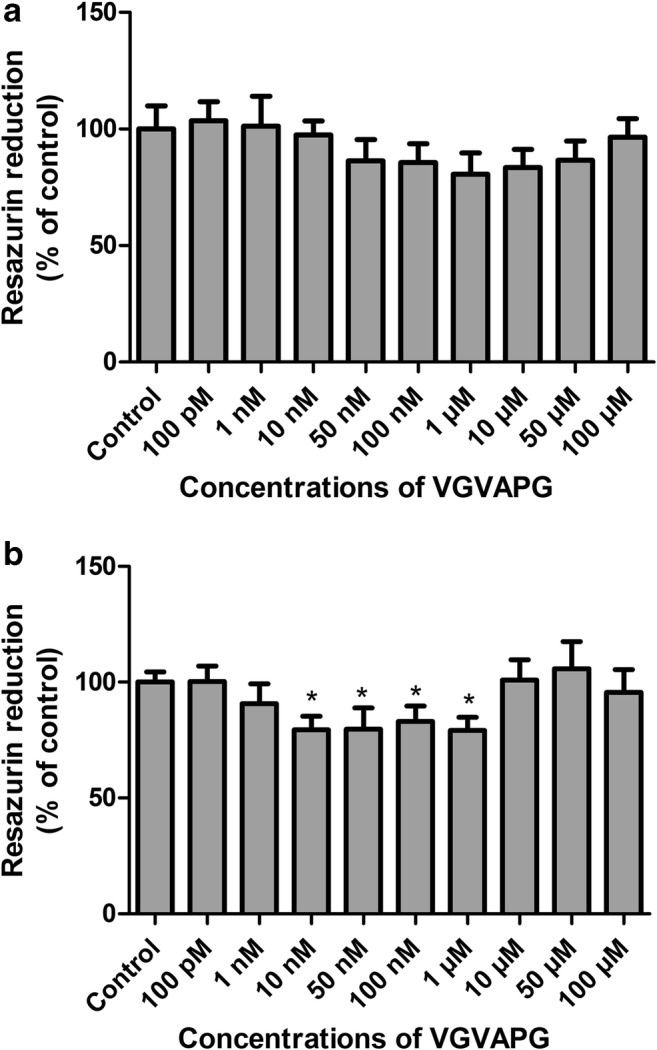
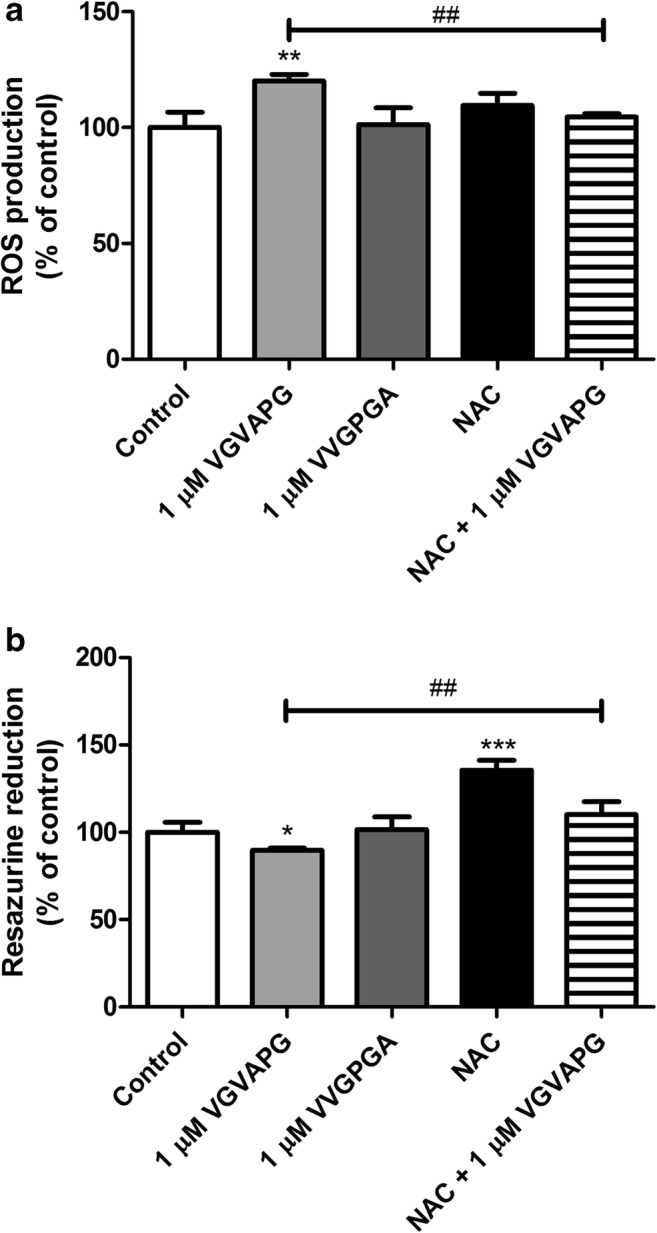
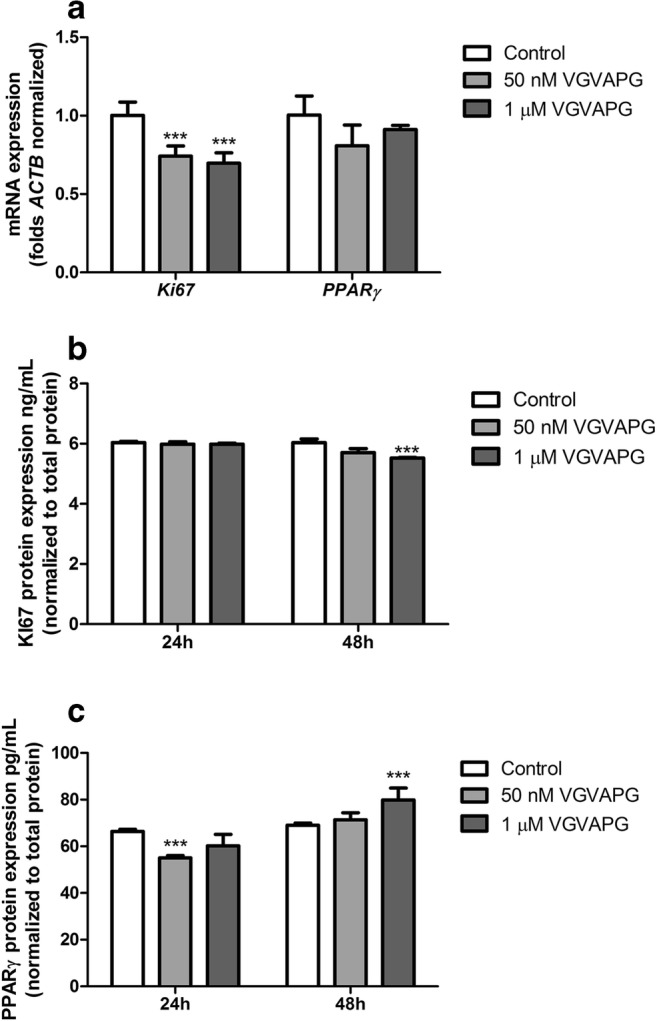
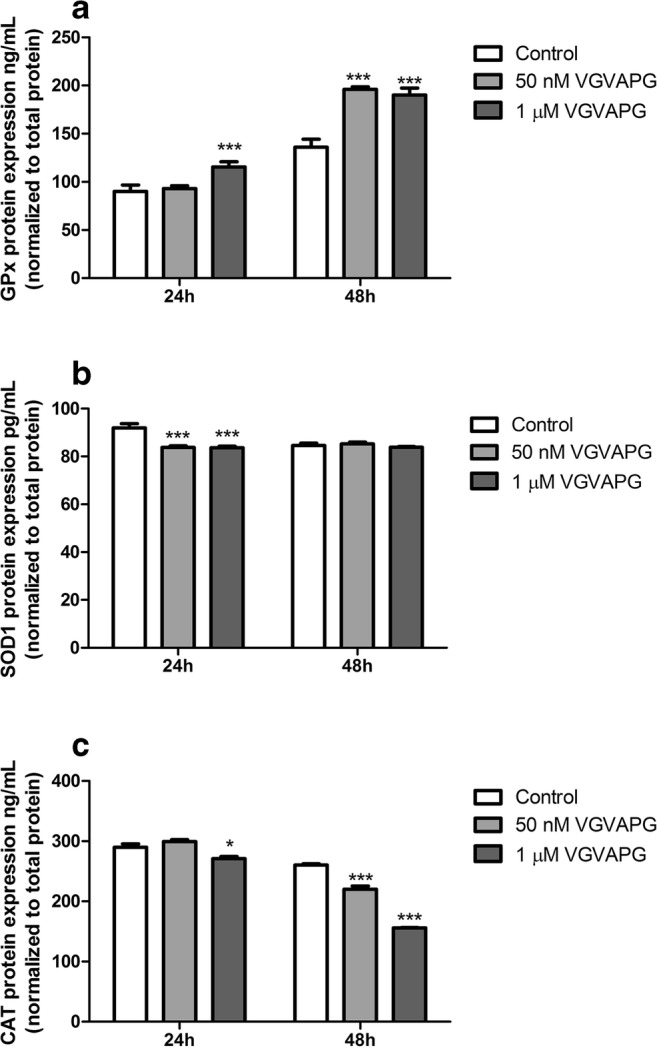
Throughout the lifetime of humans, the amount of stem cells and the rate of cell proliferation continue to decrease. Reactive oxygen species (ROS) are one among the many factors that promote stem cell aging. Both a decrease in the level of stem cells and increase in ROS production can lead to the development of different neurodegenerative diseases. This study was conducted to determine how the VGVAPG peptide, liberated from elastin during the aging process and under pathological conditions, affects ROS production and activities of antioxidant enzymes in undifferentiated, proliferating SH-SY5Y cells. SH-SY5Y cells were maintained in Dulbecco's modified Eagle's medium/nutrient mixture F-12 supplemented with 10% heat-inactivated fetal bovine serum (FBS). After treating the SH-SY5Y cells with VGVAPG peptide, we measured ROS production; cell metabolism, proliferation, and expression; and activities of superoxide dismutase (SOD), glutathione peroxidase (GPx), and catalase (CAT). We demonstrated that the VGVAPG peptide increases GPx expression and activity, whereas it decreases CAT expression in SH-SY5Y cells. Silencing of the GLB1 gene prevents changes in GPx activity. Despite the fact that the VGVAPG peptide increases GPx expression, it increases the ROS level. Moreover, the VGVAPG peptide decreases SH-SY5Y proliferation, which is prevented by the ROS scavenger N-acetyl-L-cysteine. Our data suggest that ROS production and decreased proliferation of SH-SY5Y cells are the results of excitotoxicity meditated through close unrecognized molecular pathways. More research is needed to elucidate the unknown mechanism of action of VGVAPG peptide in the nervous system.
在人类的整个生命周期中,干细胞的数量和细胞增殖的速度持续下降。活性氧 (ROS) 是促进干细胞衰老的众多因素之一。干细胞水平下降和 ROS 产生增加都可能导致不同的神经退行性疾病的发生。本研究旨在确定弹性蛋白在衰老过程中和病理条件下释放的 VGVAPG 肽如何影响未分化、增殖的 SH-SY5Y 细胞中的 ROS 产生和抗氧化酶活性。SH-SY5Y 细胞在补充有 10%热灭活胎牛血清 (FBS) 的 Dulbecco 改良 Eagle 培养基/营养混合物 F-12 中维持。在用 VGVAPG 肽处理 SH-SY5Y 细胞后,我们测量了 ROS 产生、细胞代谢、增殖和表达以及超氧化物歧化酶 (SOD)、谷胱甘肽过氧化物酶 (GPx) 和过氧化氢酶 (CAT) 的活性。我们证明 VGVAPG 肽增加了 SH-SY5Y 细胞中的 GPx 表达和活性,同时降低了 CAT 的表达。GLB1 基因的沉默阻止了 GPx 活性的变化。尽管 VGVAPG 肽增加了 GPx 的表达,但它增加了 ROS 的水平。此外,VGVAPG 肽降低了 SH-SY5Y 的增殖,而 ROS 清除剂 N-乙酰-L-半胱氨酸可预防这种增殖降低。我们的数据表明,SH-SY5Y 细胞中 ROS 的产生和增殖的减少是通过尚未被认识的分子途径介导的兴奋性毒性的结果。需要进一步的研究来阐明 VGVAPG 肽在神经系统中的未知作用机制。