Rayyan Morsi, Zheutlin Alex, Byrd James Brian
Department of Internal Medicine, University of Michigan Medical School, Ann Arbor, MI, USA.
J Extracell Vesicles. 2018 Oct 26;7(1):1535744. doi: 10.1080/20013078.2018.1535744. eCollection 2018.
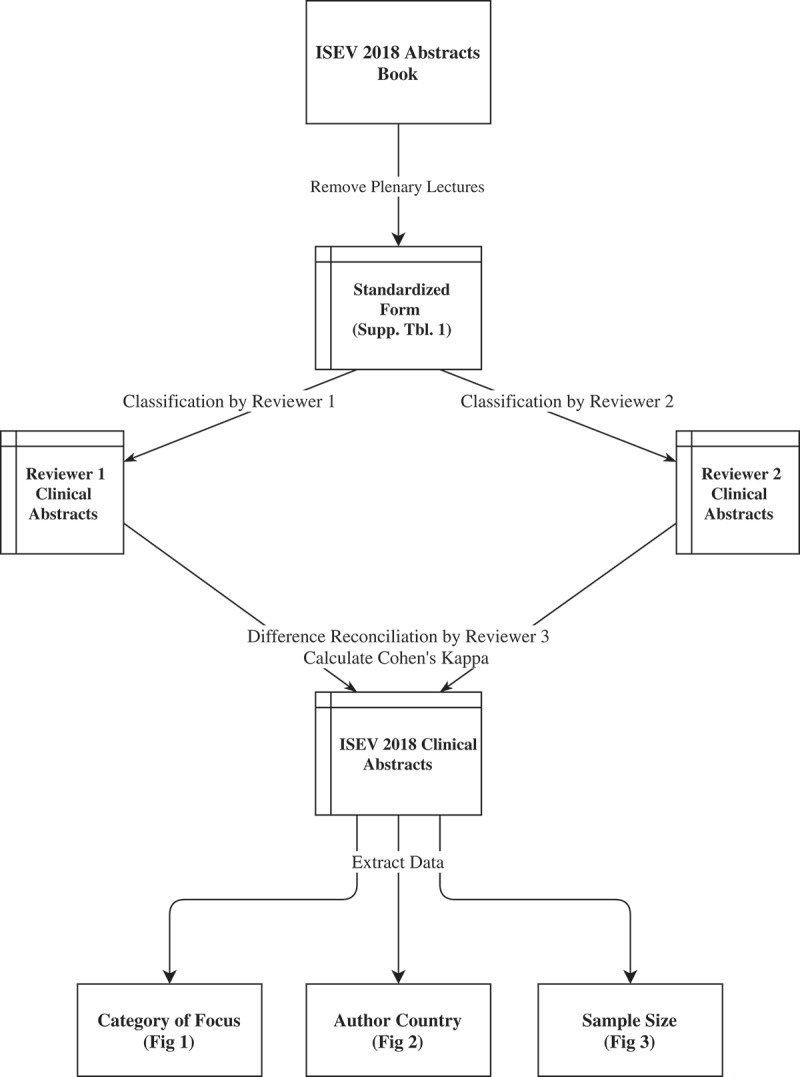
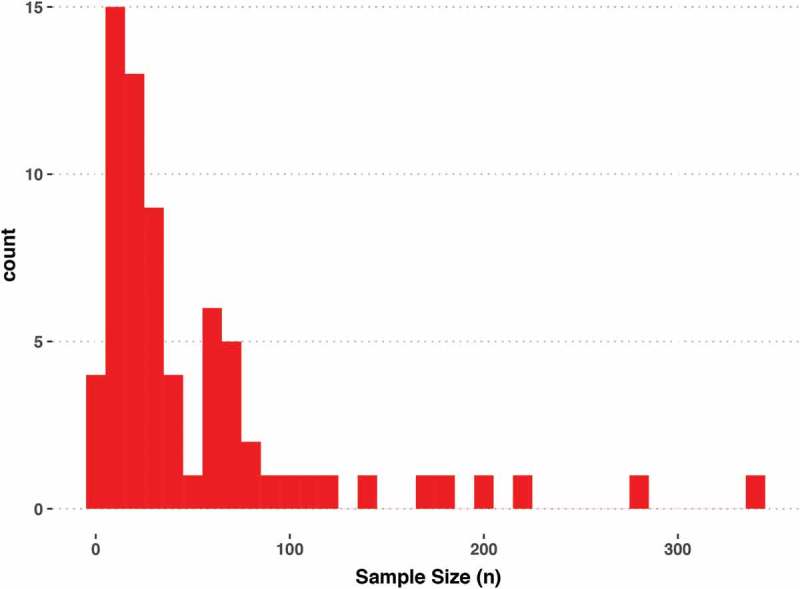
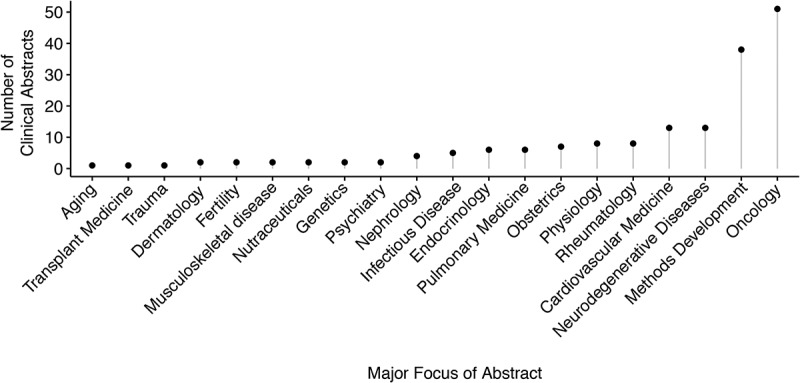
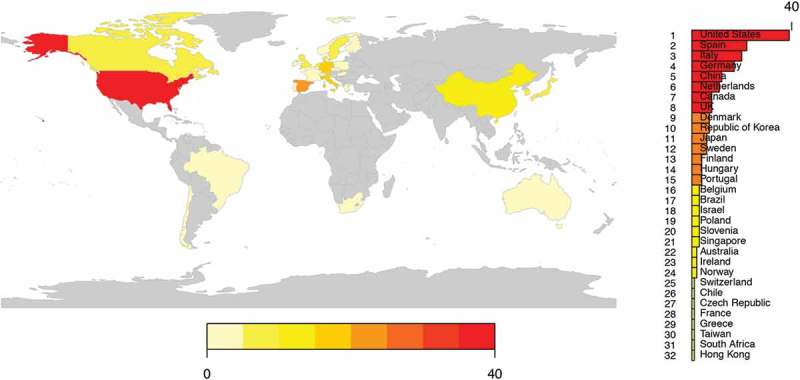
The abstracts presented at the 2018 International Society for Extracellular Vesicles Annual Meeting offer unique insight into the newest discoveries related to the biology and applied use of extracellular vesicles (EVs). As an extension of a recent "Clinical-Wrap Up" discussion at the International Society for Extracellular Vesicles 2018 Annual Meeting, a systematic review of each abstract was performed to determine which abstracts could be considered clinical research. Once the clinical research abstracts were identified, systematic data extraction included: the major focus of each clinical research abstract; the countries in which the work was done; and the sample size, if provided in the abstract. Each abstract was reviewed by two independent authors, with a third author resolving discrepancies in cases of disagreement. 174 out of 656 (27%) unique abstracts were determined to be clinical research. Oncology was a principal research focus (51 of the 174 clinical research abstracts, 29%). Many other clinical research abstracts presented at the International Society for Extracellular Vesicles 2018 Annual Meeting focused on the use of human samples for development of methods for potential application in the clinic. Beyond oncology and methods development, a wide range of topics was represented, including cardiovascular disease, neurodegenerative disease, genetics, and many others. Current research involving EVs highlights the common, but false dichotomy of science into curiosity-driven basic science or application-driven clinical research, when in fact both quest for understanding and intent to apply the findings appeared to drive much of the work at the International Society for Extracellular Vesicles 2018 Annual Meeting. Using Pasteur's Quadrant as a framework, we discuss where the field of EV research is heading and how we may gain insight into the biological function of EVs in tandem with how they may benefit individual health.
在2018年国际细胞外囊泡学会年会上展示的摘要为细胞外囊泡(EVs)生物学及应用相关的最新发现提供了独特见解。作为2018年国际细胞外囊泡学会年会上近期“临床总结”讨论的延伸,我们对每篇摘要进行了系统回顾,以确定哪些摘要可被视为临床研究。一旦确定了临床研究摘要,系统的数据提取包括:每篇临床研究摘要的主要重点;开展研究工作的国家;以及摘要中提供的样本量(如果有的话)。每篇摘要由两位独立作者审阅,如有分歧则由第三位作者解决。656篇独特摘要中有174篇(27%)被确定为临床研究。肿瘤学是主要研究重点(174篇临床研究摘要中有51篇,占29%)。2018年国际细胞外囊泡学会年会上展示的许多其他临床研究摘要聚焦于使用人体样本开发可能应用于临床的方法。除了肿瘤学和方法开发外,还涵盖了广泛的主题,包括心血管疾病、神经退行性疾病、遗传学等。当前涉及EVs的研究凸显了一种常见但错误的科学二分法,即分为好奇心驱动的基础科学或应用驱动的临床研究,而实际上在2018年国际细胞外囊泡学会年会上,对理解的追求和应用研究结果的意图似乎推动了大部分工作。以巴斯德象限为框架,我们讨论了EV研究领域的发展方向,以及我们如何在深入了解EVs生物学功能的同时,了解它们如何造福个体健康。