Department of Psychology, Johannes Gutenberg-Universität Mainz, Mainz, Germany.
PLoS One. 2019 Jun 4;14(6):e0217587. doi: 10.1371/journal.pone.0217587. eCollection 2019.
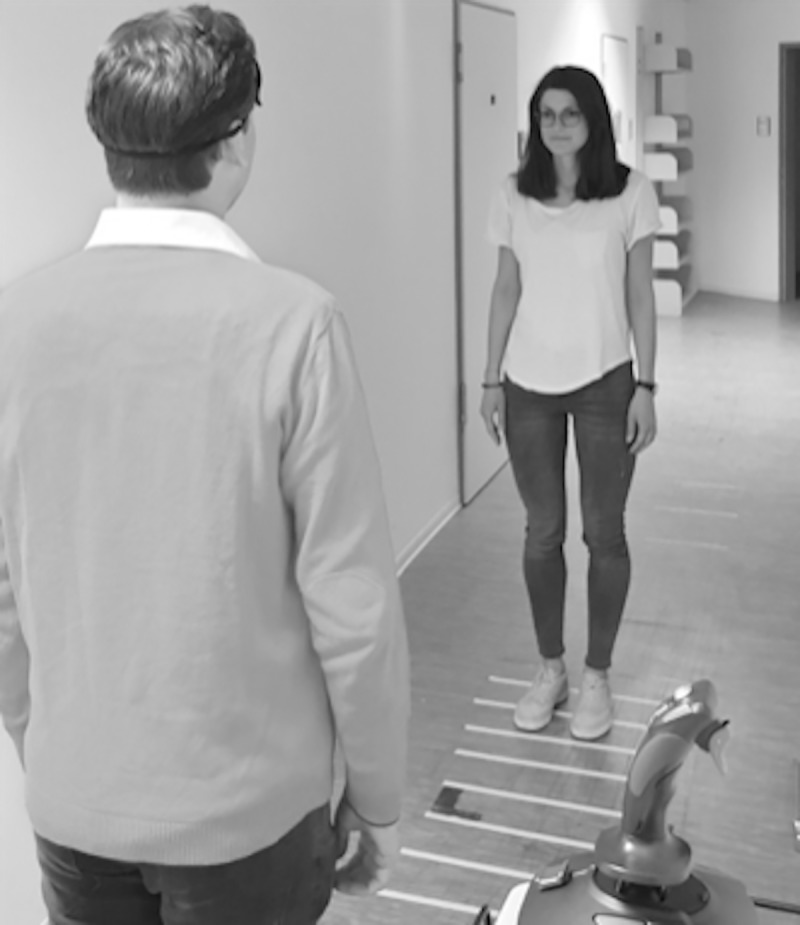
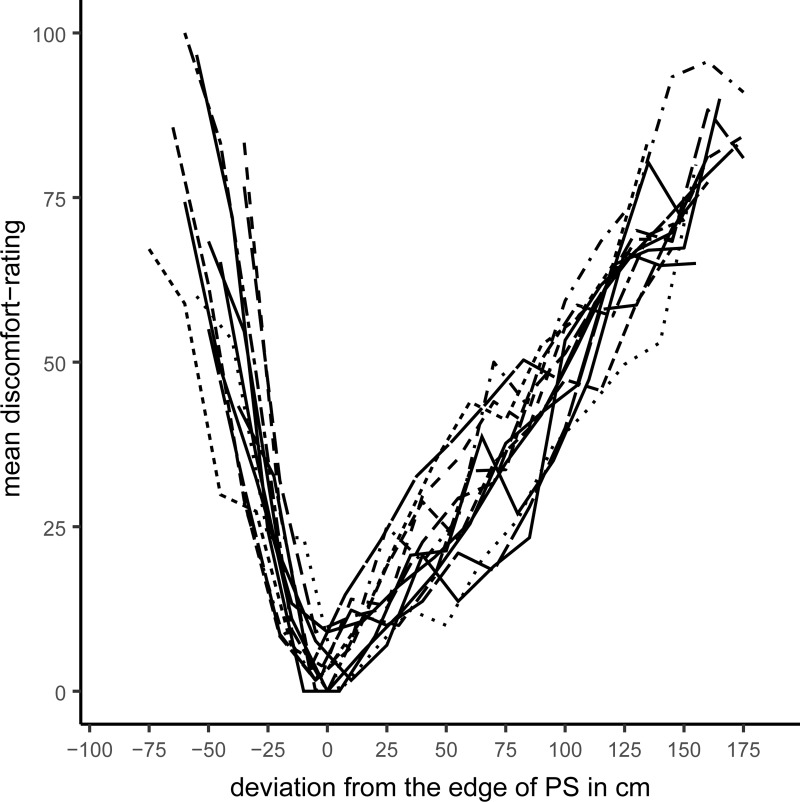
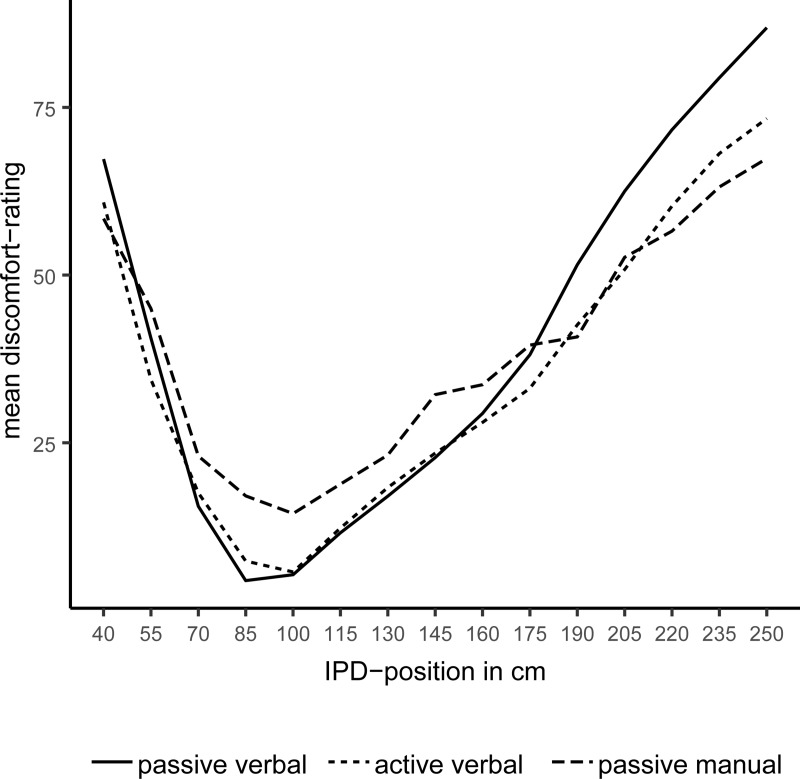
Violations of personal space are associated with discomfort. However, the exact function linking the magnitude of discomfort to interpersonal distance has not yet been specified. In this study, we explore whether interpersonal distance and discomfort are isotropic with respect to uncomfortably far or close distances. We also extend previous findings with regard to intrusions into personal space as well as maintenance of distances outside of personal space. We presented subjects with 15 interpersonal distances ranging from 40 to 250 cm and obtained verbal and joystick-based ratings of discomfort. Whereas discomfort rose immediately when personal space was entered, the gradient was less steep for distances that exceeded the comfort region of personal space. Thus, personal space is anisotropic with regard to experienced discomfort.
侵犯个人空间会让人感到不适。然而,将不适感的大小与人际距离联系起来的确切功能尚未确定。在这项研究中,我们探讨了人际距离和不适感是否在不舒服的远距和近距离上具有各向同性。我们还扩展了先前关于侵犯个人空间以及维持个人空间外距离的发现。我们向被试呈现了 15 个人际距离,范围从 40 厘米到 250 厘米,并获得了基于口头和操纵杆的不适感评分。虽然当个人空间被侵犯时不适感会立即上升,但当距离超过个人空间的舒适区时,梯度就不那么陡峭了。因此,个人空间在体验到的不适方面是各向异性的。