
一项关于基于正念的干预措施对注意力缺陷多动障碍症状影响的荟萃分析研究。
A meta-analytic investigation of the impact of mindfulness-based interventions on ADHD symptoms.
作者信息
Xue Jiaming, Zhang Yun, Huang Ying
机构信息
West China School of Basic Medical Sciences and Forensic Medicine.
Department of Pathophysiology, West China School of Basic Medical Sciences and Forensic Medicine, Sichuan University, Chengdu, Sichuan Province, China.
出版信息
Medicine (Baltimore). 2019 Jun;98(23):e15957. doi: 10.1097/MD.0000000000015957.
BACKGROUND
Mindfulness-based interventions (MBIs) have been reported to be efficacious in treating attention deficit hyperactivity disorder (ADHD). However, the value of the control effect of MBIs on ADHD core symptoms remains controversial. To clarify the literature on the control effect of MBIs on the symptoms of ADHD and guide future researches, an effect-size analysis was conducted.
METHODS
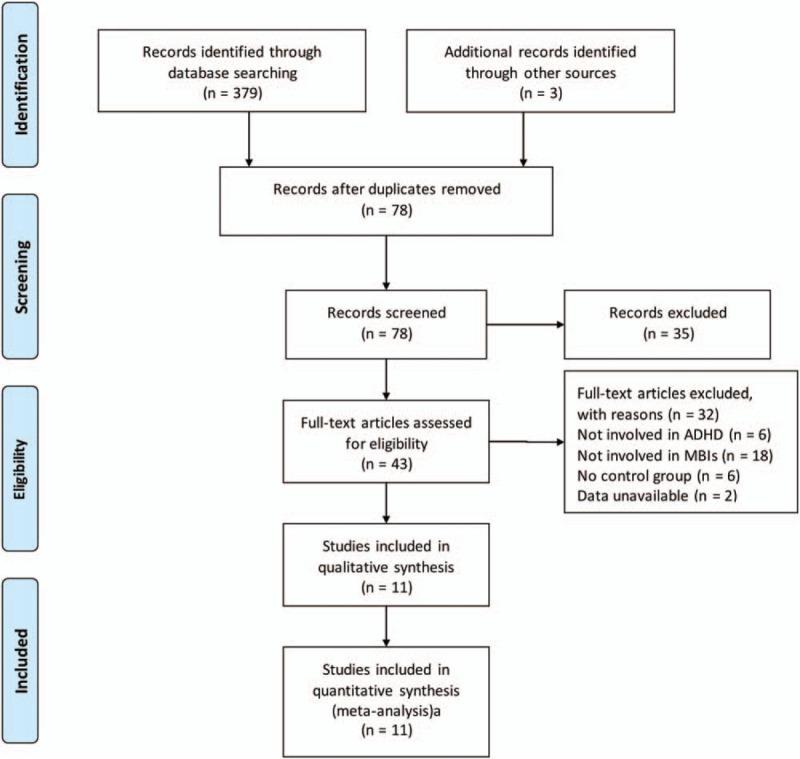
A systematic search in PubMed, Embase, Web of Science, Medline, Cochrane Library, China National Knowledge Infrastructure, and Wangfang Data databases was performed up to January 11, 2019. The overall effect size of MBIs on ADHD core symptoms (ie, inattention and hyperactivity/impulsivity) was recorded by the metric of Hedges' g with 95% confidence interval, Z-value, and P-value.
RESULTS
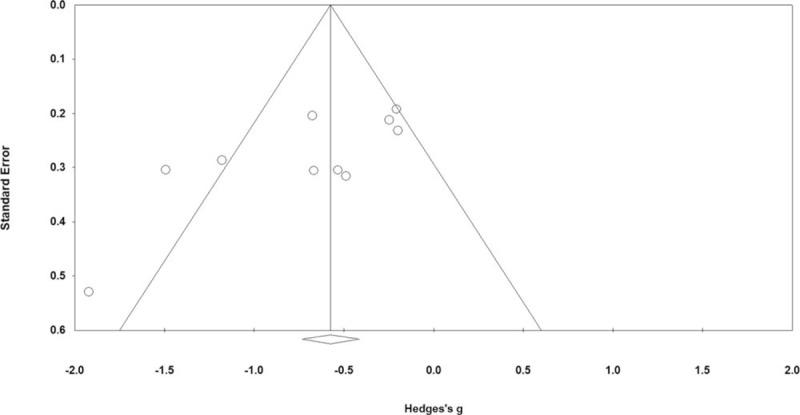
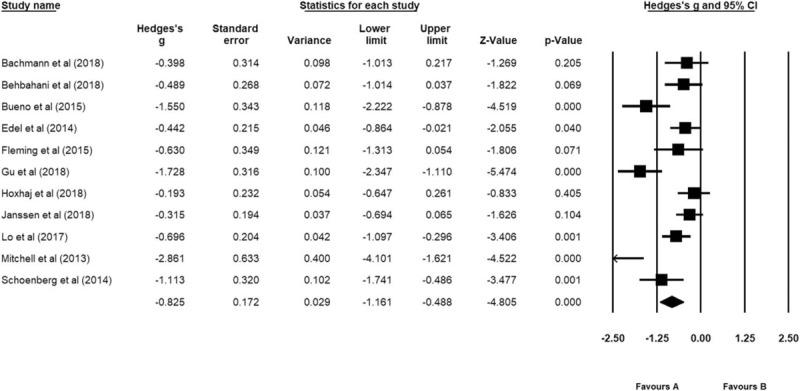
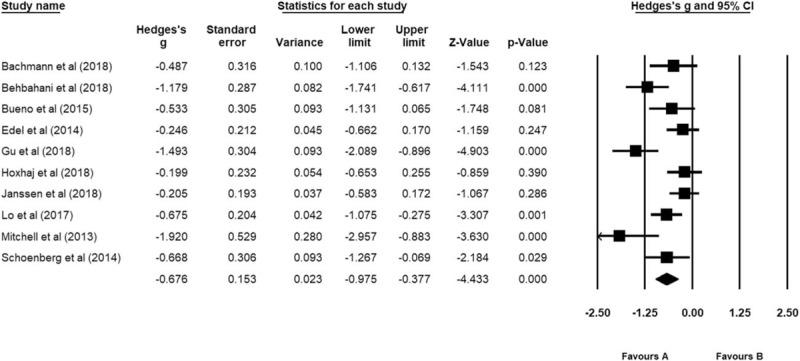
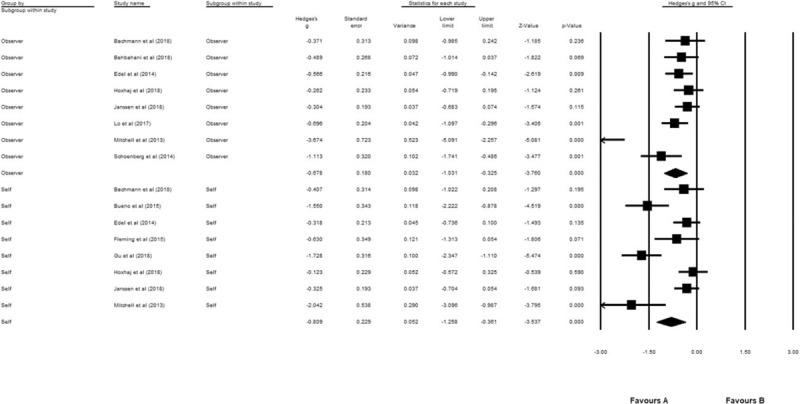
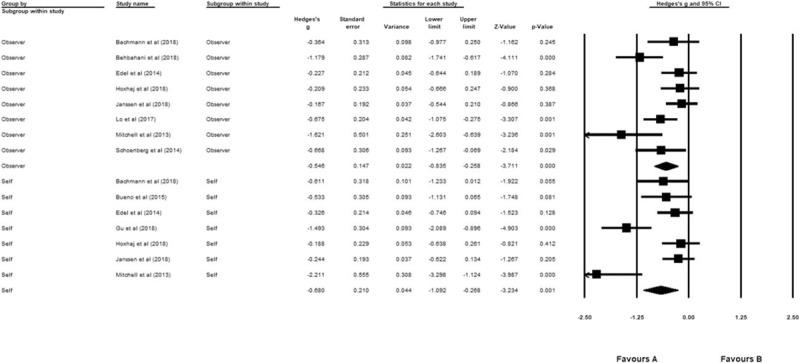
Eleven eligible studies featuring 682 participants were included in the meta-analysis. The overall results indicated that MBIs had large effects on inattention (Hedges' g = -0.825) and hyperactivity/impulsivity (Hedges' g = -0.676) relative to the control group. Results from subgroup analyses between self- and observer rating on ADHD symptoms revealed that the effect of MBIs both remained in a large range and self-rated ADHD core symptom had a greater impact on heterogeneity across the studies. Meta-regression found that the overall effect might be moderated by participant age group and control condition.
CONCLUSION
The present meta-analysis suggested that MBIs had large effects in reducing ADHD core symptoms in comparison with the control group. Future researches are needed to assess follow-up effects of MBIs on ADHD core symptoms and explore the correlation between the individual level of mindfulness and reduction of ADHD symptoms.
背景
有报道称基于正念的干预措施(MBIs)在治疗注意力缺陷多动障碍(ADHD)方面有效。然而,MBIs对ADHD核心症状的控制效果的价值仍存在争议。为了阐明关于MBIs对ADHD症状控制效果的文献并指导未来研究,进行了效应量分析。
方法
截至2019年1月11日,在PubMed、Embase、Web of Science、Medline、Cochrane图书馆、中国知网和万方数据数据库中进行了系统检索。通过Hedges' g指标记录MBIs对ADHD核心症状(即注意力不集中和多动/冲动)的总体效应量,并给出95%置信区间、Z值和P值。
结果
荟萃分析纳入了11项符合条件的研究,共682名参与者。总体结果表明,相对于对照组,MBIs对注意力不集中(Hedges' g = -0.825)和多动/冲动(Hedges' g = -0.676)有较大影响。ADHD症状自评与他评之间的亚组分析结果显示,MBIs的效果均处于较大范围,且ADHD核心症状自评对各研究间的异质性影响更大。元回归分析发现,总体效应可能受参与者年龄组和对照条件的调节。
结论
本荟萃分析表明,与对照组相比,MBIs在减轻ADHD核心症状方面有较大效果。未来需要进行研究以评估MBIs对ADHD核心症状的随访效果,并探索正念个体水平与ADHD症状减轻之间的相关性。
 Zotero 插件