Universite du Quebec à Montréal, Education and Pedagogy Department, Montréal, Quebec, Canada H3C 3P8.
Bishop's University, Psychology Department, Sherbrooke, Quebec, Canada J1M 1Z7.
Behav Neurol. 2019 Apr 4;2019:5682050. doi: 10.1155/2019/5682050. eCollection 2019.
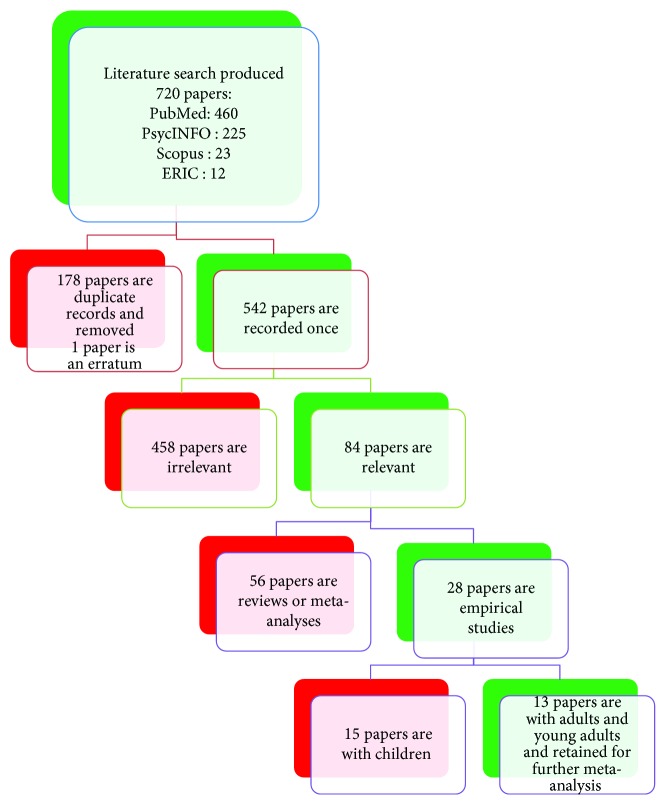
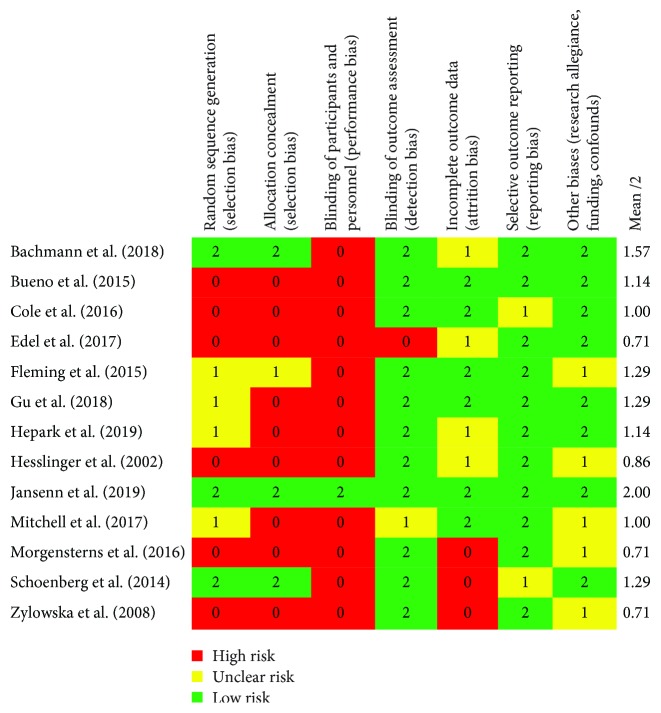
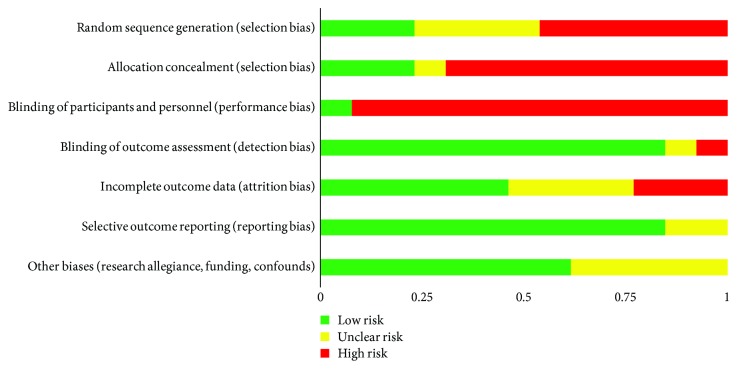
Mindfulness-based interventions (MBIs) are becoming increasingly popular as treatments for physical and psychological problems. Recently, several studies have suggested that MBIs may also be effective in reducing symptoms of attention-deficit hyperactivity disorder (ADHD). Most studies have examined the effectiveness in children, but there are now a sufficient number of individual treatment trials to consider a systematic review in adults. Majority of existing systematic reviews and meta-analyses only consider ADHD symptoms as an outcome, and most of them do not fully report potential biases of included studies, thus limiting considerably their conclusions. This is an important facet because some studies could be found ineligible to be included in future analysis due to their low quality. In this systematic review, we followed the PRISMA/PICO criteria and we thoroughly assessed the risks of bias for each of the selected studies according to Cochrane guidelines. We searched the available literature concerning MBIs in adult participants with ADHD using PsycINFO, PubMed, Scopus, and ERIC databases. In total, 13 studies conducted with 753 adults (mean age of 35.1 years) were identified as eligible. Potential moderators such as participants' age, ADHD subtypes, medication status, comorbidity, intervention length, mindfulness techniques, homework amount, and training of therapists were carefully described. Aside from measuring the symptoms of ADHD, outcome measures were categorized into executive/cognitive functioning, emotional disturbances, quality of life, mindfulness, and grade point average at school. According to presented descriptive results, all the studies (100%) showed improvement of ADHD symptoms. In addition, mindfulness meditation training improves some aspects of executive function and emotion dysregulation. Although these are promising findings to support treatment efficacy of MBIs for ADHD, various biases such as absence of randomization and lack of a control group may affect the actual clinical value and implications of the studies. Moreover, the relatively low quality of selection and performance criteria in several studies, as well as relatively high attrition bias across studies, call for caution before considering conducting further analysis.
正念干预(MBI)作为治疗身心问题的方法正变得越来越流行。最近,几项研究表明 MBI 可能也能有效减轻注意力缺陷多动障碍(ADHD)的症状。大多数研究都在儿童中进行了检验,但是现在有足够数量的个体治疗试验可以考虑对成人进行系统评价。现有的大多数系统评价和荟萃分析仅将 ADHD 症状作为一个结果进行考量,并且大多数分析没有充分报告纳入研究的潜在偏倚,从而极大地限制了其结论。这是一个重要的方面,因为由于一些研究的质量较低,可能会发现它们不符合纳入未来分析的条件。在本系统评价中,我们根据 PRISMA/PICO 标准进行研究,并根据 Cochrane 指南对所选研究的偏倚风险进行了全面评估。我们使用 PsycINFO、PubMed、Scopus 和 ERIC 数据库搜索了关于 ADHD 成人参与者的 MBI 相关文献。共有 13 项研究涉及 753 名成年人(平均年龄 35.1 岁)被确定为符合条件。仔细描述了参与者年龄、ADHD 亚型、药物状态、共病、干预时长、正念技术、作业量和治疗师培训等潜在的调节因素。除了测量 ADHD 症状外,结果衡量指标还分为执行/认知功能、情绪障碍、生活质量、正念和学校平均绩点。根据呈现的描述性结果,所有研究(100%)均显示 ADHD 症状有所改善。此外,正念冥想训练可改善执行功能和情绪失调的某些方面。虽然这些发现支持 MBI 治疗 ADHD 的疗效,但各种偏倚,如缺乏随机分组和缺乏对照组,可能会影响研究的实际临床价值和意义。此外,由于一些研究的选择和执行标准相对较低,以及研究之间较高的脱落偏倚,在考虑进一步分析之前需要谨慎。