Programa de Microbiología y Micología, Instituto de Ciencias Biomédicas (ICBM), Facultad de Medicina Universidad de Chile, Santiago, Chile.
Servicio de Gastroenterología, Hospital Clínico Universidad de Chile y Facultad de Medicina, Universidad de Chile, Santiago, Chile.
PLoS One. 2019 Jun 6;14(6):e0217684. doi: 10.1371/journal.pone.0217684. eCollection 2019.
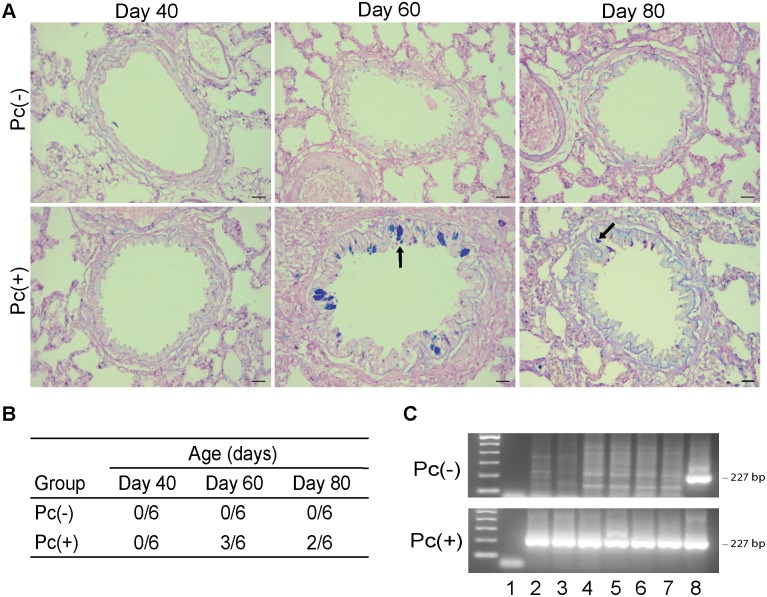
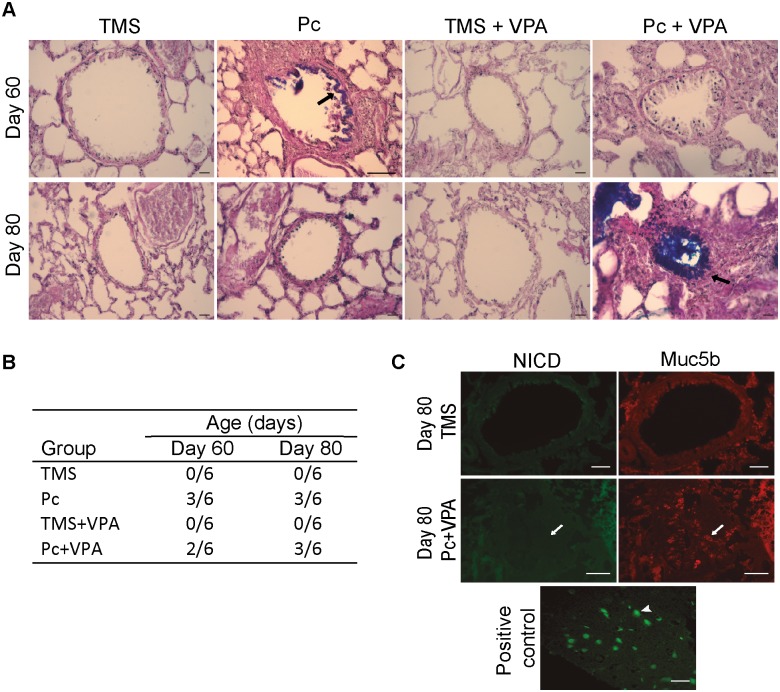
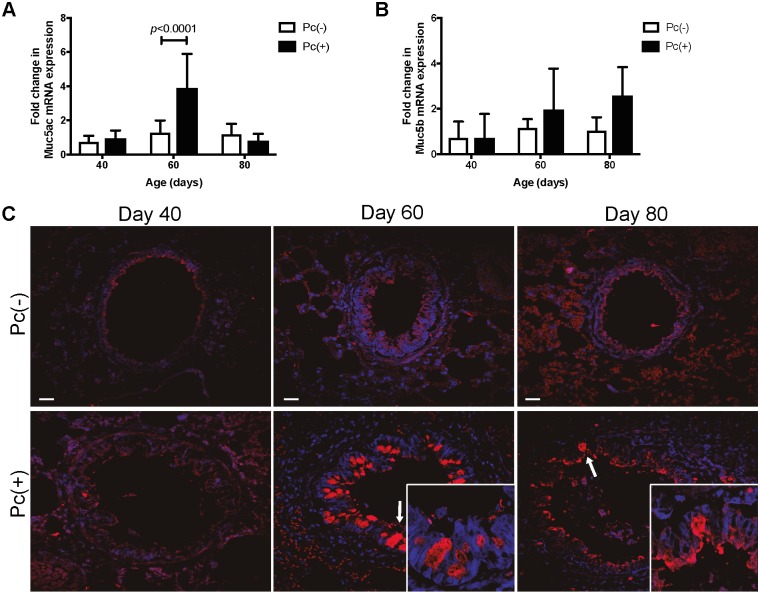
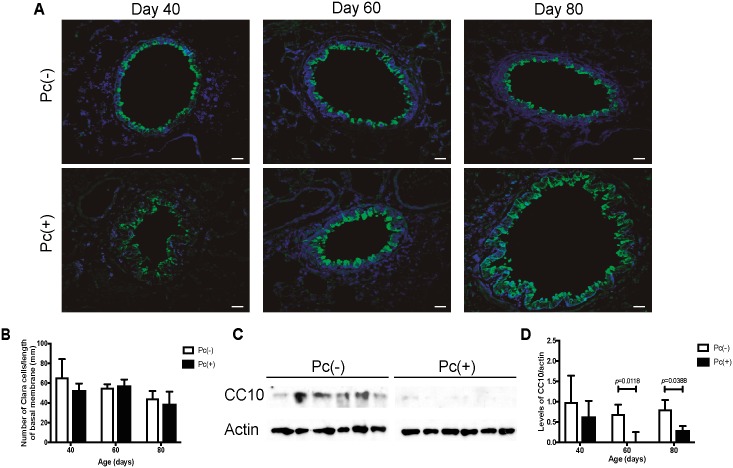
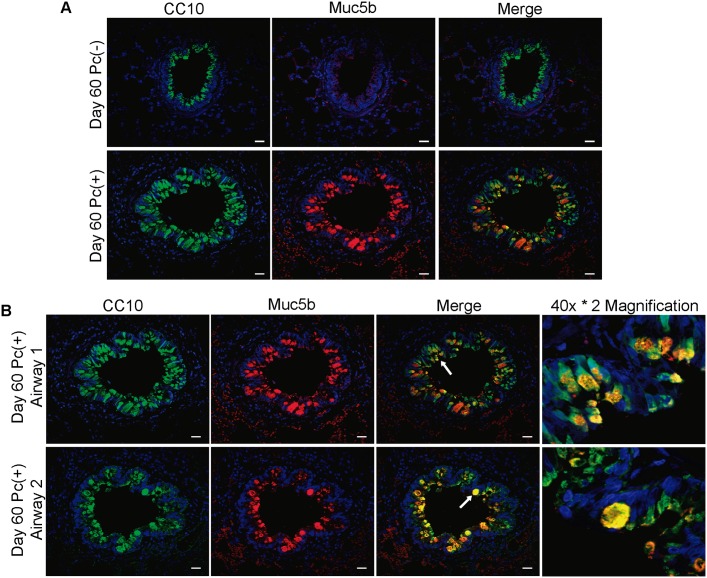
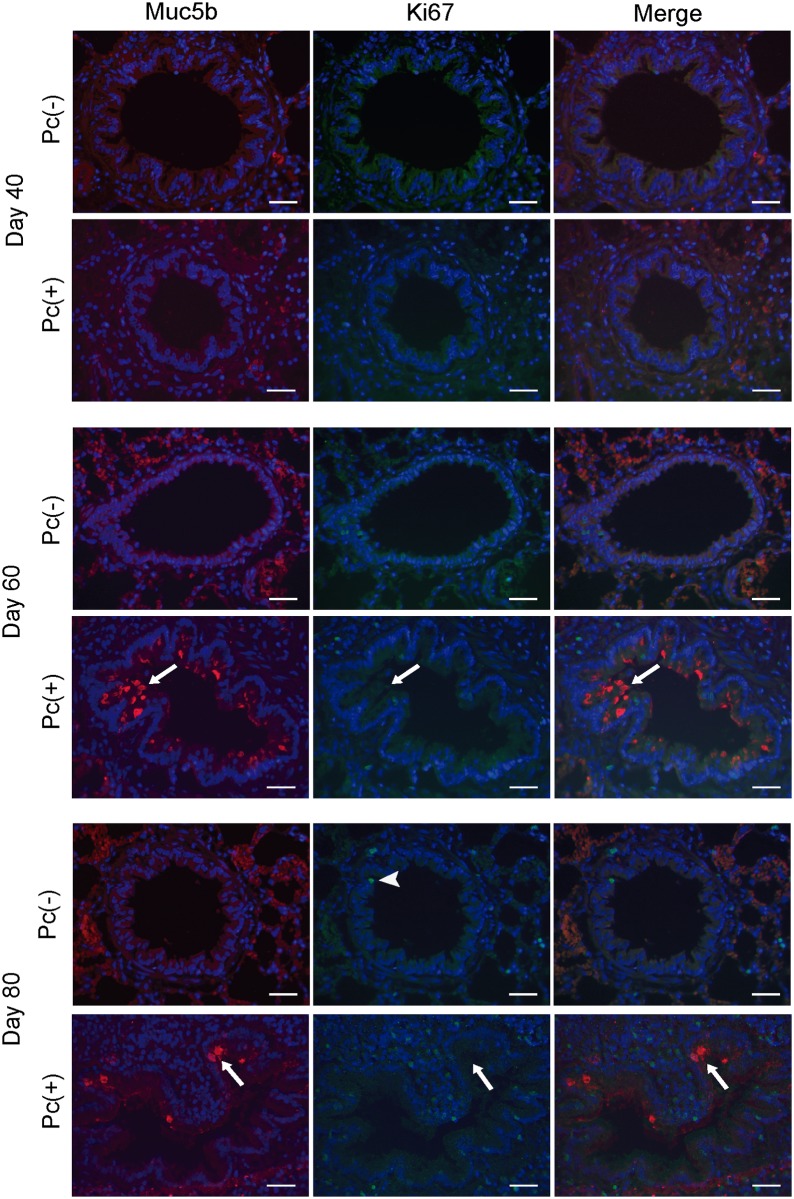
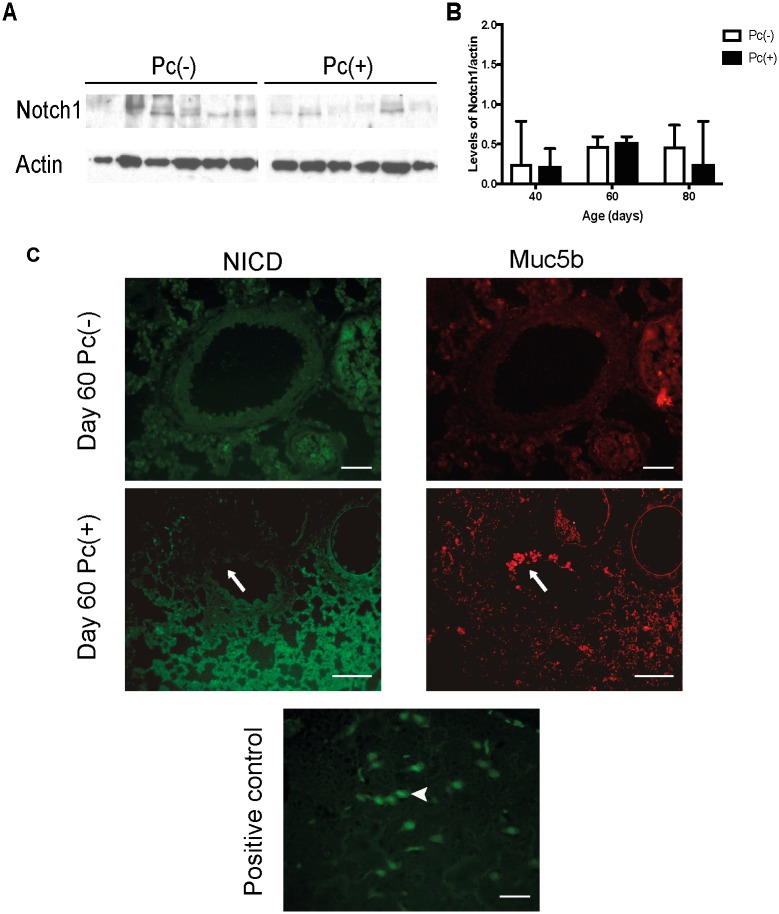
Clara cells are the main airway secretory cells able to regenerate epithelium in the distal airways through transdifferentiating into goblet cells, a process under negative regulation of the Notch pathway. Pneumocystis is a highly prevalent fungus in humans occurring between 2 and 5 months of age, a period when airways are still developing and respiratory morbidity typically increases. Pneumocystis induces mucus hyperproduction in immunocompetent host airways and whether it can stimulate Clara cells is unknown. Markers of Clara cell secretion and Notch1 activation were investigated in lungs of immunocompetent rats at 40, 60, and 80 days of age during Pneumocystis primary infection with and without Valproic acid (VPA), a Notch inducer. The proportion of rats expressing mucin increased in Pneumocystis-infected rats respect to controls at 60 and 80 days of age. Frequency of distal airways Clara cells was maintained while mRNA levels for the mucin-encoding genes Muc5B and Muc5ac in lung homogenates increased 1.9 and 3.9 times at 60 days of infection (P. = 0.1609 and P. = 0.0001, respectively) and protein levels of the Clara cell marker CC10 decreased in the Pneumocystis-infected rats at 60 and 80 days of age (P. = 0.0118 & P. = 0.0388). CC10 and Muc5b co-localized in distal airway epithelium of Pneumocystis-infected rats at day 60. Co-localization of Muc5b and Ki67 as marker of mitosis in distal airways was not observed suggesting that Muc5b production by Clara cells was independent of mitosis. Notch levels remained similar and no transnucleation of activated Notch associated to Pneumocystis infection was detected. Unexpectedly, mucus was greatly increased at day 80 in Pneumocystis-infected rats receiving VPA suggesting that a Notch-independent mechanism was triggered. Overall, data suggests a Clara to goblet cell transdifferentiation mechanism induced by Pneumocystis and independent of Notch.
Clara 细胞是主要的气道分泌细胞,能够通过向杯状细胞转分化来再生远端气道上皮,这一过程受到 Notch 通路的负调控。卡氏肺孢子虫是一种在人类中广泛存在的真菌,发生在 2 至 5 个月大时,此时气道仍在发育,呼吸道发病率通常会增加。卡氏肺孢子虫在免疫功能正常的宿主气道中诱导黏液过度产生,但其是否能刺激 Clara 细胞尚不清楚。在卡氏肺孢子虫初次感染免疫功能正常的大鼠的第 40、60 和 80 天,研究了标记 Clara 细胞分泌和 Notch1 激活的标志物,同时观察有无丙戊酸(VPA),一种 Notch 诱导剂。与对照组相比,在 60 和 80 天感染的大鼠中,表达黏蛋白的大鼠比例增加。肺匀浆中黏蛋白编码基因 Muc5B 和 Muc5ac 的 mRNA 水平在感染后第 60 天分别增加了 1.9 倍和 3.9 倍(P = 0.1609 和 P = 0.0001),而 Clara 细胞标志物 CC10 的蛋白水平在感染的卡氏肺孢子虫大鼠中降低第 60 和 80 天(P = 0.0118 & P = 0.0388)。在感染的卡氏肺孢子虫大鼠第 60 天,CC10 和 Muc5b 共定位于远端气道上皮。未观察到远端气道中 Muc5b 和 Ki67(有丝分裂标志物)的共定位,表明 Clara 细胞的 Muc5b 产生与有丝分裂无关。Notch 水平保持相似,并且未检测到与卡氏肺孢子虫感染相关的激活 Notch 的核转位。出乎意料的是,在接受 VPA 的感染的卡氏肺孢子虫大鼠中,第 80 天的黏液大量增加,这表明触发了一种不依赖 Notch 的机制。总的来说,数据表明卡氏肺孢子虫诱导了 Clara 细胞向杯状细胞的转分化机制,并且该机制不依赖 Notch。