Department of Clinical Sciences, College of Veterinary Medicine and Biomedical Sciences, Colorado State University, Fort Collins, Colorado.
Flint Animal Cancer Center, Colorado State University, Fort Collins, Colorado.
Mol Cancer Ther. 2019 Aug;18(8):1460-1471. doi: 10.1158/1535-7163.MCT-18-1346. Epub 2019 Jun 7.
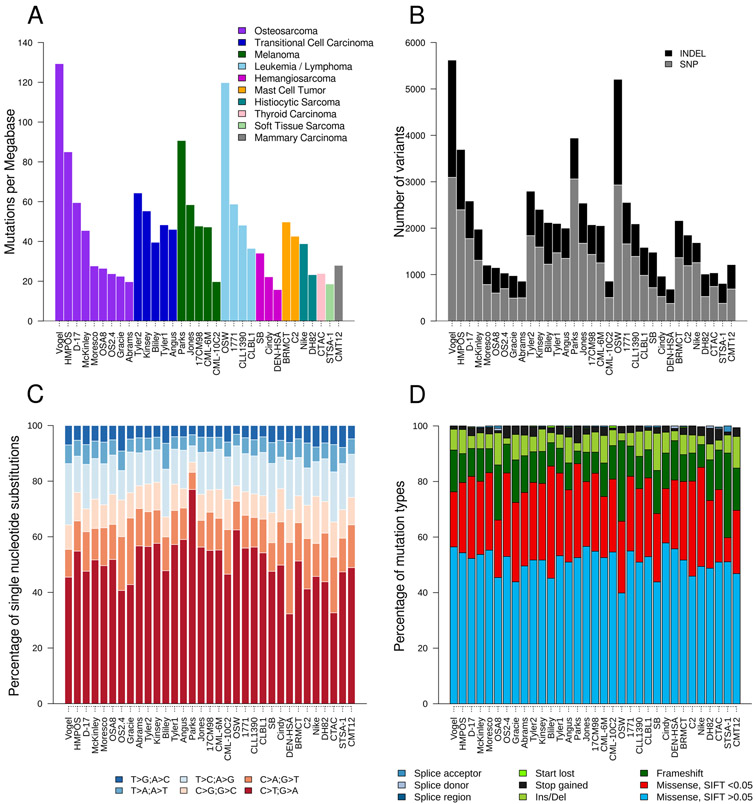
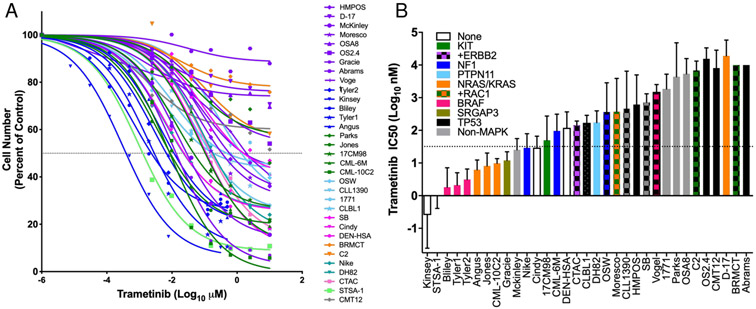
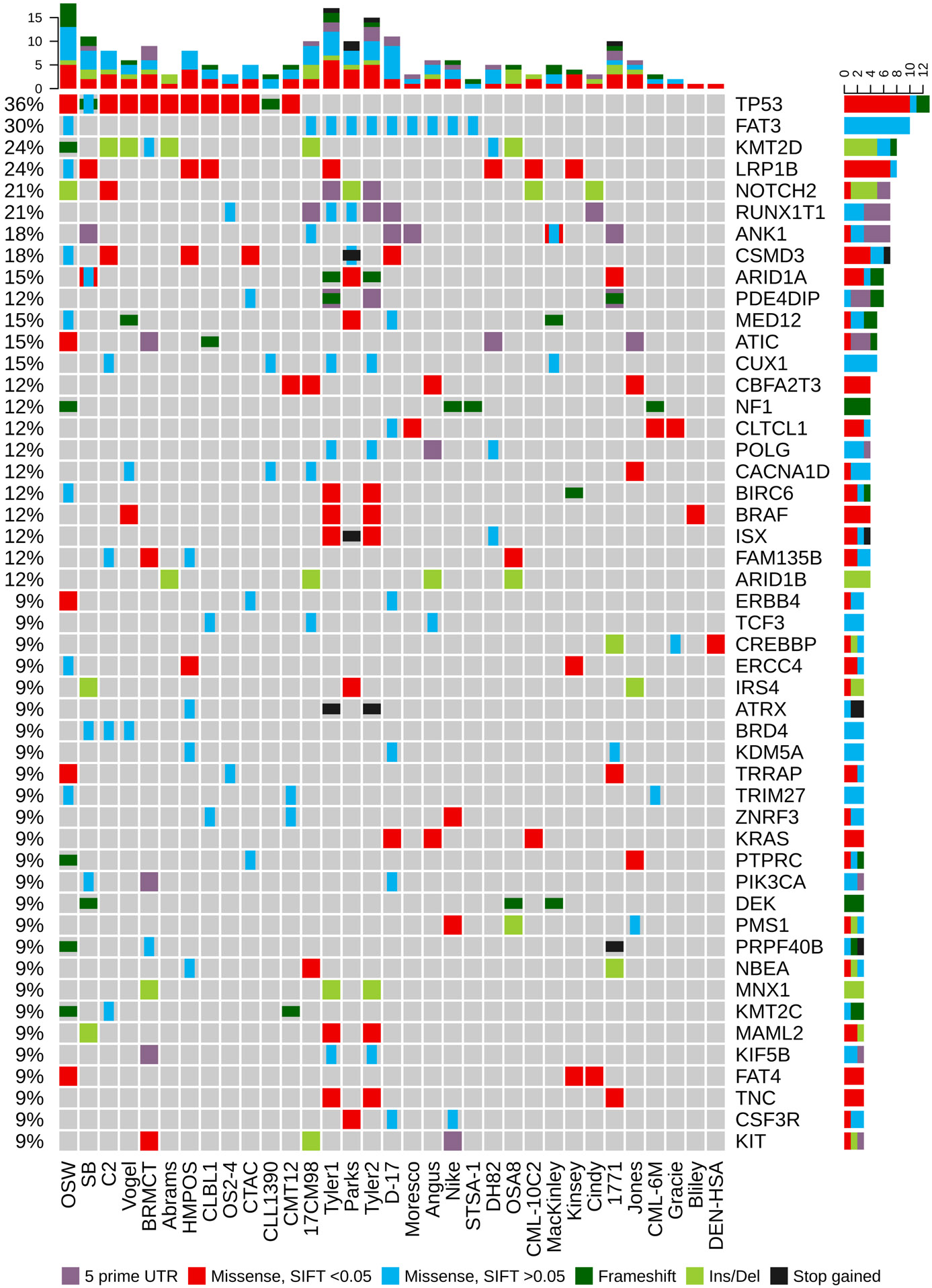
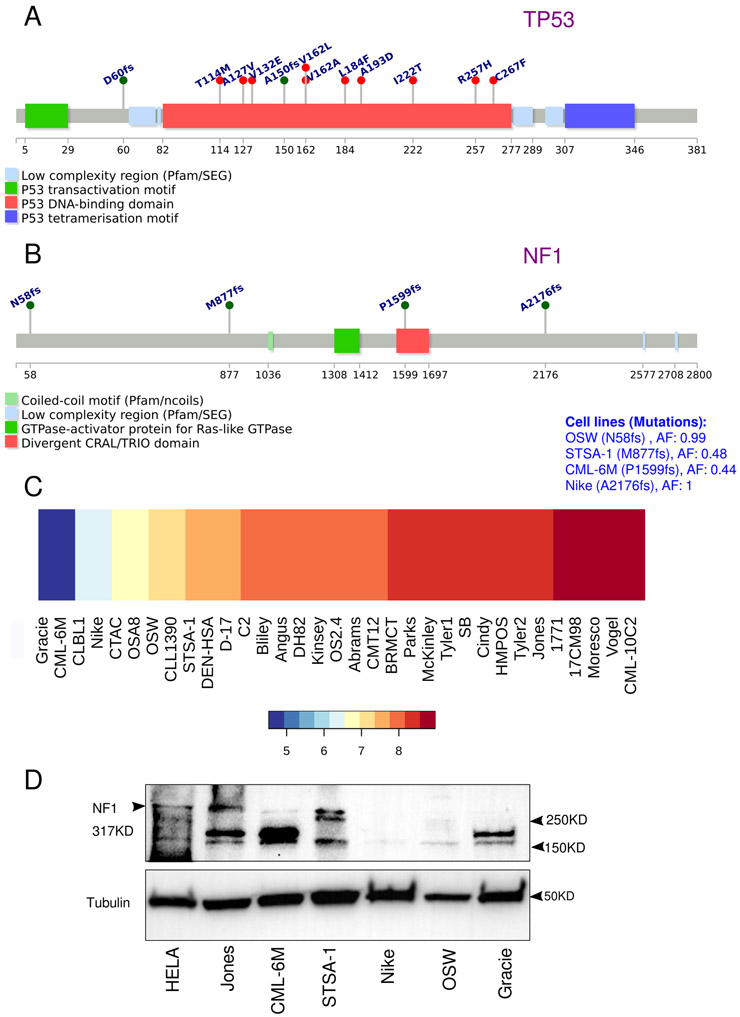
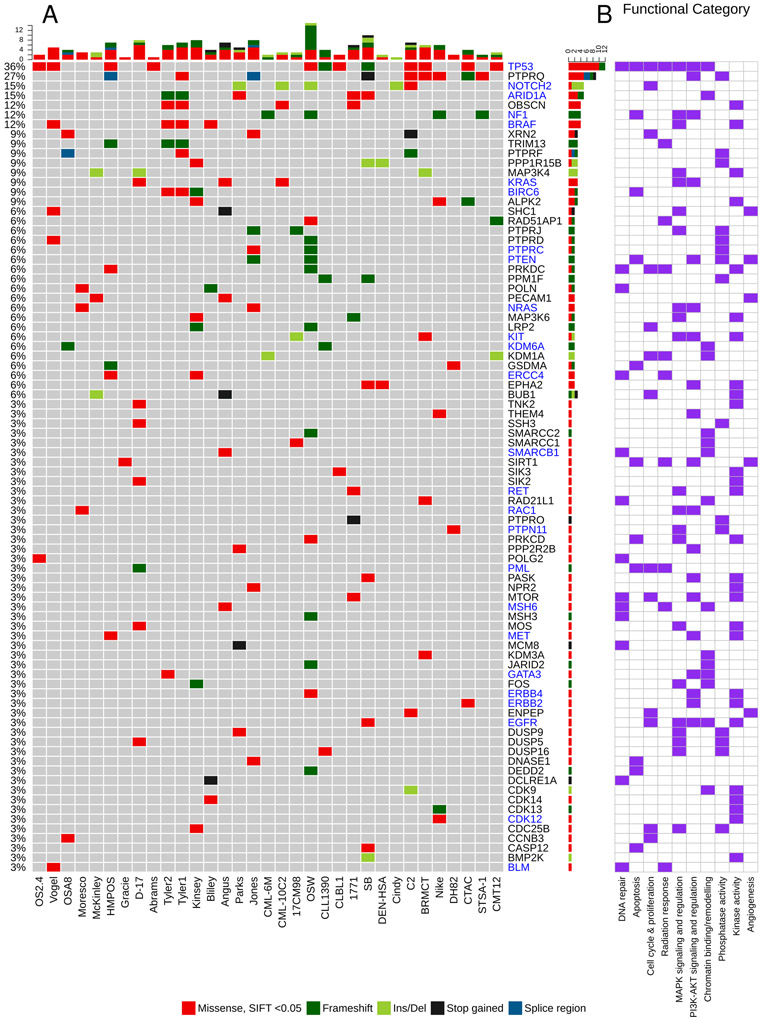
Cancer cell culture has been a backbone in cancer research, in which analysis of human cell line mutational profiles often correlates with oncogene addiction and drug sensitivity. We have conducted whole-exome sequence analyses on 33 canine cancer cell lines from 10 cancer types to identify somatic variants that contribute to pathogenesis and therapeutic sensitivity. A total of 66,344 somatic variants were identified. Mutational load ranged from 15.79 to 129.37 per Mb, and 13.2% of variants were located in protein-coding regions (PCR) of 5,085 genes. PCR somatic variants were identified in 232 genes listed in the Cancer Gene Census (COSMIC). Cross-referencing variants with human driving mutations on cBioPortal identified 61 variants as candidate cancer drivers in 30 cell lines. The most frequently mutated cancer driver was TP53 (15 mutations in 12 cell lines). No drivers were identified in three cell lines. We identified 501 non-COSMIC genes with PCR variants that functionally annotate with COSMIC genes. These genes frequently mapped to the KEGG MAPK and PI3K-AKT pathways. We evaluated the cell lines for ERK1/2 and AKT(S473) phosphorylation and sensitivity to the MEK1/2 inhibitor, trametinib. Twelve of the 33 cell lines were trametinib-sensitive (IC < 32 nmol/L), all 12 exhibited constitutive or serum-activated ERK1/2 phosphorylation, and 8 carried MAPK pathway cancer driver variants: NF1(2), BRAF(3), N/KRAS(3). This functionally annotated database of canine cell line variants will inform hypothesis-driven preclinical research to support the use of companion animals in clinical trials to test novel combination therapies.
癌细胞培养一直是癌症研究的基础,对人类细胞系突变谱的分析通常与致癌基因成瘾和药物敏感性相关。我们对 10 种癌症类型的 33 种犬癌细胞系进行了全外显子组测序分析,以确定导致发病机制和治疗敏感性的体细胞变异。共鉴定出 66344 个体细胞变异。突变负荷范围为 15.79 至 129.37 个/Mb,13.2%的变异位于 5085 个基因的编码区(PCR)。在癌症基因目录(COSMIC)中列出的 232 个基因中鉴定出 PCR 体细胞变异。在 cBioPortal 中与人类驱动突变交叉引用的变异,在 30 个细胞系中确定了 61 个候选癌症驱动基因的变异。最常突变的癌症驱动基因是 TP53(12 个细胞系中有 15 个突变)。三个细胞系中没有鉴定出驱动基因。我们鉴定出 501 个非 COSMIC 基因,这些基因的 PCR 变异与 COSMIC 基因具有功能注释。这些基因经常映射到 KEGG MAPK 和 PI3K-AKT 途径。我们评估了细胞系中 ERK1/2 和 AKT(S473)的磷酸化水平以及对 MEK1/2 抑制剂 trametinib 的敏感性。33 个细胞系中有 12 个对 trametinib 敏感(IC < 32 nmol/L),所有 12 个细胞系均表现出组成性或血清激活的 ERK1/2 磷酸化,其中 8 个携带 MAPK 途径癌症驱动基因变异:NF1(2)、BRAF(3)、N/KRAS(3)。该犬细胞系变异的功能注释数据库将为假设驱动的临床前研究提供信息,以支持在临床试验中使用伴侣动物来测试新的联合疗法。