Hinrichs Rebecca, van Rooij Sanne Jh, Michopoulos Vasiliki, Schultebraucks Katharina, Winters Sterling, Maples-Keller Jessica, Rothbaum Alex O, Stevens Jennifer S, Galatzer-Levy Isaac, Rothbaum Barbara O, Ressler Kerry J, Jovanovic Tanja
Department of Psychiatry and Behavioral Sciences, Emory University School of Medicine, Atlanta, Georgia.
Yerkes National Primate Research Center, Atlanta, Georgia.
Chronic Stress (Thousand Oaks). 2019 Jan-Dec;3. doi: 10.1177/2470547019844441. Epub 2019 Apr 24.
Exposure to a traumatic event leads to posttraumatic stress disorder (PTSD) in 10-20% of exposed individuals. Predictors of risk are needed to target early interventions to those who are most vulnerable. The objective of the study was to test whether a noninvasive mobile device that measures a physiological biomarker of autonomic nervous system activation could predict future PTSD symptoms.
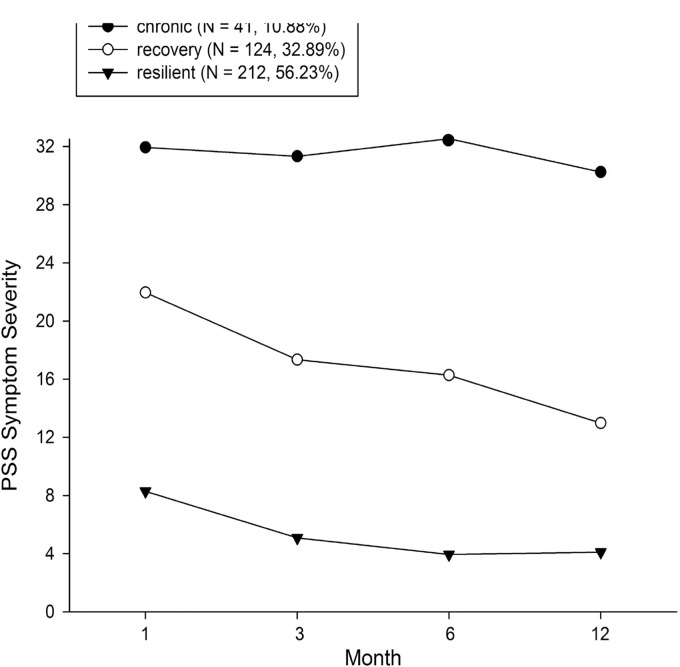
Skin conductance response (SCR) was collected during a trauma interview in the emergency department within hours of exposure to trauma in 95 individuals. Trajectories of PTSD symptoms over 12 months post-trauma were identified using Latent Growth Mixture Modeling.
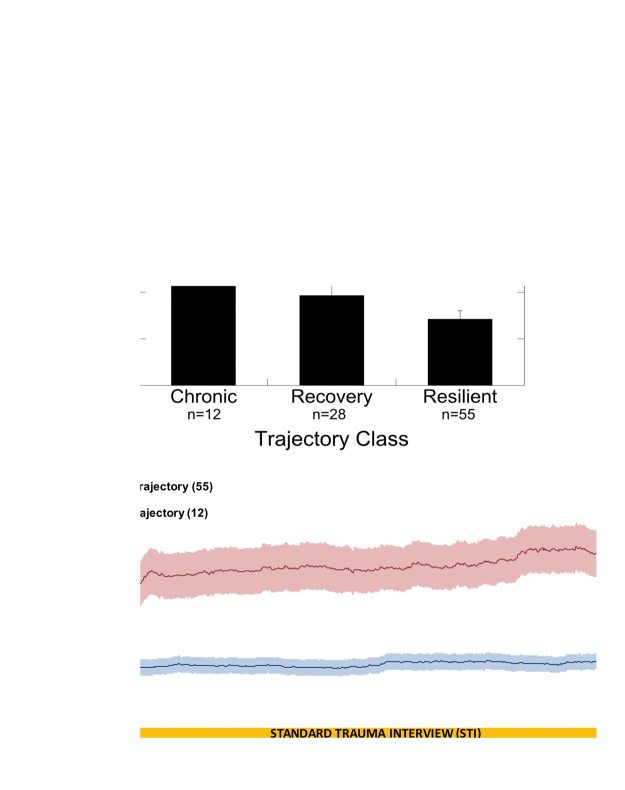
SCR was significantly correlated with the probability of being in the chronic PTSD trajectory following trauma exposure in the ED (r=0.489, p<0.000001). Lasso regression with elastic net was performed with demographic and clinical measures obtained in the ED, demonstrating that SCR was the most significant predictor of the chronic PTSD trajectory (<0.00001).
The current study is the first prospective study of PTSD showing SCR in the immediate aftermath of trauma predicts subsequent development of chronic PTSD. This finding points to an easily obtained, and neurobiologically informative, biomarker in emergency departments that can be disseminated to predict the development of PTSD.
遭受创伤性事件后,10%-20%的受暴露个体患有创伤后应激障碍(PTSD)。需要风险预测指标,以便针对最脆弱的个体进行早期干预。本研究的目的是测试一种测量自主神经系统激活生理生物标志物的非侵入性移动设备能否预测未来的PTSD症状。
在95名个体暴露于创伤事件数小时后的急诊室创伤访谈期间收集皮肤电反应(SCR)。使用潜在增长混合模型确定创伤后12个月内PTSD症状的轨迹。
在急诊室,SCR与创伤暴露后处于慢性PTSD轨迹的概率显著相关(r=0.489,p<0.000001)。利用在急诊室获得的人口统计学和临床测量数据进行带弹性网络的套索回归分析,结果表明SCR是慢性PTSD轨迹最显著的预测指标(<0.00001)。
本研究是第一项关于PTSD的前瞻性研究,表明创伤后即刻的SCR可预测慢性PTSD的后续发展。这一发现指出了急诊室中一种易于获得且具有神经生物学信息的生物标志物,可用于预测PTSD的发展。