Department of Molecular & Systems Biology, Norris Cotton Cancer Center, Geisel School of Medicine at Dartmouth, Lebanon, NH, USA.
Department of Microbiology and Immunology, Norris Cotton Cancer Center, Geisel School of Medicine at Dartmouth, Lebanon, NH, USA.
Mol Oncol. 2019 Aug;13(8):1778-1794. doi: 10.1002/1878-0261.12528. Epub 2019 Jul 9.
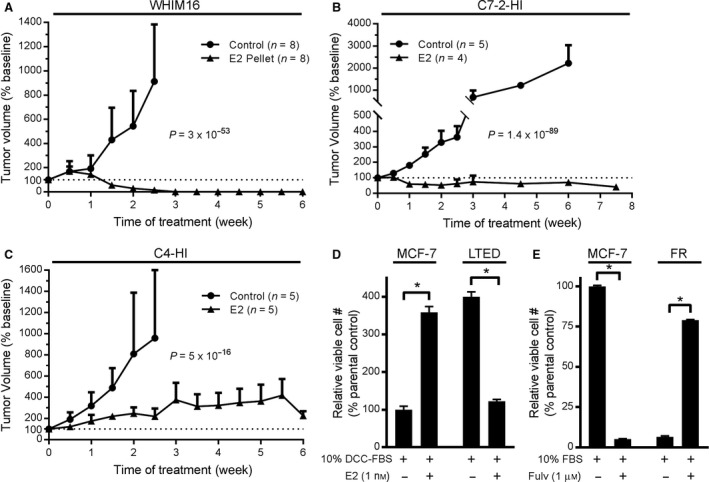
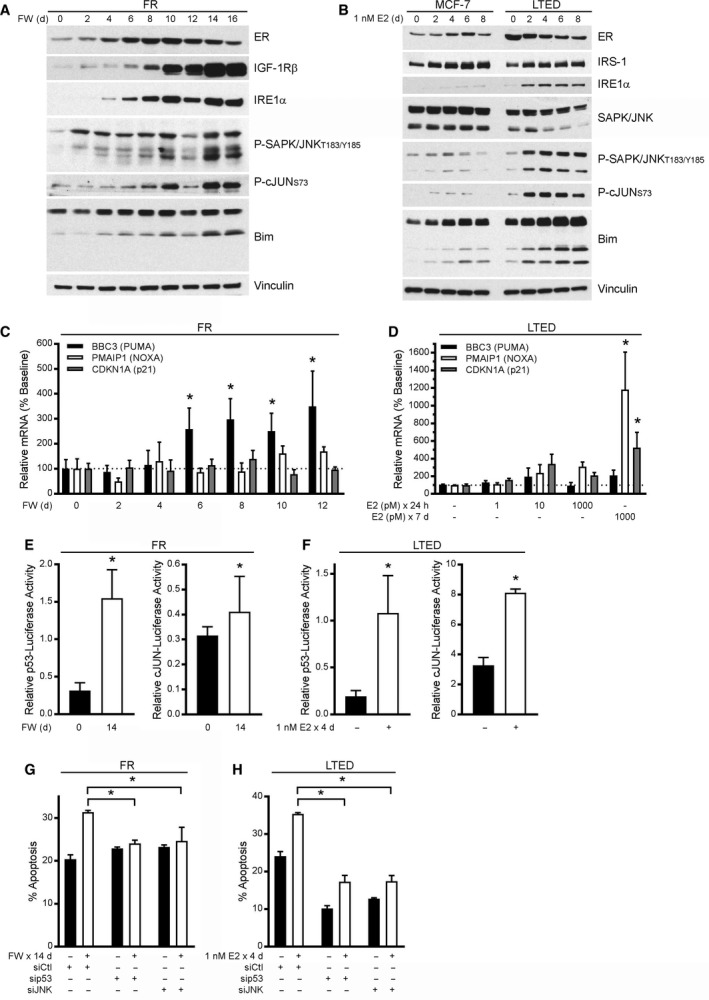
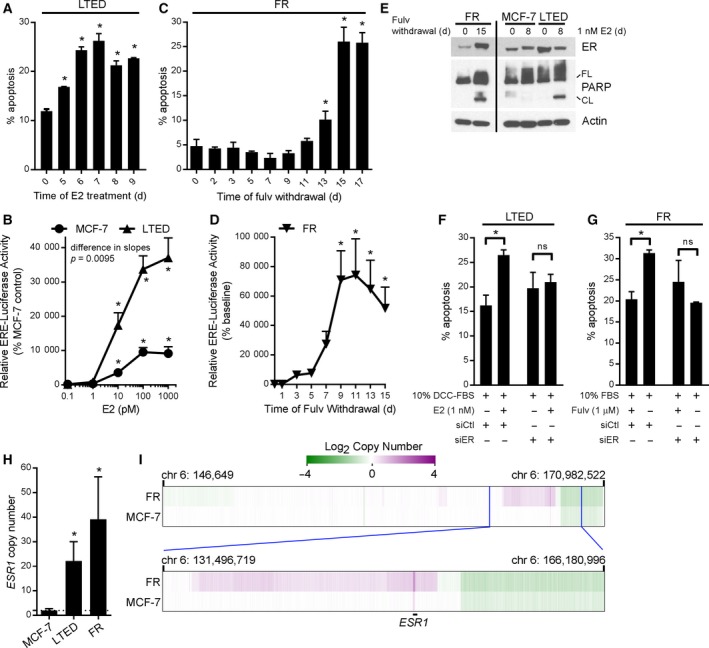
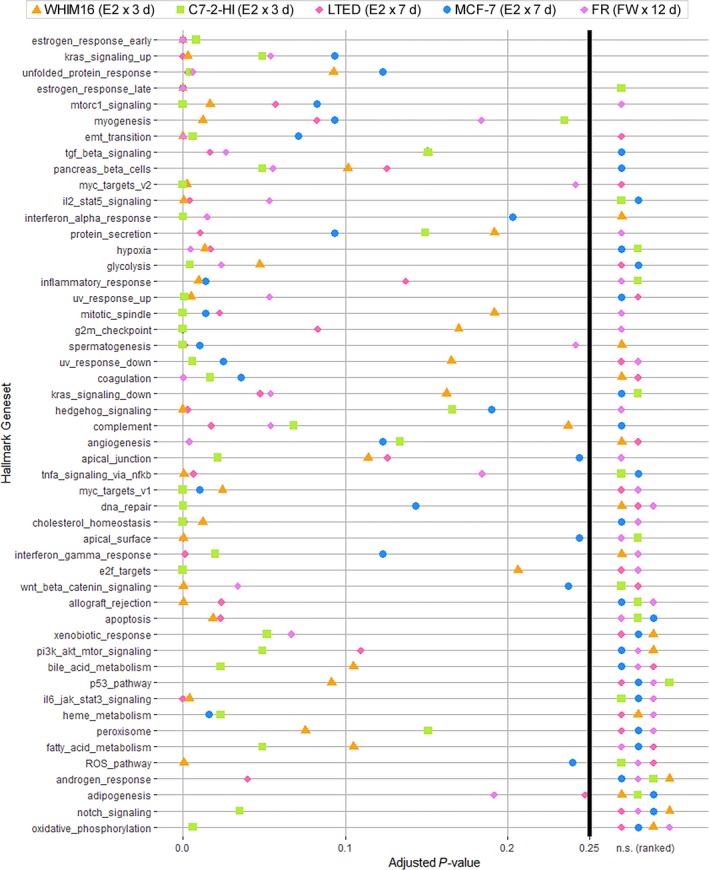
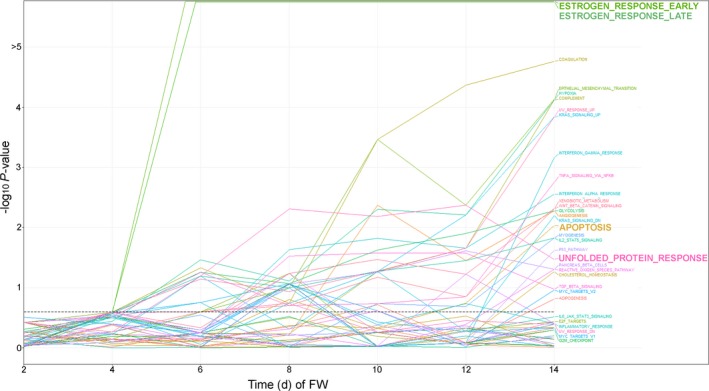
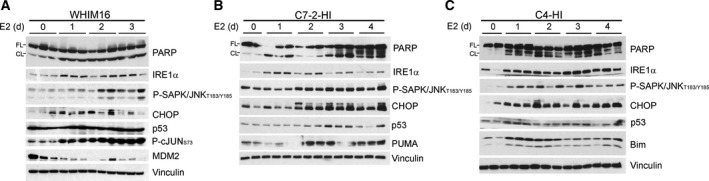
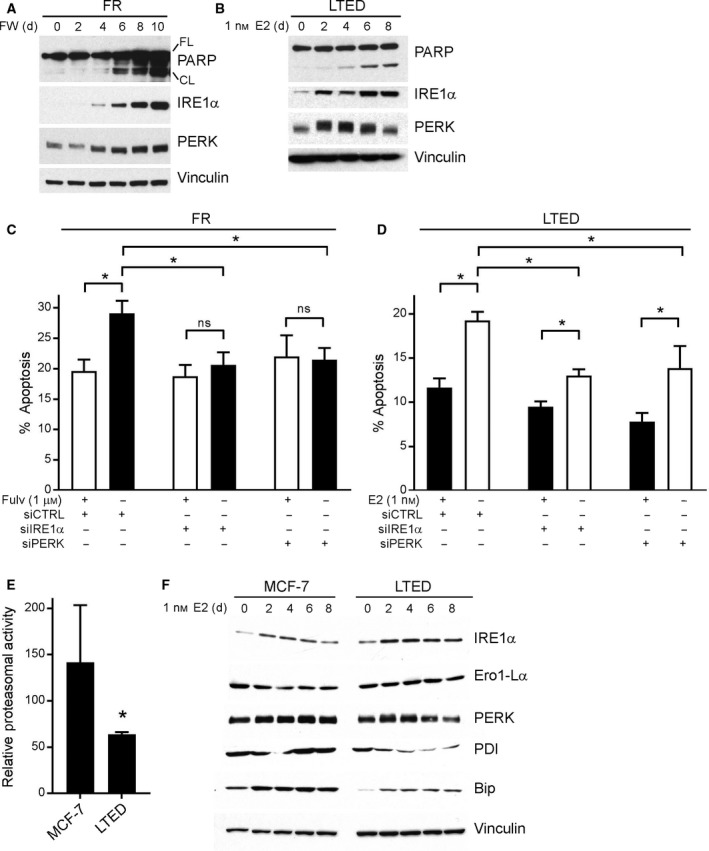
Estrogens have been shown to elicit anticancer effects against estrogen receptor α (ER)-positive breast cancer. We sought to determine the mechanism underlying the therapeutic response. Response to 17β-estradiol was assessed in ER+ breast cancer models with resistance to estrogen deprivation: WHIM16 patient-derived xenografts, C7-2-HI and C4-HI murine mammary adenocarcinomas, and long-term estrogen-deprived MCF-7 cells. As another means to reactivate ER, the anti-estrogen fulvestrant was withdrawn from fulvestrant-resistant MCF-7 cells. Transcriptional, growth, apoptosis, and molecular alterations in response to ER reactivation were measured. 17β-estradiol treatment and fulvestrant withdrawal induced transcriptional activation of ER, and cells adapted to estrogen deprivation or fulvestrant were hypersensitive to 17β-estradiol. ER transcriptional response was followed by an unfolded protein response and apoptosis. Such apoptosis was dependent upon the unfolded protein response, p53, and JNK signaling. Anticancer effects were most pronounced in models exhibiting genomic amplification of the gene encoding ER (ESR1), suggesting that engagement of ER at high levels is cytotoxic. These data indicate that long-term adaptation to estrogen deprivation or ER inhibition alters sensitivity to ER reactivation. In such adapted cells, 17β-estradiol treatment and anti-estrogen withdrawal hyperactivate ER, which drives an unfolded protein response and subsequent growth inhibition and apoptosis. 17β-estradiol treatment should be considered as a therapeutic option for anti-estrogen-resistant disease, particularly in patients with tumors harboring ESR1 amplification or ER overexpression. Furthermore, therapeutic strategies that enhance an unfolded protein response may increase the therapeutic effects of ER reactivation.
雌激素已被证明对雌激素受体α(ER)阳性乳腺癌具有抗癌作用。我们试图确定治疗反应的机制。在对雌激素剥夺有抗性的 ER+乳腺癌模型中评估了 17β-雌二醇的反应:WHIM16 患者来源的异种移植物、C7-2-HI 和 C4-HI 鼠乳腺腺癌,以及长期去雌激素的 MCF-7 细胞。作为另一种重新激活 ER 的方法,从对氟维司群有抗性的 MCF-7 细胞中撤回了抗雌激素氟维司群。测量了对 ER 重新激活的转录、生长、凋亡和分子改变的反应。17β-雌二醇处理和氟维司群撤回诱导了 ER 的转录激活,适应雌激素剥夺或氟维司群的细胞对 17β-雌二醇敏感。ER 转录反应后是未折叠蛋白反应和凋亡。这种凋亡依赖于未折叠蛋白反应、p53 和 JNK 信号。在表现出编码 ER(ESR1)的基因基因组扩增的模型中,抗癌作用最为明显,这表明高水平结合 ER 具有细胞毒性。这些数据表明,长期适应雌激素剥夺或 ER 抑制会改变对 ER 重新激活的敏感性。在适应的细胞中,17β-雌二醇处理和抗雌激素撤回会过度激活 ER,从而引发未折叠蛋白反应,随后抑制生长和凋亡。17β-雌二醇治疗应被视为抗雌激素耐药疾病的一种治疗选择,特别是在肿瘤携带 ESR1 扩增或 ER 过表达的患者中。此外,增强未折叠蛋白反应的治疗策略可能会增加 ER 重新激活的治疗效果。