Department of Architecture, Design, Media, and Technology, Aalborg University, 9000 Aalborg, Denmark;
Department of Architecture, Design, Media, and Technology, Aalborg University, 9000 Aalborg, Denmark.
Proc Natl Acad Sci U S A. 2019 Jul 16;116(29):14769-14778. doi: 10.1073/pnas.1900648116. Epub 2019 Jun 12.
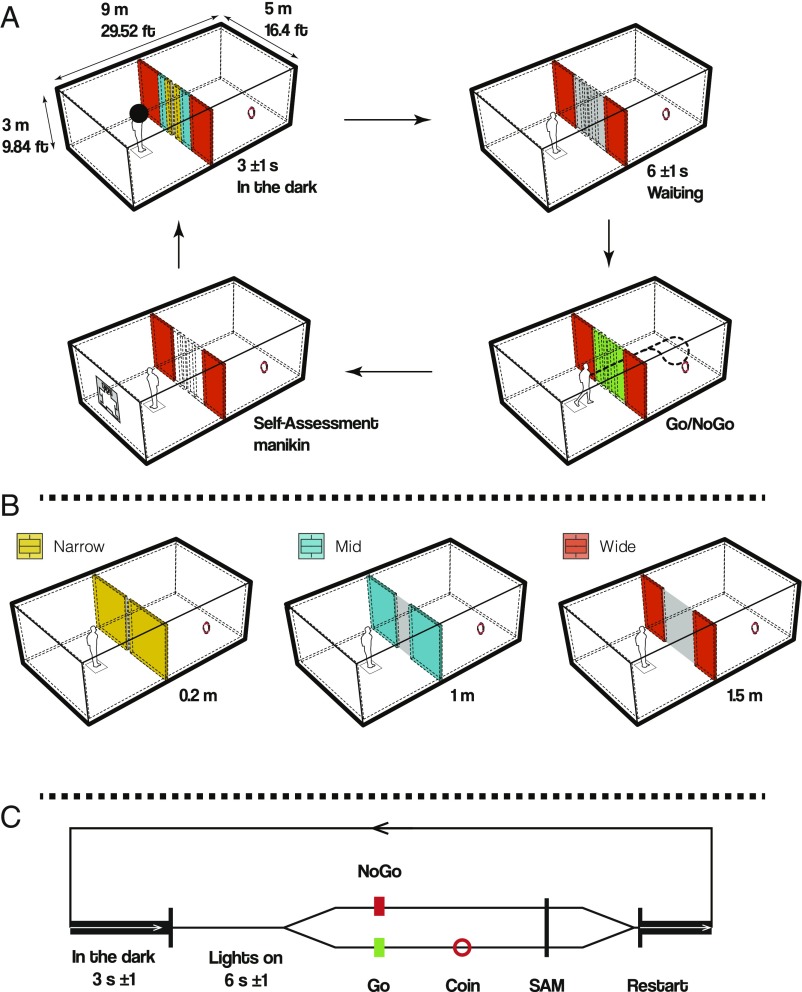
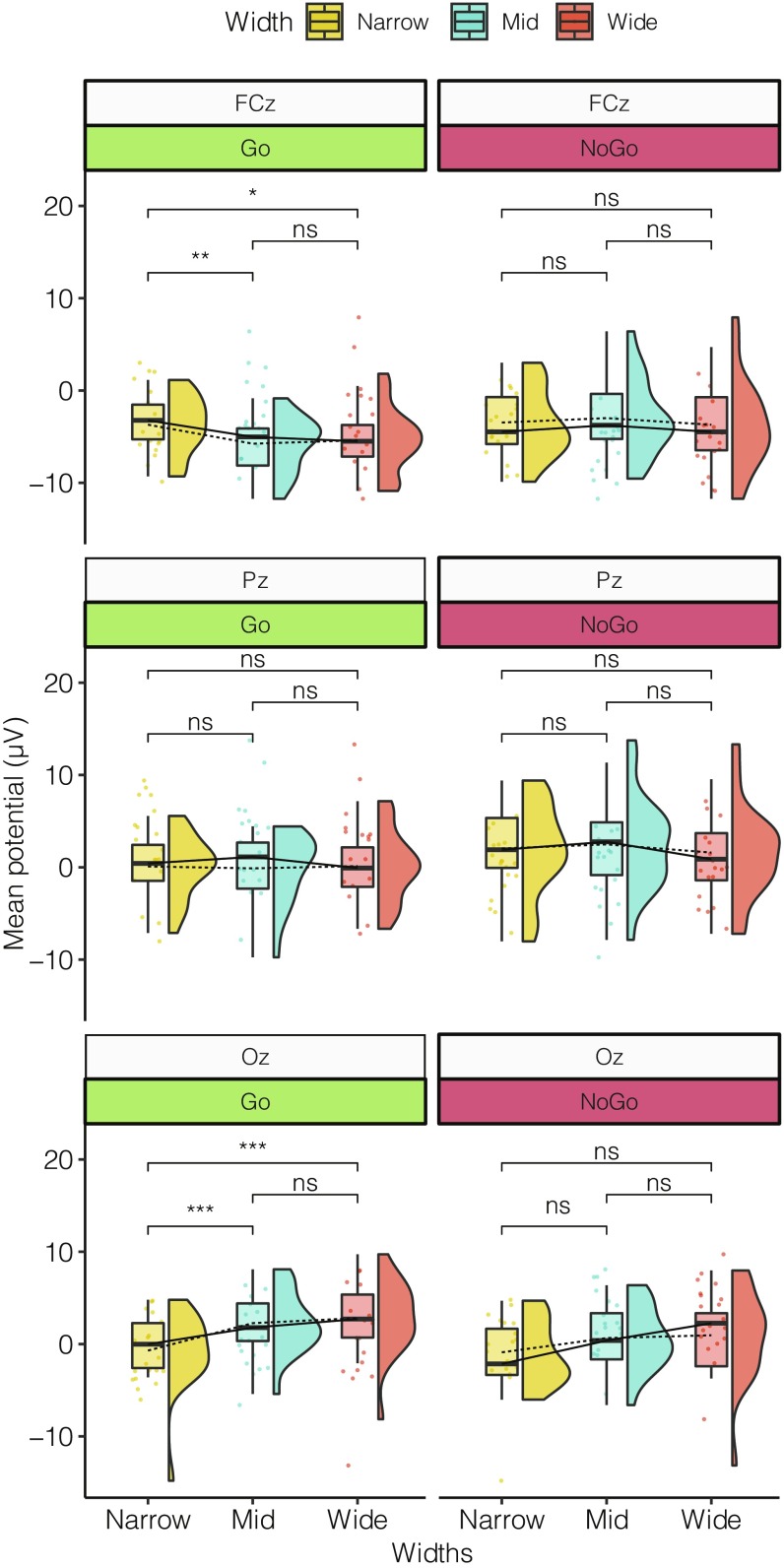
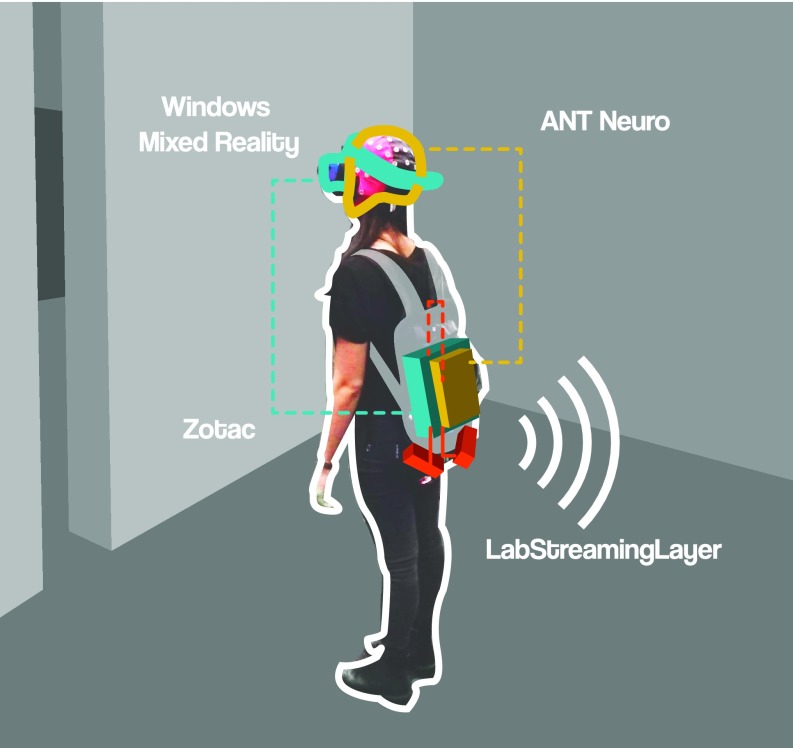
Anticipating meaningful actions in the environment is an essential function of the brain. Such predictive mechanisms originate from the motor system and allow for inferring actions from environmental affordances, and the potential to act within a specific environment. Using architecture, we provide a unique perspective on the ongoing debate in cognitive neuroscience and philosophy on whether cognition depends on movement or is decoupled from our physical structure. To investigate cognitive processes associated with architectural affordances, we used a mobile brain/body imaging approach recording brain activity synchronized to head-mounted displays. Participants perceived and acted on virtual transitions ranging from nonpassable to easily passable. We found that early sensory brain activity, on revealing the environment and before actual movement, differed as a function of affordances. In addition, movement through transitions was preceded by a motor-related negative component that also depended on affordances. Our results suggest that potential actions afforded by an environment influence perception.
预测环境中的有意义行为是大脑的基本功能。这种预测机制源自运动系统,允许从环境提供的信息中推断出动作,以及在特定环境中行动的可能性。我们利用建筑提供了一个独特的视角,探讨认知神经科学和哲学中关于认知是否取决于运动或与我们的物理结构是否分离的持续争论。为了研究与建筑提供的信息相关的认知过程,我们使用了一种移动脑/身成像方法,记录与头戴式显示器同步的大脑活动。参与者感知并作用于虚拟过渡,范围从不可通行到容易通行。我们发现,在揭示环境和实际运动之前,早期的感官大脑活动会根据提供的信息而有所不同。此外,过渡时的运动之前还会出现一个与运动相关的负成分,该成分也取决于提供的信息。我们的结果表明,环境提供的潜在动作会影响感知。