Li Han-Xue
Department of Preventive Dentistry, Stomatological Hospital of Chongqing Medical University, Chongqing 400015, People's Republic of China.
Onco Targets Ther. 2019 May 13;12:3645-3660. doi: 10.2147/OTT.S203144. eCollection 2019.
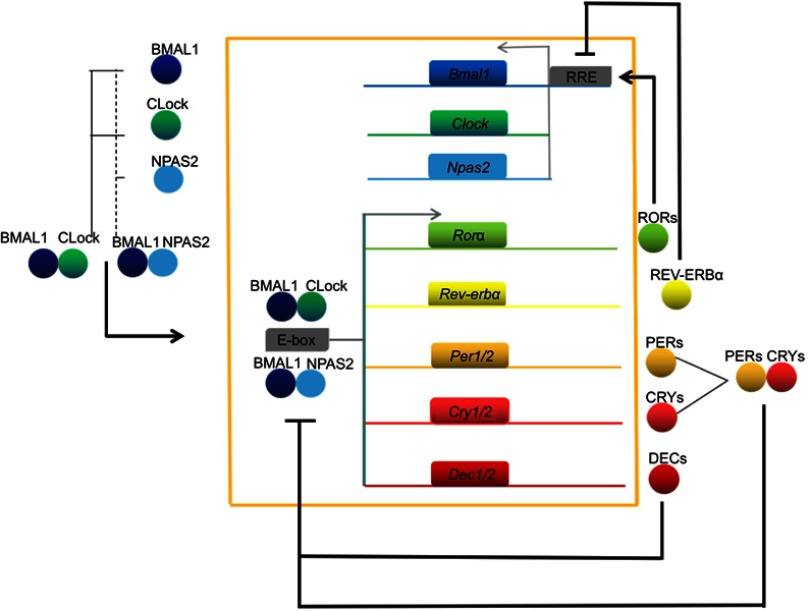
Circadian rhythms are generated via variations in the expression of clock genes that are organized into a complex transcriptional-translational autoregulatory network and regulate the diverse physiological and behavioral activities that are required to adapt to periodic environmental changes. Aberrant clock gene expression is associated with a heightened risk of diseases that affect all aspects of human health, including cancers. Within the past several years, a number of studies have indicated that clock genes contribute to carcinogenesis by altering the expression of clock-controlled and tumor-related genes downstream of many cellular pathways. This review comprehensively summarizes how clock genes affect the development of tumors and their prognosis. In addition, the review provides a full description of the current state of oral cancer research that aims to optimize cancer diagnosis and treatment modalities.
昼夜节律是通过生物钟基因表达的变化产生的,这些基因被组织成一个复杂的转录-翻译自动调节网络,并调节适应周期性环境变化所需的各种生理和行为活动。生物钟基因表达异常与影响人类健康各个方面的疾病风险增加有关,包括癌症。在过去几年中,多项研究表明,生物钟基因通过改变许多细胞通路下游的生物钟控制基因和肿瘤相关基因的表达来促进致癌作用。本综述全面总结了生物钟基因如何影响肿瘤的发生及其预后。此外,该综述还全面描述了旨在优化癌症诊断和治疗方式的口腔癌研究现状。