Cipriano Graziella Fb, Cipriano Gerson, Santos Francisco V, Güntzel Chiappa Adriana M, Pires Luigi, Cahalin Lawrence Patrick, Chiappa Gaspar R
Physical Therapy Department, University of Brasilia, Brasilia, Brazil.
Department of Physical Therapy, University of Miami Miller School Of Medicine, Coral Gables, FL, USA.
Integr Blood Press Control. 2019 May 20;12:1-11. doi: 10.2147/IBPC.S159386. eCollection 2019.
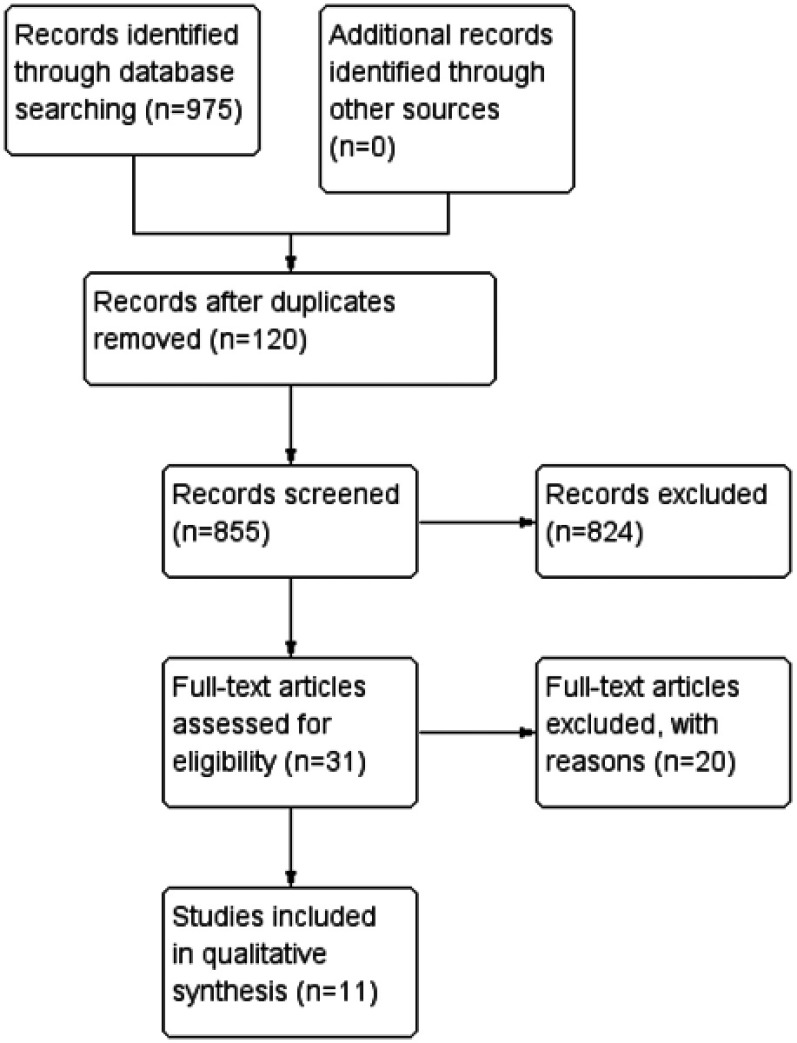
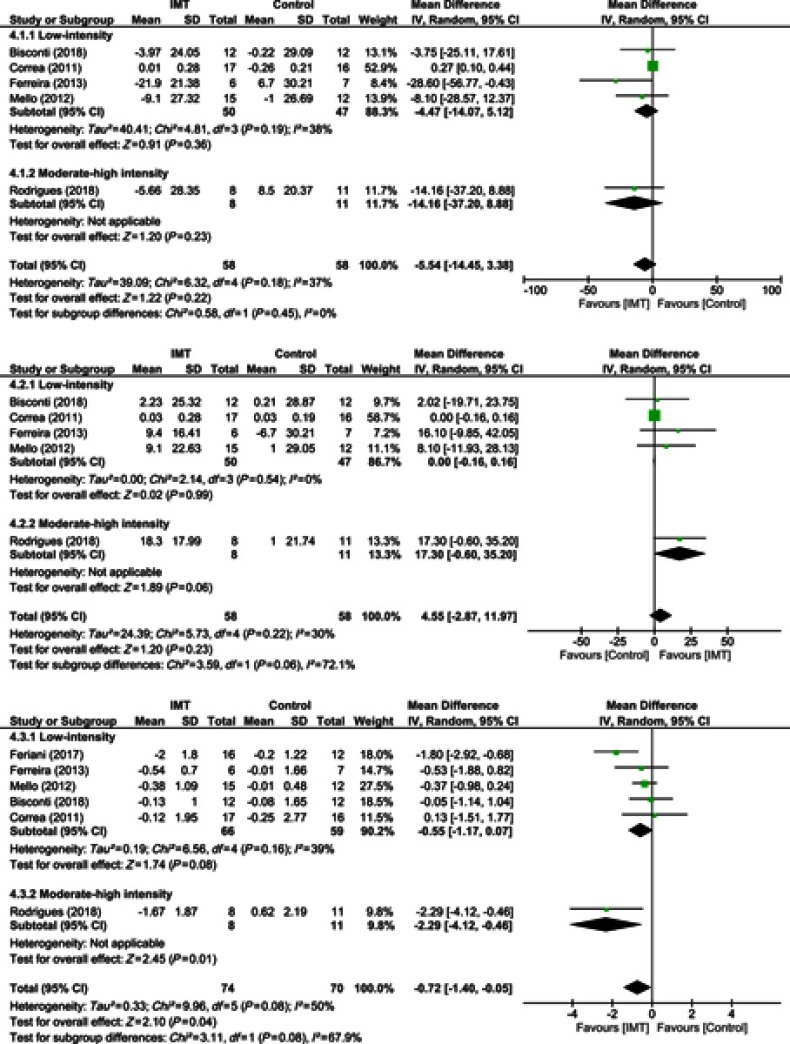
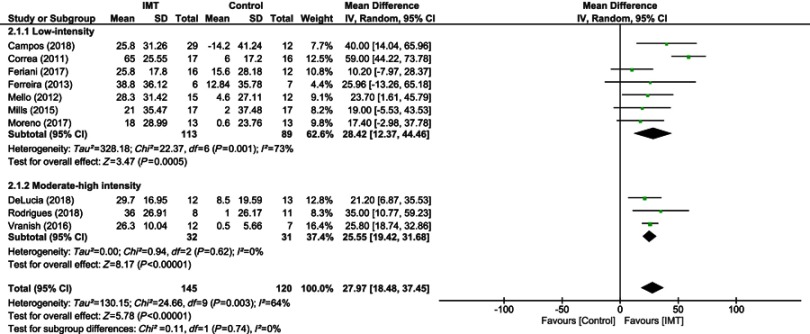
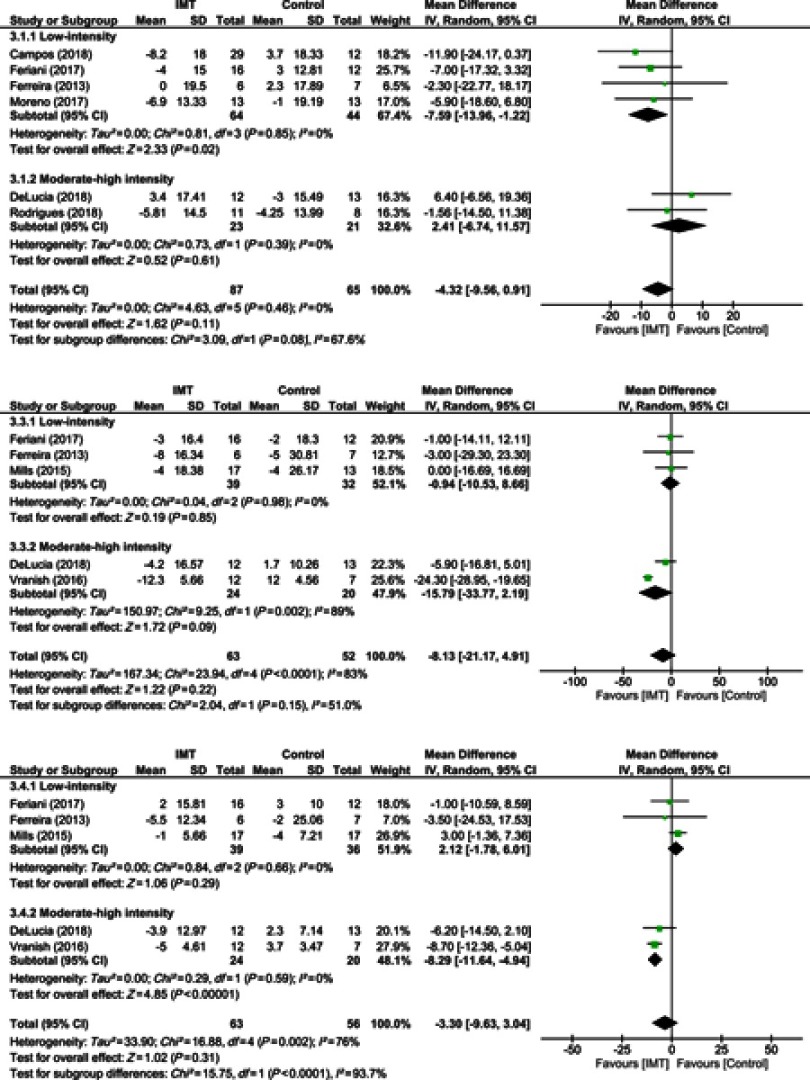
Cardiorespiratory limitation is a common hallmark of cardiovascular disease which is a key component of pharmacological and exercise treatments. More recently, inspiratory muscle training (IMT) is becoming an effective complementary treatment with positive effects on muscle strength and exercise capacity. We assessed the effectiveness of IMT on the cardiovascular system through autonomic function modulation via heart rate variability and arterial blood pressure. Randomized controlled trials (RCTs) were identified from searches of The Cochrane Library, MEDLINE and EMBASE to November 2018. Citations, conference proceedings and previous reviews were included without population restriction, comparing IMT intervention to no treatment, placebo or active control. We identified 10 RCTs involving 267 subjects (mean age range 51-71 years). IMT programs targeted maximum inspiratory pressure (MIP) and cardiovascular outcomes, using low (=6) and moderate to high intensity (=4) protocols, but the protocols varied considerably (duration: 1-12 weeks, frequency: 3-14 times/week, time: 10-30 mins). An overall increase of the MIP (cmHO) was observed (-27.57 95% CI -18.48, -37.45, =64%), according to weighted mean difference (95%CI), and was accompanied by a reduction of the low to high frequency ratio (-0.72 95% CI-1.40, -0.05, =50%). In a subgroup analysis, low- and moderate-intensity IMT treatment was associated with a reduction of the heart rate (HR) (-7.59 95% CI -13.96, -1.22 bpm, =0%) and diastolic blood pressure (DBP) (-8.29 [-11.64, -4.94 mmHg], =0%), respectively. IMT is an effective treatment for inspiratory muscle weakness in several populations and could be considered as a complementary treatment to improve the cardiovascular system, mainly HR and DBP. Further research is required to better understand the above findings.
心肺功能受限是心血管疾病的常见特征,而心血管疾病是药物治疗和运动治疗的关键组成部分。最近,吸气肌训练(IMT)正成为一种有效的辅助治疗方法,对肌肉力量和运动能力有积极影响。我们通过心率变异性和动脉血压对自主神经功能进行调节,评估了IMT对心血管系统的有效性。通过检索Cochrane图书馆、MEDLINE和EMBASE至2018年11月,确定了随机对照试验(RCT)。纳入了不限人群的文献、会议记录和先前的综述,将IMT干预与不治疗、安慰剂或积极对照进行比较。我们确定了10项RCT,涉及267名受试者(平均年龄范围为51 - 71岁)。IMT方案针对最大吸气压力(MIP)和心血管结局,采用低强度(=6)和中高强度(=4)方案,但方案差异很大(持续时间:1 - 12周,频率:每周3 - 14次,时间:10 - 30分钟)。根据加权平均差(95%CI),观察到MIP(cmH₂O)总体增加(-27.57 95%CI -18.48,-37.45,I² = 64%),并伴有低频与高频比值降低(-0.72 95%CI -1.40,-0.05,I² = 50%)。在亚组分析中,低强度和中等强度IMT治疗分别与心率(HR)降低(-7.59 95%CI -13.96,-1.22次/分钟,I² = 0%)和舒张压(DBP)降低(-8.29 [-11.64,-4.94 mmHg],I² = 0%)相关。IMT是治疗多人群吸气肌无力的有效方法,可被视为改善心血管系统(主要是心率和舒张压)的辅助治疗方法。需要进一步研究以更好地理解上述发现。