Deutsches Herzzentrum München, Klinik für Herz- und Kreislauferkrankungen, Technische Universität München, DZHK (German Centre for Cardiovascular Research), Munich Heart Alliance, Munich, Germany.
Integrated Cardio Metabolic Centre, Department of Medicine, Karolinska Institutet, Karolinska Universitetssjukhuset, Huddinge, Sweden.
J Am Coll Cardiol. 2019 Jun 18;73(23):2946-2957. doi: 10.1016/j.jacc.2019.03.520.
Genetic variants currently known to affect coronary artery disease (CAD) risk explain less than one-quarter of disease heritability. The heritability contribution of gene regulatory networks (GRNs) in CAD, which are modulated by both genetic and environmental factors, is unknown.
This study sought to determine the heritability contributions of single nucleotide polymorphisms affecting gene expression (eSNPs) in GRNs causally linked to CAD.
Seven vascular and metabolic tissues collected in 2 independent genetics-of-gene-expression studies of patients with CAD were used to identify eSNPs and to infer coexpression networks. To construct GRNs with causal relations to CAD, the prior information of eSNPs in the coexpression networks was used in a Bayesian algorithm. Narrow-sense CAD heritability conferred by the GRNs was calculated from individual-level genotype data from 9 European genome-wide association studies (GWAS) (13,612 cases, 13,758 control cases).
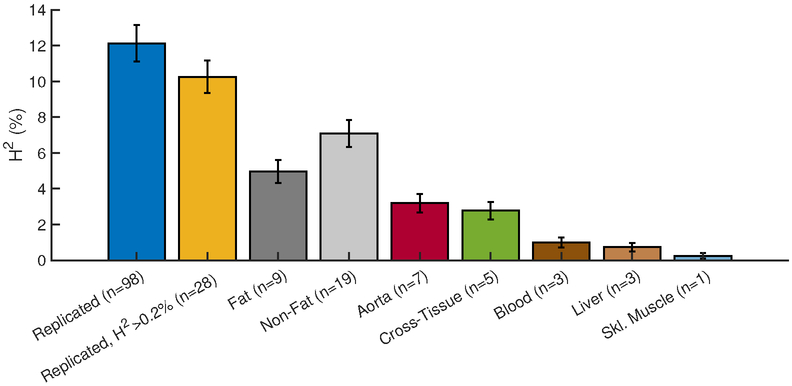
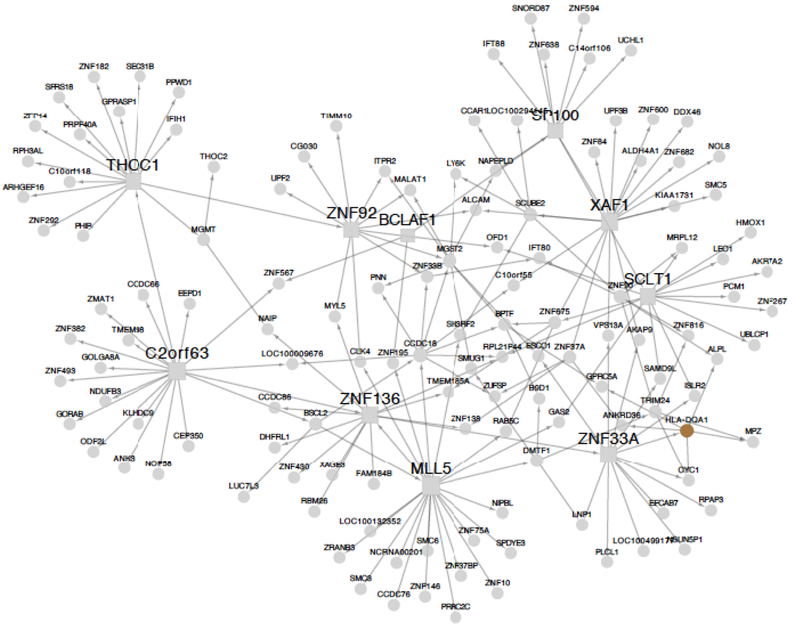
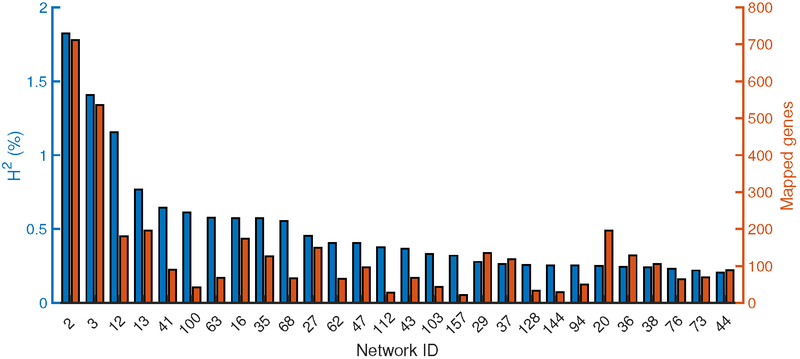
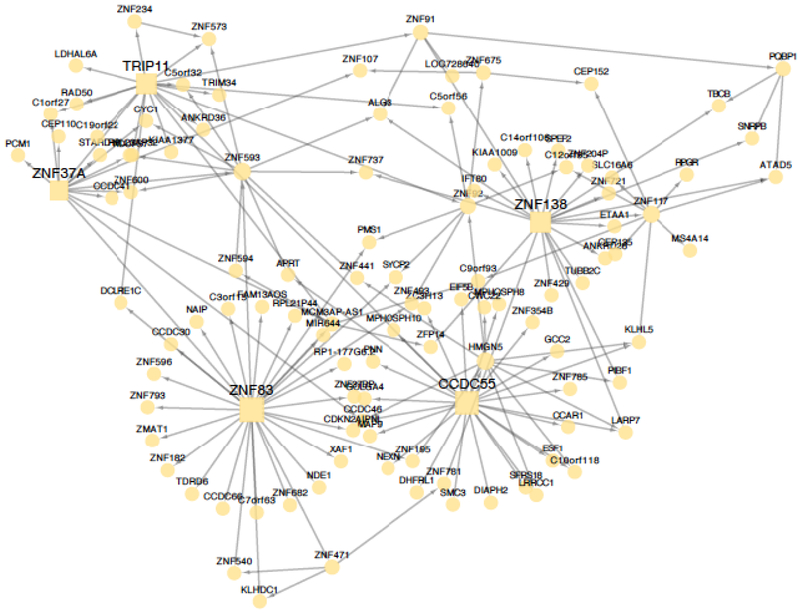
The authors identified and replicated 28 independent GRNs active in CAD. The genetic variation in these networks contributed to 10.0% of CAD heritability beyond the 22% attributable to risk loci identified by GWAS. GRNs in the atherosclerotic arterial wall (n = 7) and subcutaneous or visceral abdominal fat (n = 9) were most strongly implicated, jointly explaining 8.2% of CAD heritability. In all, these 28 GRNs (each contributing to >0.2% of CAD heritability) comprised 24 to 841 genes, whereof 1 to 28 genes had strong regulatory effects (key disease drivers) and harbored many relevant functions previously associated with CAD. The gene activity in these 28 GRNs also displayed strong associations with genetic and phenotypic cardiometabolic disease variations both in humans and mice, indicative of their pivotal roles as mediators of gene-environmental interactions in CAD.
GRNs capture a major portion of genetic variance and contribute to heritability beyond that of genetic loci currently known to affect CAD risk. These networks provide a framework to identify novel risk genes/pathways and study molecular interactions within and across disease-relevant tissues leading to CAD.
目前已知影响冠心病(CAD)风险的遗传变异仅能解释不到四分之一的疾病遗传率。CAD 中基因调控网络(GRN)的遗传率贡献尚不清楚,这些网络受遗传和环境因素的调节。
本研究旨在确定与 CAD 因果相关的 GRN 中影响基因表达的单核苷酸多态性(eSNP)的遗传率贡献。
使用从 CAD 患者的 2 项独立基因表达遗传学研究中收集的 7 种血管和代谢组织,鉴定 eSNP 并推断共表达网络。为了构建与 CAD 具有因果关系的 GRN,共表达网络中 eSNP 的先验信息在贝叶斯算法中得到了应用。从 9 项欧洲全基因组关联研究(GWAS)的个体水平基因型数据中计算 GRN 窄义 CAD 遗传率(13612 例病例,13758 例对照病例)。
作者确定并复制了 28 个与 CAD 活性相关的独立 GRN。这些网络中的遗传变异对 GWAS 确定的 22% CAD 风险位点之外的 10.0% CAD 遗传率有贡献。动脉粥样硬化动脉壁(n=7)和皮下或内脏腹部脂肪(n=9)中的 GRN 关联性最强,共同解释了 8.2%的 CAD 遗传率。这 28 个 GRN(每个都对 CAD 遗传率有>0.2%的贡献)包含 24 到 841 个基因,其中 1 到 28 个基因具有强烈的调控作用(关键疾病驱动基因),并包含许多与 CAD 相关的相关功能。这些 28 个 GRN 中的基因活性也与人类和小鼠的遗传和表型心血管代谢疾病变异具有强烈关联,表明它们在 CAD 中作为基因-环境相互作用的中介具有关键作用。
GRN 捕获了遗传变异的主要部分,并对 CAD 风险相关遗传位点之外的遗传率有贡献。这些网络为识别新的风险基因/途径以及研究导致 CAD 的疾病相关组织内和组织间的分子相互作用提供了一个框架。