
miR-29c 在不孕患者的子宫内膜中过表达和 COL4A1 下调降低了体外子宫内膜上皮细胞的黏附能力,提示其在容受性中发挥作用。
miR-29c overexpression and COL4A1 downregulation in infertile human endometrium reduces endometrial epithelial cell adhesive capacity in vitro implying roles in receptivity.
机构信息
Embryo Implantation Laboratory, Hudson Institute of Medical Research, Clayton, Victoria, 3168, Australia.
Department of Anatomy and Developmental Biology, Monash University, Clayton, Victoria, 3800, Australia.
出版信息
Sci Rep. 2019 Jun 14;9(1):8644. doi: 10.1038/s41598-019-45155-6.
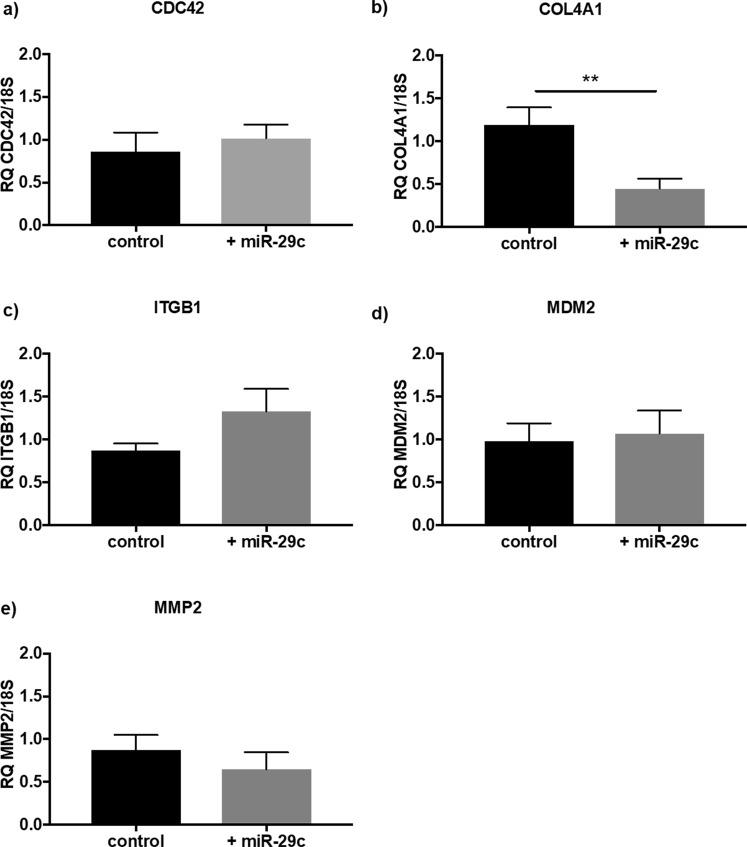
The endometrium is a highly complex tissue that is vulnerable to subtle gene expression changes and is the first point of contact for an implanting blastocyst. Successful blastocyst implantation can only occur when the endometrium is receptive during a short window with each menstrual cycle. microRNAs are small, non-coding RNAs that negatively regulate their gene targets. miR-29c has previously been identified to be differentially regulated across the fertile menstrual cycle, however it has not been investigated in association with infertility. We hypothesised that miR-29c dysregulation in the infertile endometrium would negatively influence endometrial adhesion and blastocyst implantation outcomes during the mid-secretory, receptive phase. miR-29c expression was elevated in early and mid-secretory phase infertile endometrium and localised to the epithelial compartments of endometrial tissue. Overexpression of miR-29c in vitro impaired endometrial epithelial adhesion, and reduced collagen type IV alpha 1 (COL4A1) mRNA expression. COL4A1 was immunolocalised to the luminal and glandular epithelial basement membranes in early and mid-secretory phase fertile and infertile endometrium for the first time. Knockdown of COL4A1 impaired endometrial epithelial adhesion suggesting a role in endometrial receptivity and implantation. Our data suggests miR-29c overexpression with infertility may impair the adhesive capacity of the endometrium, potentially contributing to implantation failure and infertility.
子宫内膜是一种高度复杂的组织,容易受到微妙的基因表达变化的影响,也是着床囊胚的第一接触点。只有在每个月经周期的短暂窗口期内,子宫内膜具有接受性时,囊胚才能成功着床。微小 RNA(miRNA)是一种小的非编码 RNA,可负向调节其基因靶标。miR-29c 以前被确定在可育的月经周期中存在差异调节,但尚未与不孕相关联进行研究。我们假设不孕子宫内膜中 miR-29c 的失调会对中分泌期的子宫内膜黏附和囊胚着床结果产生负面影响,该时期子宫内膜处于接受状态。miR-29c 在不孕的早中期分泌期子宫内膜中表达升高,并定位于子宫内膜组织的上皮细胞区室。体外过表达 miR-29c 会损害子宫内膜上皮细胞的黏附能力,并降低胶原蛋白 IV 型α1(COL4A1)mRNA 的表达。COL4A1 首次在早中期分泌期的可育和不孕子宫内膜的腔上皮和腺上皮的基底膜上进行免疫定位。COL4A1 的敲低会损害子宫内膜上皮细胞的黏附能力,这表明其在子宫内膜接受性和着床中发挥作用。我们的数据表明,miR-29c 与不孕的过度表达可能会损害子宫内膜的黏附能力,从而可能导致着床失败和不孕。



 Zotero 插件