Wang Wei, Shen Xia-Bo, Jia Wei, Huang Da-Bing, Wang Yong, Pan Yue-Yin
Department of Medical Oncology, The First Affiliated Hospital of USTC, Hefei, PR China.
Department of Medical Oncology, Anhui Provincial Hospital, Hefei, PR China.
Ther Adv Med Oncol. 2019 May 23;11:1758835919850665. doi: 10.1177/1758835919850665. eCollection 2019.
Non-small cell lung carcinoma (NSCLC) is a major worldwide health threat due to its low cure rate and high lethality. Emerging evidence suggests that epidermal growth factor receptor (EGFR) plays vital roles in cancer initiation and progression, and is considered an important cancer-driving protein. However, how EGFR expression is regulated during NSCLC development remains to be fully elucidated.
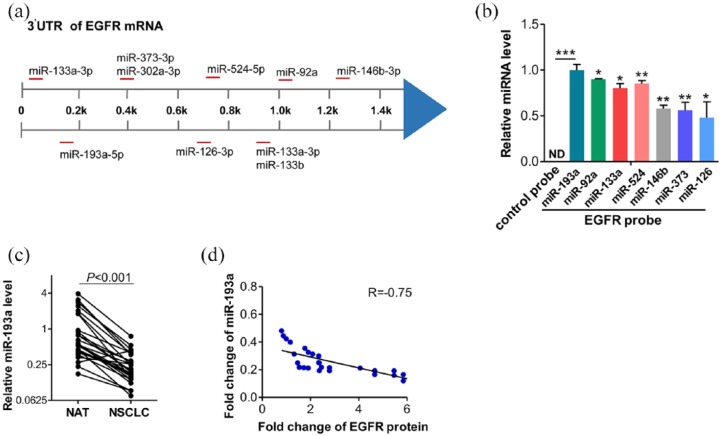
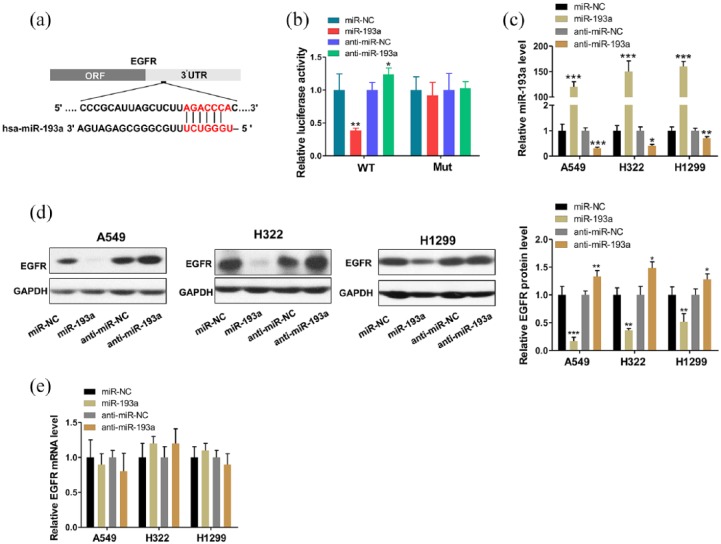
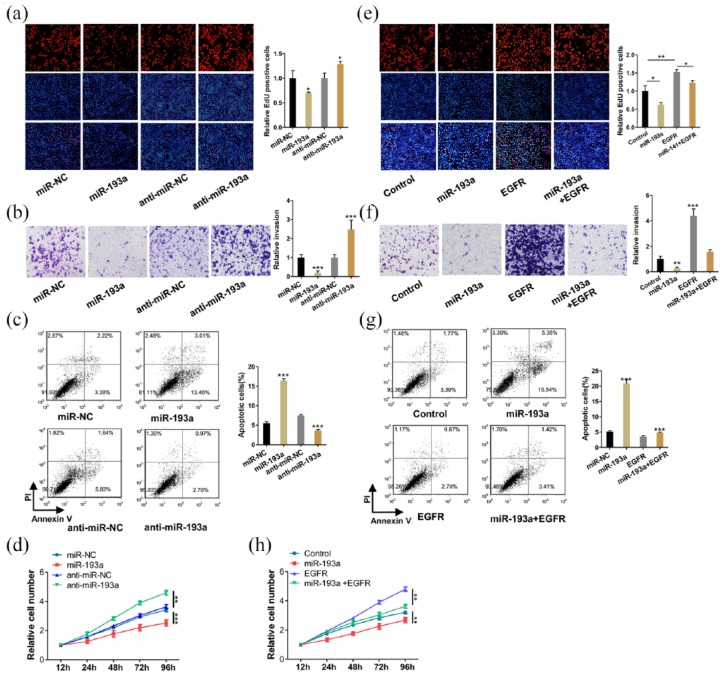
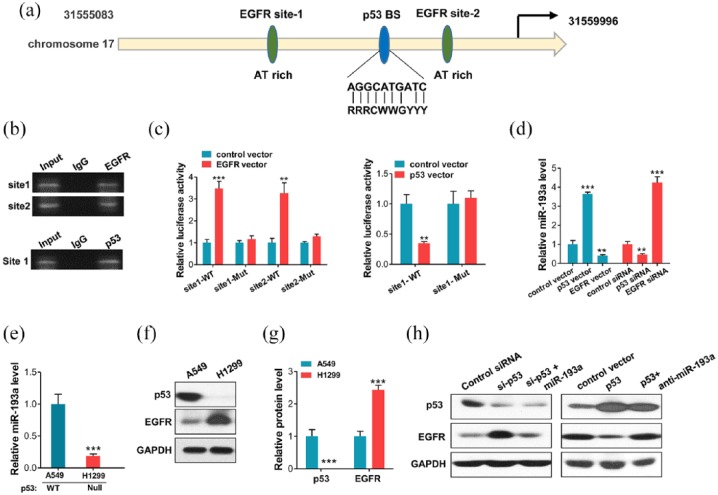
In NSCLC clinical samples, EGFR protein levels were measured by western blotting and qRT-PCR, respectively. Combining microRNA (miRNA) target prediction software and the pulldown assay, we predicted microRNAs (miRNAs) that targeted EGFR. Next, three NSCLC cell lines, A549 (p53 WT), H322 (p53 mutant), and H1299 (p53 null), were used to demonstrate the direct targeting of EGFR by miR-193a. In addition, we investigated the biological effects of EGFR inhibition by miR-193a using Cell Counting Kit-8, 5-Ethynyl-2'-deoxyuridine (EdU), transwell, and apoptosis assays. Then, using ChIP and luciferase assays, we demonstrated that miR-193a was directly activated by p53 at the transcriptional level and that p53-induced-miR-193a and EGFR form a double-negative feedback loop.
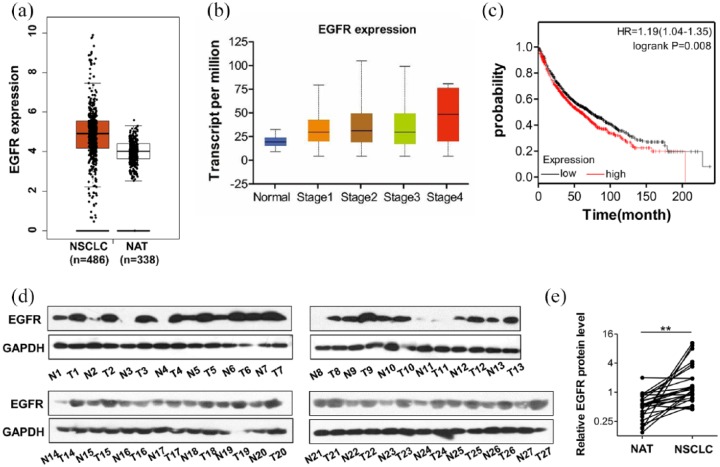
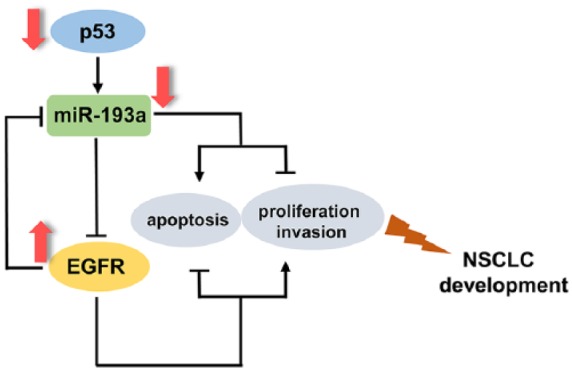
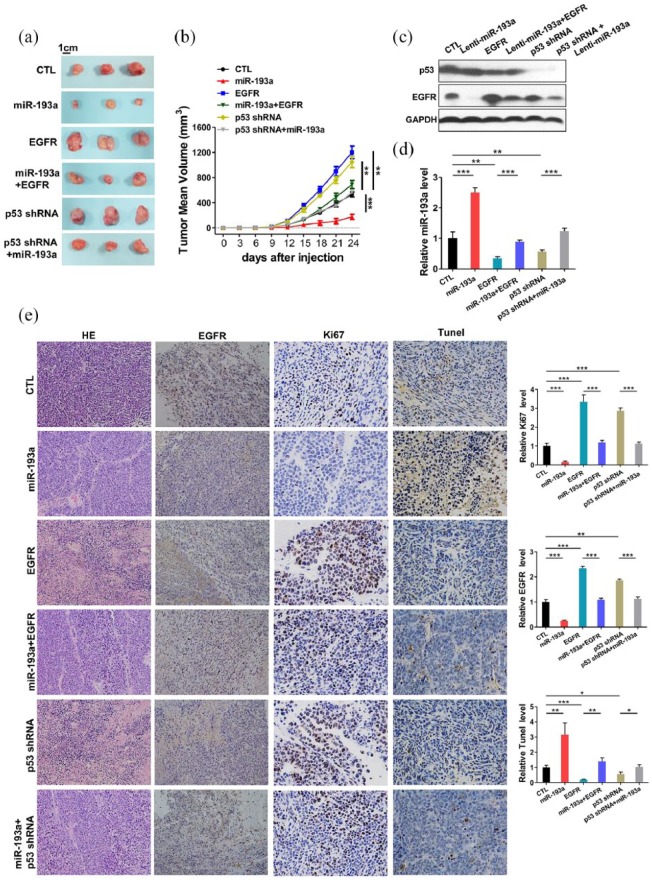
We found that EGFR mRNA and protein were upregulated in NSCLC. We predicted that EGFR was a target of miR-193a and validated that miR-193a bound directly to the 3'-UTR of the EGFR mRNA. Moreover, miR-193a inhibited NSCLC proliferation and invasion, and promotes NSCLC apoptosis by directly downregulating EGFR. Then, we demonstrated that p53 directly activated miR-193a transcription, whereas EGFR functioned as a transcriptional repressor to negatively control miR-193a expression, forming a feedback loop. The loop promoted NSCLC cell proliferation and migration and accelerated tumor growth in xenograft mice.
This study highlights a double-negative feedback loop in NSCLC. The feedback loop is crucial because overexpressing EGFR strongly accelerated tumor growth, while miR-193a restoration blocked tumor growth . Our findings are in line with the emerging opinion that miRNAs and protein regulators form regulatory networks in critical biological processes and that their dysregulation can lead to cellular dysfunction. In conclusion, this study provides important insights into the molecular mechanisms of NSCLC progression and may help inform the development of new therapeutics for managing NSCLC.
非小细胞肺癌(NSCLC)因其低治愈率和高致死率,是全球主要的健康威胁。新出现的证据表明,表皮生长因子受体(EGFR)在癌症的发生和发展中起关键作用,被认为是一种重要的致癌驱动蛋白。然而,在NSCLC发展过程中EGFR表达是如何被调控的仍有待充分阐明。
在NSCLC临床样本中,分别通过蛋白质印迹法和qRT-PCR检测EGFR蛋白水平。结合微小RNA(miRNA)靶标预测软件和下拉分析,我们预测了靶向EGFR的微小RNA(miRNAs)。接下来,使用三种NSCLC细胞系,A549(p53野生型)、H322(p53突变型)和H1299(p53缺失型),来证明miR-193a对EGFR的直接靶向作用。此外,我们使用细胞计数试剂盒-8、5-乙炔基-2'-脱氧尿苷(EdU)、Transwell和凋亡分析,研究了miR-193a抑制EGFR的生物学效应。然后,通过染色质免疫沉淀(ChIP)和荧光素酶分析,我们证明miR-193a在转录水平上被p53直接激活,并且p53诱导的miR-193a和EGFR形成一个双负反馈环。
我们发现NSCLC中EGFR的mRNA和蛋白上调。我们预测EGFR是miR-193a的靶标,并验证了miR-193a直接与EGFR mRNA的3'-非翻译区(3'-UTR)结合。此外,miR-193a通过直接下调EGFR来抑制NSCLC的增殖和侵袭,并促进NSCLC凋亡。然后,我们证明p53直接激活miR-193a的转录,而EGFR作为转录抑制因子负向调控miR-193a的表达,形成一个反馈环。该反馈环促进NSCLC细胞增殖和迁移,并加速异种移植小鼠的肿瘤生长。
本研究揭示了NSCLC中的一个双负反馈环。该反馈环至关重要,因为EGFR的过表达强烈加速肿瘤生长,而miR-193a的恢复则阻断肿瘤生长。我们的发现与新出现的观点一致,即miRNAs和蛋白质调节因子在关键生物学过程中形成调控网络,它们的失调会导致细胞功能障碍。总之,本研究为NSCLC进展的分子机制提供了重要见解,并可能有助于为NSCLC的新治疗方法的开发提供信息。