Mia Mohammad Nahid, Islam Mohammad Zahirul, Chowdhury Md Razib, Razzaque Abdur, Chin Brian, Rahman M Shafiqur
Health Systems and Population Studies Division, International Centre for Diarrhoeal Disease Research, Bangladesh (icddr,b), Dhaka, Bangladesh.
Embassy of Sweden, Dhaka, Bangladesh.
SSM Popul Health. 2019 Jun 2;8:100415. doi: 10.1016/j.ssmph.2019.100415. eCollection 2019 Aug.
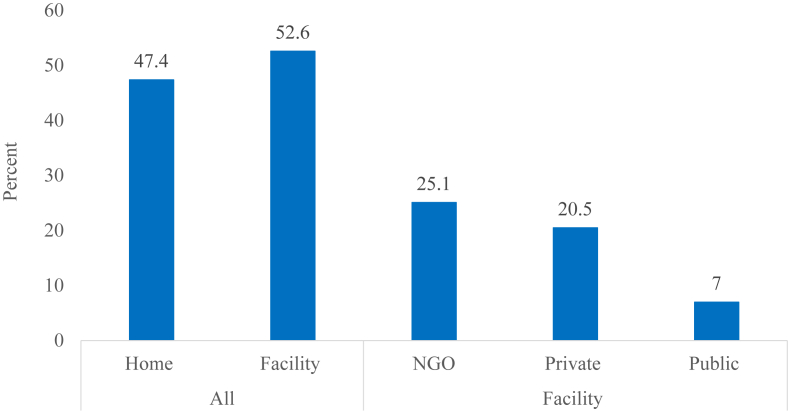
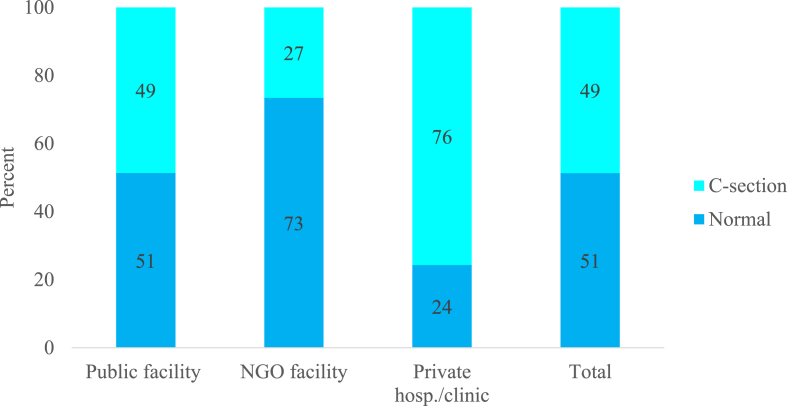
Caesarean sections (CS) is the most common lifesaving surgeries for obstructed labour and other emergency obstetrical conditions. The WHO had recommended ideal rate for CS to be between 5% and 15%. The rate higher than 15% indicates overused other than lifesaving. Bangladesh has experienced a dramatic increase in CS delivery from 4% in 2004 to 23% in 2014. This increase is elevated by the several factors including maternal education, maternal request or elective CS, and by the urban richest population. However, little is known about the use CS by the urban poorest population. Therefore, the study aimed to examine and identify the factors associated with CS among the urban disadvantaged section of the population. A total of 1063 randomly chosen women aged 15-49 years from the population of 121,912 residing five-different slums were interviewed during November-December 2016. CS delivery was considered as outcome variable. Both bivariate and multivariable statistical analyses were carried-out. We performed logistic regression analyses to examine the net-effect of independent variables on outcome variable. Over 25% of total deliveries and 50% of facility-based deliveries were CS. The odds of CS delivery was 3.4-fold greater among better-off women than poorest. Women who had 4 + ANC checks-up during pregnancy had a 2-fold higher odds of CS delivery than women of ANC check-up. In private facilities, 76% of births were delivered as CS, followed by 51% in public facilities and 24% in NGO facilities. The likelihood of CS delivery in private facilities was 9.2-fold greater than NGO facilities after controlling for women socio-demographic, pregnancy and delivery characteristics. Thus, the high use of CS is largely associated with private facility, ANC visits and household wealth. Therefore, the Government of Bangladesh should take immediate actions by designing new policies and regulations to ensure CS for the lifesaving condition, not for financial gain.
剖宫产是处理难产和其他产科急症最常见的挽救生命的手术。世界卫生组织建议剖宫产的理想比例为5%至15%。高于15%的比例表明除挽救生命外存在过度使用的情况。孟加拉国剖宫产分娩率从2004年的4%急剧上升至2014年的23%。这一增长受到多种因素推动,包括产妇教育程度、产妇要求或选择性剖宫产以及城市最富裕人群。然而,关于城市最贫困人群剖宫产的使用情况知之甚少。因此,本研究旨在调查并确定城市弱势群体中与剖宫产相关的因素。2016年11月至12月期间,从居住在五个不同贫民窟的121,912人中随机抽取了1063名年龄在15至49岁的女性进行访谈。剖宫产分娩被视为结果变量。进行了双变量和多变量统计分析。我们进行逻辑回归分析以检验自变量对结果变量的净效应。超过25%的总分娩和50%的机构分娩为剖宫产。富裕女性剖宫产分娩的几率比最贫困女性高3.4倍。孕期进行4次及以上产前检查的女性剖宫产分娩几率比未进行产前检查的女性高2倍。在私立机构,76%的分娩为剖宫产,其次是公立机构的51%和非政府组织机构的24%。在控制了女性社会人口统计学、怀孕和分娩特征后,私立机构剖宫产分娩的可能性比非政府组织机构高9.2倍。因此,剖宫产的高使用率在很大程度上与私立机构、产前检查次数和家庭财富有关。因此,孟加拉国政府应立即采取行动,制定新的政策和法规,以确保剖宫产用于挽救生命的情况,而非为了经济利益。