McKillop Caitlin N, Leonard Tammy, Pruitt Sandi L, Tiro Jasmin A
Economics Department, State University of New York at Cortland, 28 Graham St, Old Main 136A, Cortland, NY, 13045, United States.
Economics Department, University of Dallas, 1845 E Northgate Drive, Irving, TX, 75062, United States.
SSM Popul Health. 2019 Jun 2;8:100421. doi: 10.1016/j.ssmph.2019.100421. eCollection 2019 Aug.
Geographic clusters of low vaccination uptake reduce the population-level efficacy of vaccination programs. However, little is known about the mechanisms that drive geographic patterns in vaccination rates. Traditional economic theory considers vaccination as a classic public good and suggests that individuals taking advantage of public goods by relying on others' immunization behavior without contributing toward themis a primary cause of low vaccination rates. However, behavioral economics suggests that free riding does not fully explain observed individual behavior, and the presence of both high and low clusters of vaccination rates suggest that this theory alone does not fully explain geographic patterns of vaccination.
We assessed geographic clustering of HPV vaccination uptake and examined the evidence for or against free riding in HPV vaccination decisions.
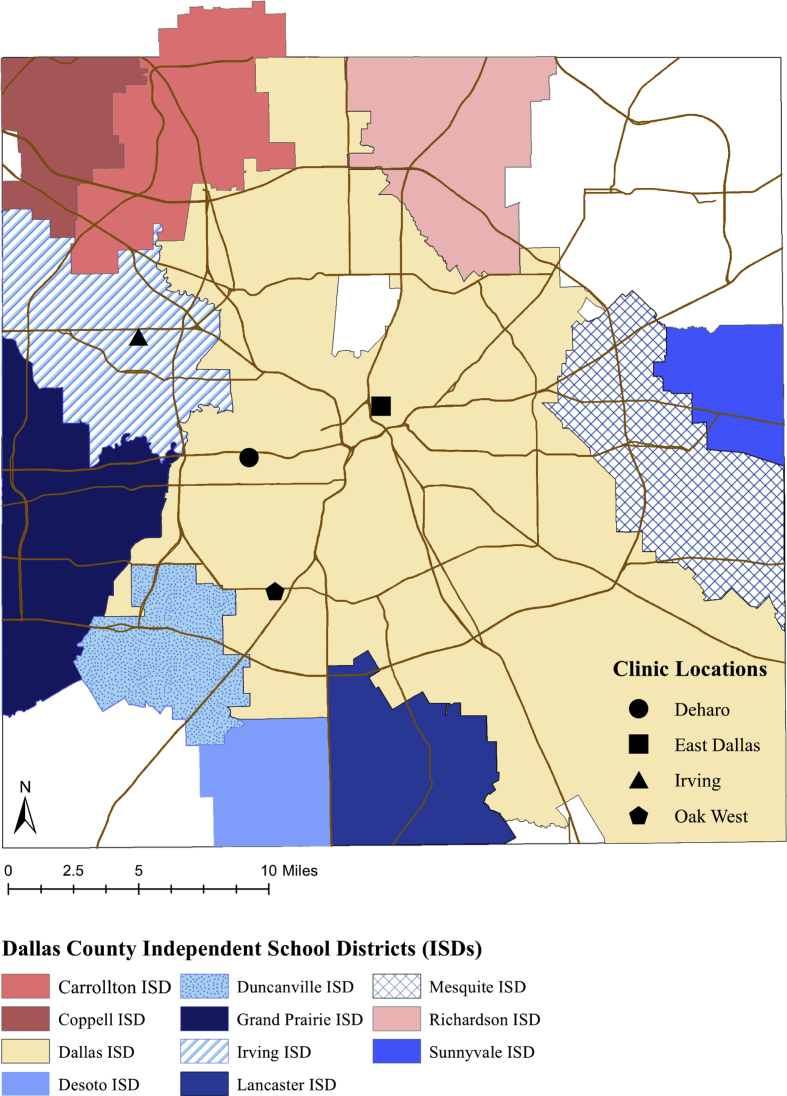
We analyzed HPV vaccination decisions of low-income adolescent females (N = 601) residing in urban neighborhoods in Dallas, Texas, USA during 2011-2012. Spatial econometric models were estimated to assess the relationship between neighborhood vaccination rates and individual vaccination decisions.
We found a positive and significant relationship between individual HPV vaccination choices and the average neighborhood vaccination rate at the time parents were making vaccine decisions for their adolescent daughters while controlling for neighborhood sorting and other confounders.
Individuals were more likely to complete the HPV vaccination series when others in their neighborhood had already completed the series. We do not find evidence for free riding in HPV vaccination decisions.
疫苗接种率低的地理聚集区会降低疫苗接种计划在人群层面的效果。然而,对于导致疫苗接种率呈现地理分布模式的机制,我们知之甚少。传统经济理论将疫苗接种视为一种典型的公共物品,并认为个体通过依赖他人的免疫行为而不自身接种来利用公共物品是疫苗接种率低的主要原因。然而,行为经济学表明,搭便车并不能完全解释观察到的个体行为,而且疫苗接种率高低聚集区的存在表明仅这一理论并不能完全解释疫苗接种的地理模式。
我们评估了人乳头瘤病毒(HPV)疫苗接种率的地理聚集情况,并检验了支持或反对HPV疫苗接种决策中搭便车行为的证据。
我们分析了2011 - 2012年期间居住在美国得克萨斯州达拉斯市城市社区的低收入青春期女性(N = 601)的HPV疫苗接种决策。估计了空间计量模型,以评估社区疫苗接种率与个体疫苗接种决策之间的关系。
在控制社区分类和其他混杂因素的情况下,我们发现当父母为青春期女儿做出疫苗决策时,个体HPV疫苗接种选择与社区平均疫苗接种率之间存在正相关且显著的关系。
当社区中的其他人已经完成HPV疫苗接种系列时,个体更有可能完成该系列接种。我们没有发现HPV疫苗接种决策中存在搭便车行为的证据。