Centre for Medical Research, The University of Western Australia, Perth, Western Australia, Australia.
Molecular Medicine Division, Neurogenetic Diseases Laboratory, Harry Perkins Institute of Medical Research, Nedlands, Western Australia, Australia.
BMJ Open. 2019 Jun 16;9(6):e028209. doi: 10.1136/bmjopen-2018-028209.
Preconception carrier screening (PCS) identifies couples at risk of having children with recessive genetic conditions. New technologies have enabled affordable sequencing for multiple disorders simultaneously, including identifying carrier status for many recessive diseases. The aim of the study was to identify the most effective way of delivering PCS in Western Australia (WA) through the public health system.
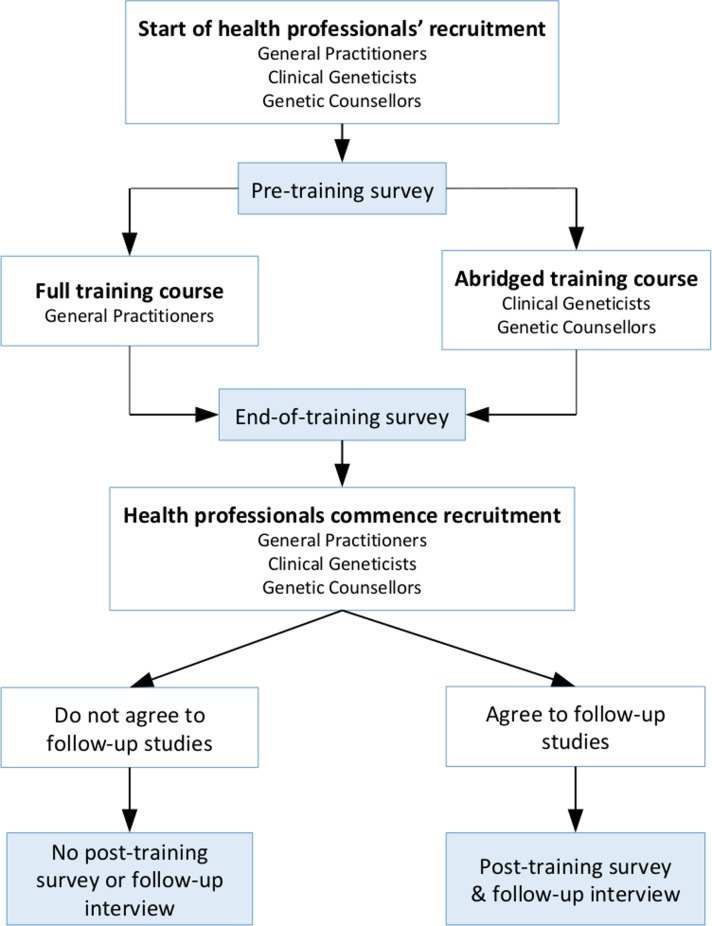
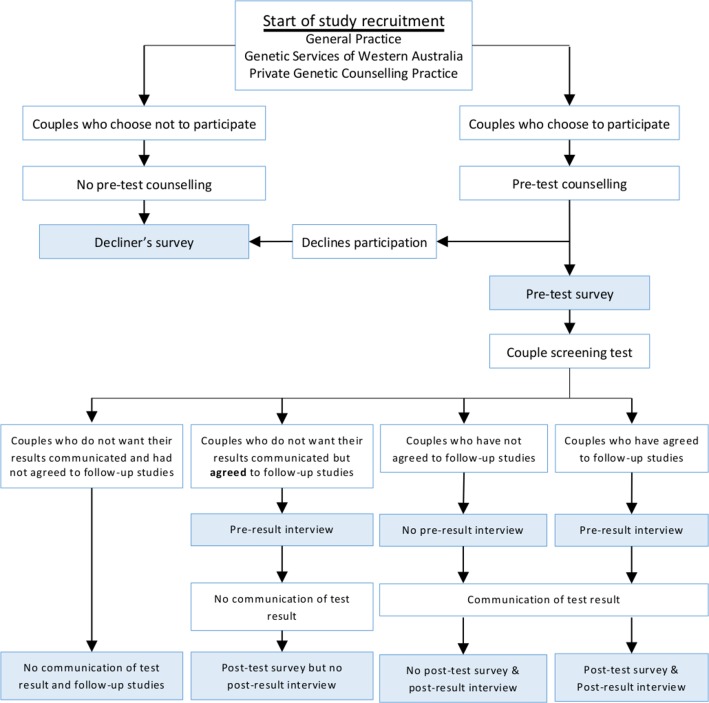
This is a multicentre cohort pilot study of 250 couples who have used PCS, conducted at three sites: (1) Genetic Services of Western Australia, (2) a private genetic counselling practice in Perth and (3) participating general practice group practices in the Busselton region of WA. The primary outcome of the pilot study was to evaluate the feasibility of implementing the comprehensive PCS programme in the WA healthcare system. Secondary outcome measures included evaluation of the psychosocial impact of couples, such as reproductive autonomy; identification of areas within the health system that had difficulties in implementing the programme and evaluation of tools developed during the study.
Approval was provided by the Women and Newborn Health Service Human Research Ethics Committee (HREC) at King Edward Memorial Hospital for Women (RGS0000000946) and the University of Western Australia (UWA) HREC (RA/4/20/4258). Participants may choose to withdraw at any time. Withdrawal will in no way affect participating couples' medical care. Study couples will be redirected to another participating health professional for consultation or counselling in the event of a health professional withdrawing. All evaluation data will be deidentified and stored in a password-protected database in UWA. In addition, all hard copy data collected will be kept in a locked cabinet within a secure building. All electronic data will be stored in a password-protected, backed-up location in the UWA Institutional Research Data Store. All evaluative results will be published as separate manuscripts, and selected results will be presented at conferences.
孕前携带者筛查(PCS)可识别有生育隐性遗传疾病子女风险的夫妇。新技术使同时对多种疾病进行测序变得经济实惠,包括确定许多隐性疾病的携带者状态。本研究的目的是通过公共卫生系统确定在西澳大利亚州(WA)提供 PCS 的最有效方法。
这是一项在三个地点(1)西澳大利亚遗传服务处、(2)珀斯的私人遗传咨询诊所和(3)WA 巴斯顿地区参与的普通实践小组进行的 250 对夫妇使用 PCS 的多中心队列试点研究。该试点研究的主要结果是评估在 WA 医疗保健系统中实施综合 PCS 计划的可行性。次要结果包括评估夫妇的社会心理影响,例如生殖自主权;确定在实施该计划时系统内存在困难的领域,并评估研究过程中开发的工具。
King Edward Memorial Hospital for Women 的妇女和新生儿健康服务人体研究伦理委员会(HREC)(RGS0000000946)和西澳大利亚大学(UWA)HREC(RA/4/20/4258)批准了此项研究。参与者可以随时退出。退出不会以任何方式影响参与夫妇的医疗护理。如果健康专业人员退出,研究夫妇将被重新引导至另一位参与的健康专业人员进行咨询或咨询。所有评估数据将被匿名化并存储在 UWA 的密码保护数据库中。此外,所有收集的硬拷贝数据将保存在安全建筑内的锁定橱柜中。所有电子数据将存储在 UWA 机构研究数据存储中的密码保护、备份位置。所有评估结果将作为单独的手稿发表,并在会议上展示部分结果。