Department of Biochemistry and Molecular Biology, University of Miami Miller School of Medicine, Gautier Bldg., Room 528, 1011 NW 15th Street, Miami, FL, 33136, USA.
J Neuroimmune Pharmacol. 2021 Mar;16(1):74-89. doi: 10.1007/s11481-019-09858-x. Epub 2019 Jun 17.
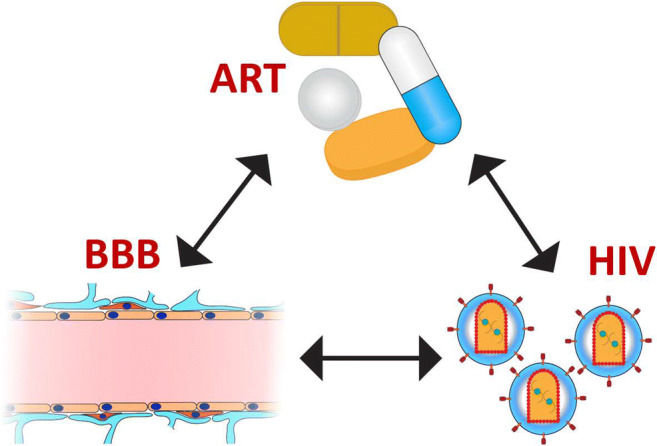
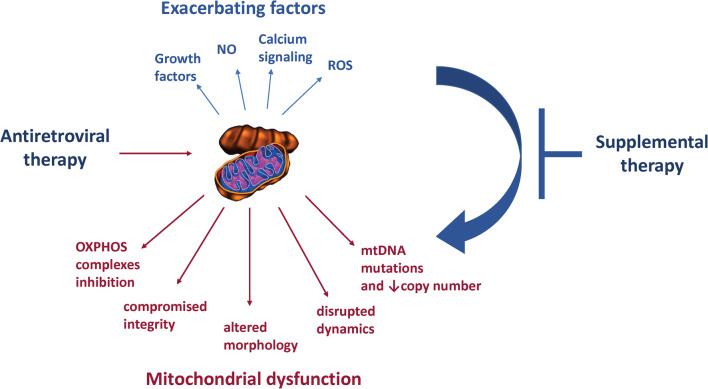
HIV infection is associated with comorbidities that are likely to be driven not only by HIV itself, but also by the toxicity of long-term use of antiretroviral therapy (ART). Indeed, increasing evidence demonstrates that the antiretroviral drugs used for HIV treatment have toxic effects resulting in various cellular and tissue pathologies. The blood-brain barrier (BBB) is a modulated anatomophysiological interface which separates and controls substance exchange between the blood and the brain parenchyma; therefore, it is particularly exposed to ART-induced toxicity. Balancing the health risks and gains of ART has to be considered in order to maximize the positive effects of therapy. The current review discusses the cerebrovascular toxicity of ART, with the focus on mitochondrial dysfunction. Graphical Abstract Graphical representation of the interactions between HIV, antiretroviral therapy (ART), and the blood-brain barrier (BBB).
HIV 感染与合并症相关,这些合并症不仅可能由 HIV 本身引起,还可能由长期使用抗逆转录病毒疗法 (ART) 的毒性引起。事实上,越来越多的证据表明,用于治疗 HIV 的抗逆转录病毒药物具有毒性作用,导致各种细胞和组织病理学改变。血脑屏障 (BBB) 是一种调节的解剖生理学界面,它分隔并控制血液和脑实质之间的物质交换;因此,它特别容易受到 ART 诱导的毒性影响。为了最大限度地发挥治疗的积极作用,必须权衡 ART 的健康风险和收益。本综述讨论了 ART 的脑血管毒性,重点是线粒体功能障碍。