Department of Bioengineering, College of Engineering, University of Toledo, Toledo, OH, 43606, USA.
Department of Medical Microbiology and Immunology, University of Toledo College of Medicine and Life Sciences, Toledo, OH, 43614, USA.
Ann Biomed Eng. 2019 Nov;47(11):2213-2231. doi: 10.1007/s10439-019-02302-4. Epub 2019 Jun 19.
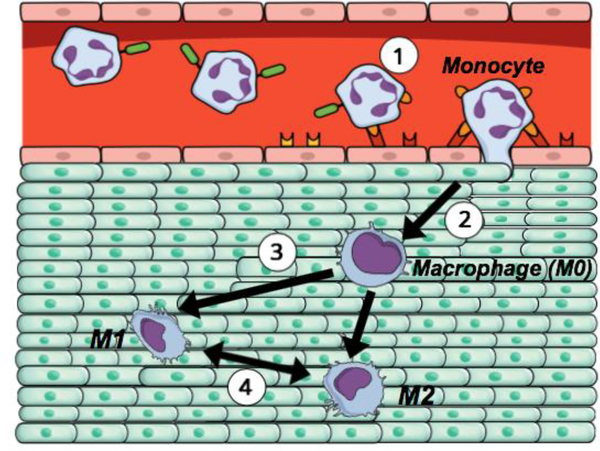
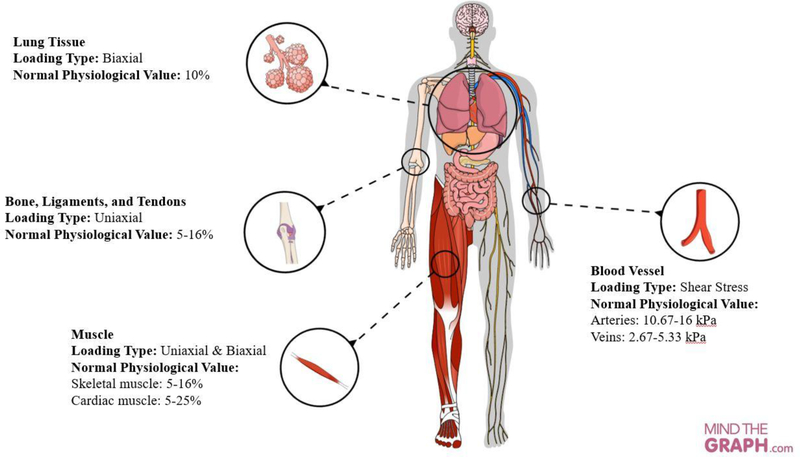
In recent years, biomaterial- and scaffold-based immunomodulation strategies were implemented in tissue regeneration efforts for manipulating macrophage polarization (a.k.a. phenotype or lineage commitment, or differentiation). Yet, most of our understanding of macrophage phenotype commitment and phagocytic capacity is limited to how physical cues (extracellular matrix stiffness, roughness, and topography) and soluble chemical cues (cytokines and chemokines released from the scaffold) influence macrophage polarization. In the context of immune response-tissue interaction, the mechanical cues experienced by the residing cells within the tissue also play a critical role in macrophage polarization and inflammatory response. However, there is no compiled study discussing the effect of the dynamic mechanical environment around the tissues on macrophage polarization and the innate immune response. The aim of this comprehensive review paper is 2-fold; (a) to highlight the importance of mechanical cues on macrophage lineage commitment and function and (b) to summarize the important studies dedicated to understand how macrophage polarization changes with different mechanical loading modalities. For the first time, this review paper compiles and compartmentalizes the studies investigating the role of dynamic mechanical loading with various modalities, amplitude, and frequency on macrophage differentiation. A deeper understanding of macrophage phenotype in mechanically dominant tissues (i.e. musculoskeletal tissues, lung tissues, and cardiovascular tissues) provides mechanistic insights into the design of mechano-immunomodulatory tissue scaffold for tissue regeneration.
近年来,基于生物材料和支架的免疫调节策略已被应用于组织再生领域,以调控巨噬细胞极化(又称表型或谱系决定,或分化)。然而,我们对巨噬细胞表型决定和吞噬能力的大部分理解仅限于物理线索(细胞外基质的硬度、粗糙度和形貌)和可溶性化学线索(支架释放的细胞因子和趋化因子)如何影响巨噬细胞极化。在免疫反应-组织相互作用的背景下,组织内驻留细胞所经历的机械线索也在巨噬细胞极化和炎症反应中起着关键作用。然而,目前没有综合研究讨论组织周围动态机械环境对巨噬细胞极化和固有免疫反应的影响。本文的主要目的有两个;(a)强调机械线索对巨噬细胞谱系决定和功能的重要性;(b)总结致力于理解不同机械加载方式如何改变巨噬细胞极化的重要研究。本文首次对不同模式、幅度和频率的动态机械加载研究进行了综合和分类,以探讨其对巨噬细胞分化的作用。深入了解在力学主导的组织(即骨骼肌肉组织、肺组织和心血管组织)中的巨噬细胞表型,为组织再生的机械免疫调节组织支架设计提供了机制见解。